
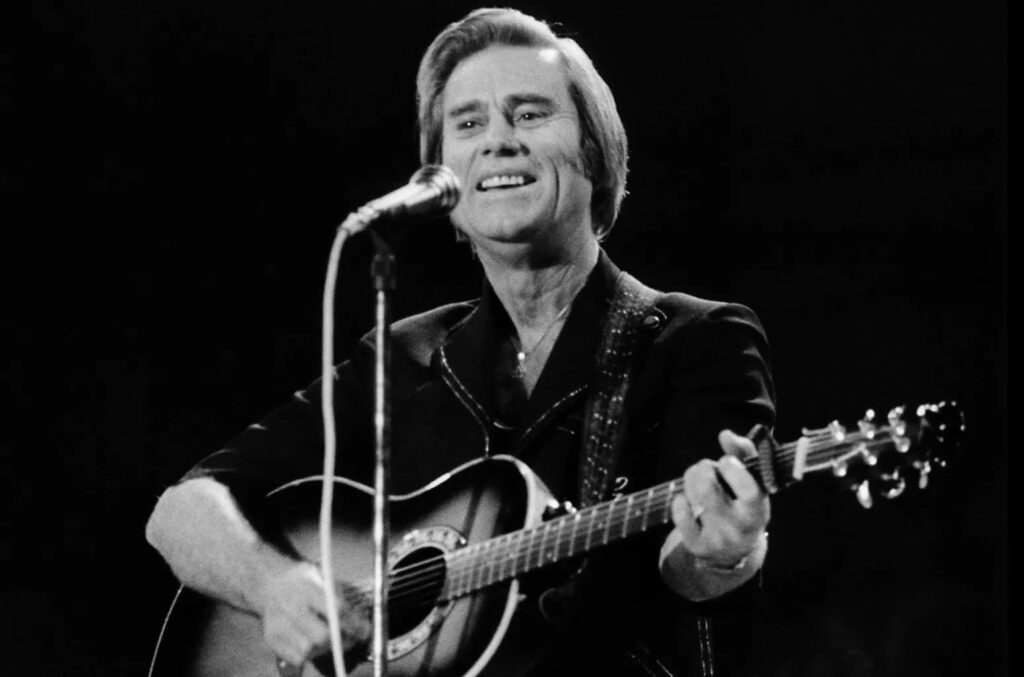
A raw, heartfelt plea that captures the confusion and longing of love
“Why Baby Why” by George Jones stands as one of the defining moments in country music history, a song that marked the emergence of a voice destined to shape the genre for decades. Released in 1955, this single quickly climbed the Billboard Country charts, peaking at #4, and announced George Jones as a force to be reckoned with in Nashville. Its enduring legacy lies not only in its commercial success but in the vivid emotional storytelling and authentic vulnerability that became Jones’ hallmark.
From the very first note, “Why Baby Why” immerses listeners in a world of yearning and frustration. The lyrics convey the universal ache of love complicated by misunderstandings and heartbreak, a theme that resonates across generations. Jones’ voice, simultaneously tender and plaintive, carries a weight that belies his young age at the time of recording. Every inflection, every slight quiver in his tone communicates the internal struggle of someone torn between affection and exasperation, capturing the bittersweet reality of romantic entanglements.
The backstory of the song adds another layer of depth. Written by Darrell Edwards and George Jones himself, it was inspired by personal experiences and observations of the trials and confusions of young love. The recording session brought together the raw energy of Jones’ early career, combining his signature emotional depth with the simplicity and honesty of traditional country instrumentation. Twanging guitars, steady percussion, and subtle steel guitar lines create a backdrop that is at once minimal and evocative, allowing the emotional core of the song to shine.
“Why Baby Why” is more than a love song; it is a conversation, a plea, and a confession rolled into a few compelling minutes of music. Its narrative structure repeating questions, each laced with desperation and hope draws the listener into the singer’s world. This technique, coupled with Jones’ ability to inhabit the emotional landscape of the lyrics fully, makes the song timeless. Listeners are invited to reflect on their own experiences of love’s uncertainties, the moments when passion clashes with confusion, and the longing for understanding from someone deeply cherished.
The cultural impact of “Why Baby Why” cannot be overstated. It helped cement George Jones’ reputation as a master of emotional expression in country music, influencing countless artists who sought to capture the same sincerity and resonance in their performances. The song’s success also heralded a period of growth for Nashville, where storytelling and raw emotional truth became central to the sound of modern country. Its influence is evident not only in subsequent hits by Jones but in the broader canon of country music, where heartfelt, plaintive vocals became a defining characteristic of the genre.
For listeners today, especially those who lived through the golden era of country music, “Why Baby Why” evokes nostalgia and reflection. It calls forth memories of youthful romances, the early days of jukeboxes spinning at diners and dance halls, and a time when music’s emotional honesty could fill hearts and homes alike. The song’s simplicity is its genius; it does not need grand production to convey the universality of its message love, with all its confusion, longing, and persistent questioning.
Ultimately, “Why Baby Why” remains a testament to George Jones’ extraordinary ability to translate the human heart’s complexities into song. Its enduring charm, emotional depth, and musical purity continue to captivate listeners, offering a window into the timeless experience of love’s joys and frustrations. It is a song that asks questions everyone knows but expresses them in a voice that can move even decades after its first recording.
 Oldies Songs