
When Memory Hurts More Than Goodbye: Patsy Cline’s Defining Performance
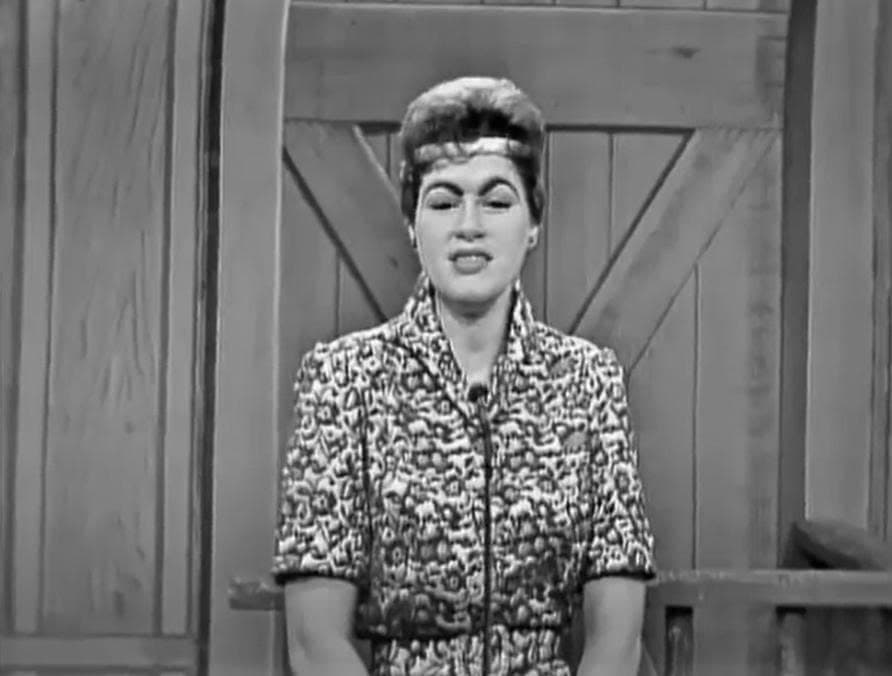
In 1962, at the height of her career, Patsy Cline stood before a television audience and delivered what would become one of the most quietly devastating performances in country music. “She’s Got You” was not merely a hit song. It was a masterclass in emotional restraint.
Written by Hank Cochran, the song arrived to Cline in a deeply personal way, hand delivered in the hope that she alone could give it life. She did more than that. She transformed it into a defining statement of loss, not through grand gestures, but through control. The heartbreak in “She’s Got You” does not erupt. It lingers.
The premise is deceptively simple. A woman reflects on a past relationship through the objects left behind: photographs, rings, fragments of a shared life. The man is gone, now belonging to someone else, yet the emotional centre of the song lies in a single moment of doubt. When Cline sings the word “or,” questioning whether those memories still hold meaning, the entire narrative fractures. It is a fleeting hesitation, but one that reveals the depth of her interpretive power.
This performance came at a striking moment in Cline’s life. Just months earlier, she had survived a near fatal car accident, enduring a long and painful recovery. By 1962, she had returned not diminished, but sharpened. There is a sense, watching her, that she is holding something back deliberately. The voice remains rich and steady, yet every phrase carries an undercurrent of experience that cannot be easily articulated.
Musically, the song reflects the evolving Nashville Sound, shaped by producer Owen Bradley and elevated by the smooth backing of The Jordanaires. It is country music reaching outward, embracing pop sensibilities without losing its emotional core. In Cline’s hands, that balance feels effortless.
“She’s Got You” would go on to top the country charts and cross into the pop mainstream, cementing Cline’s status as one of the era’s most important crossover artists. Yet, viewed now, the performance carries an added weight. Within a year, she would be gone.
That knowledge reshapes the moment. A song about losing someone becomes, in retrospect, something more profound. It becomes a reminder of how quickly a voice, no matter how powerful, can fall silent.