
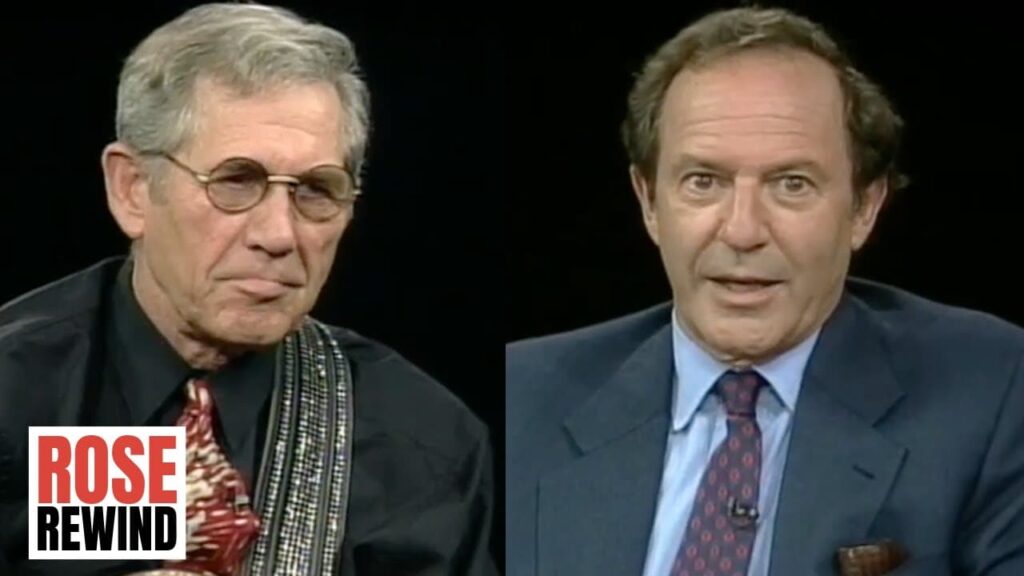
A Symphony of Solitude and Stringed Wisdom: Chet Atkins on the Twilight Reflections of “Almost Alone”
The quiet, late-night intimacy of the Charlie Rose set became a cathedral of memory as Chet Atkins sat down with guest host Mortimer Zuckerman, looking back on five decades of musical pioneering while introducing the world to the delicate, solo beauty of his late-career masterpiece, Almost Alone.
In the spring of 1996, the television landscape was often loud and fast, but there was one late-night sanctuary where conversations were allowed to breathe. On May 28, 1996, viewers tuning into PBS for the Charlie Rose Show were treated to a rare, deeply reflective broadcast. With the regular host away, the esteemed publisher Mortimer Zuckerman stepped in as guest host to converse with “Mr. Guitar” himself, Chet Atkins. This interview served as a gorgeous, bittersweet retrospective of a man who was then celebrating a staggering 50-year career in the music industry. But more than just a trip down memory lane, the appearance was a quiet celebration of his brand-new, critically acclaimed studio album, Almost Alone, which had been released on April 30, 1996, under RCA Victor.
For the sophisticated music lover who had followed Chet’s journey since the late 1940s, this 1996 interview was a masterclass in humility and artistic longevity. Clad in his signature sports coat, with his beloved guitar resting gently in his lap like an extension of his own body, Chet spoke about his half-century in Nashville with the serene detachment of a true craftsman. He had defined the Nashville Sound, run major record labels, discovered stars like Dolly Parton and Charley Pride, and revolutionized fingerstyle guitar playing. Yet, when Zuckerman pressed him on his legendary status, Chet merely smiled, preferring to let his fingers do the talking. He explained that after decades of playing with massive orchestras, famous duets, and heavy production, he wanted to strip everything away.
The concept behind Almost Alone was a return to absolute purity. Aside from two beautiful collaborations—one with Jerry Reed and another with classical guitar virtuoso Liona Boyd—the album was exactly what the title promised: Chet Atkins, alone in a room with a guitar. The record peaked at #73 on the Billboard Top Country Albums chart, but its true value lay in its quiet defiance of the high-gloss, heavily produced country-pop that was dominating the mid-90s airwaves. In the interview, Chet demonstrated his legendary thumb-and-finger picking style for Zuckerman, showing how he could play the bassline, the rhythm, and the melody simultaneously. It was a technique he had spent fifty years perfecting, yet he described it with the simple wonder of a child playing with a favorite toy.
The conversation took a poignant turn as Chet and Mortimer Zuckerman discussed the passage of time and the physical realities of aging. Having survived major health scares, including cancer, Chet spoke about his relationship with the guitar as a form of therapy and companionship. The guitar wasn’t just his livelihood; it was his voice when words failed. The tracks on the new album, such as his solo rendition of “Cheek to Cheek” or the hauntingly delicate “Jam Man” (which would win a Grammy Award for Best Country Instrumental Performance in 1997), reflected a musician who had learned the value of the notes he didn’t play. He was no longer trying to prove how fast he could pick; he was searching for the perfect tone, the exact weight of a vibrating nylon string.
To look back on this Charlie Rose Rewind episode today is to experience a powerful wave of nostalgia for a dignified era of television and a vanished era of music. It takes us back to a time when a national broadcast would pause for several minutes just to let an elder statesman of the guitar play a soft, solo melody in a dimly lit studio. There is a deep, comforting warmth in hearing the gentle creak of Chet’s guitar strap, the soft slide of his fingers across the frets, and the quiet, intellectual banter between him and Zuckerman.
Chet Atkins’ appearance in May 1996 remains a beautiful, starlit milestone in his final years. It reminds us that while careers may span decades and technologies may change the way we record sound, the ultimate power of music lies in the quiet sincerity of a single human hand touching a wooden instrument. It is a highly reflective, peaceful chapter in the legacy of a gentleman who spent fifty years making the world a significantly more beautiful place, one perfect note at a time.