
*“If Drinkin’ Don’t Kill Me (Her Memory Will)” a haunted toast to memory, despair, and the ghosts that follow heartache
When you hear “If Drinkin’ Don’t Kill Me (Her Memory Will)”, you feel the slow drip of sadness, as if every glass raised carries a whisper of love lost and nights that can never be forgotten.
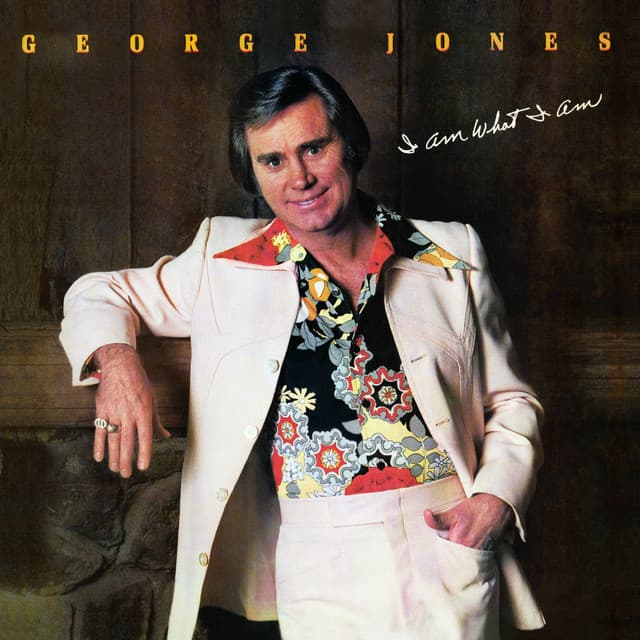
Right at the top: “If Drinkin’ Don’t Kill Me (Her Memory Will)” was recorded by George Jones and released in January 1981 as the third single from his album I Am What I Am. Upon its release, the song reached #8 on the Billboard Hot Country Singles chart a notable return to the Top 10 for a man who had weathered many storms.
The story behind the song is as raw as its melody. Written by Harlan Sanders and Rick Beresford, the lyrics dive into despair and memory both potent forces when love disappears. In the song, the narrator walks home in the early hours, drunk, head resting on the wheel of his car, haunted not by the drink itself but by the lingering ghost of a beloved. “And if drinkin’ don’t kill me her memory will,” he confesses, acknowledging that sometimes the heart’s ache outlasts the poison of liquor.
Musically, the arrangement is spare yet heavy with sorrow. The steady rhythm, the soulful steel guitar and soft piano, the subtle backing vocals all create a sombre canvas for George Jones’s voice. And that voice full of weariness, regret, longing carries the pain as if he’s lived it himself. This wasn’t a performance of sorrow; it was a confession, a man staring into the emptiness left by love and facing the harsh dawn with trembling honesty.
By 1981, George Jones had already seen triumphant highs: a resurrection of his career thanks to his legendary comeback single “He Stopped Loving Her Today”, renewed public adoration, a sharp return to form. Yet behind the charts and applause lurked personal demons years of heavy drinking, struggles with addiction and the kind of heartbreak that doesn’t fade.
Against that backdrop, “If Drinkin’ Don’t Kill Me” becomes more than a song. It becomes a raw mirror of real life: the bottles, the late-night silence, the lingering shadows of what once was. It is as if George, through his worn-out voice, gives permission to acknowledge the pain pain for lost love, for regret, for the memories that cling despite everything. In a 1999 profile, one writer noted how Jones “owns” this kind of song: through grit, sorrow, and honesty, he doesn’t sing heartbreak; he lives it.
Over time, the song has become more than just a hit on a chart. For many country lovers especially those whose life has known sorrow, longing, or the ache of a fading love the song remains a companion in the silence of midnight, when memories stir and the heart quietly trembles. Chronicling despair without sensationalizing it, the track is a testament to the idea that sometimes songs don’t exist to cheer you up or distract you they exist to meet you where you already are, grief and longing included.
“When the bars are all closed, it’s four in the mornin’,” the narrator begins and that simple opening line sets the darkness. The rest of the song walks slowly through the aftermath: the stench of regret, the honk of a car horn, the neighborhood knowing you’re home drunk again. The penitent acceptance that maybe drinking won’t kill him but love’s memory might resonates deeply for anyone who has ever tried to outrun heartbreak with whiskey, only to discover that the scar stays with you.
In the broader arc of George Jones’s career, “If Drinkin’ Don’t Kill Me (Her Memory Will)” stands as a portrait of resilience not triumphant, but painfully honest. Even after personal chaos, after fame, loss, and scandal, he returned to the charts with this bleak hymn, reminding listeners that sorrow can be sung, felt, and shared. And for those who’ve carried burdens in their hearts burdens of lost love, of regret, of nights too heavy to hold the song remains not a relic, but a living companion, willing to reflect the ache, not mask it.
Perhaps that’s why, decades later, when the needle drops and the voices of George Jones drift through the speakers, you don’t just hear a voice. You hear a man reaching across time, whispering: “I felt it too. I carry it too. And if drinkin’ don’t kill me her memory will.”
 Oldies Songs