
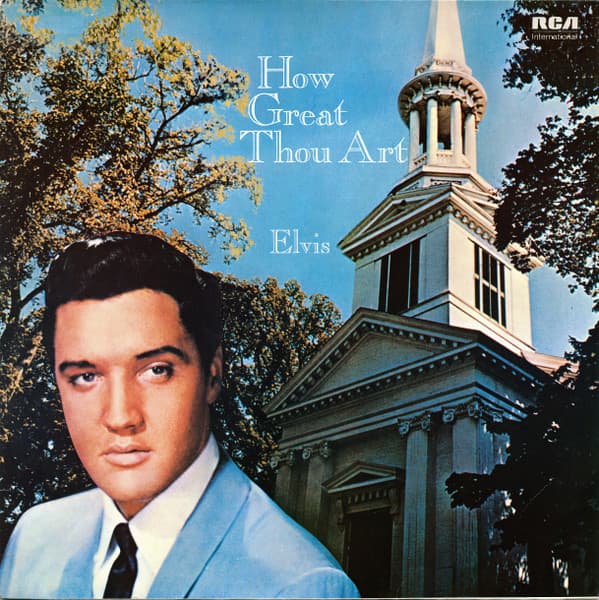
“How Great Thou Art” — a reverent hymn that restored a soul and opened a new chapter for Elvis
When you hear “How Great Thou Art”, you feel the stirring of something sacred — a humble awe at beauty, faith, and the infinite, captured in a voice that seems to reach beyond time.
When How Great Thou Art by Elvis Presley was released in February 1967 as the title track of the gospel album How Great Thou Art, it marked one of the most significant turning points in Elvis’s mid-career. The album climbed to #18 on the U.S. Billboard Top Pop Albums chart. Recognized by both public embrace and critical acclaim, it earned Elvis his first ever Grammy Award — Best Sacred Performance — at the 1967 Grammy Awards.
This was more than a commercial success. For Elvis, worn from years of movies, soundtracks, and shifting public taste, this album was a return to something deeply personal. The sessions for How Great Thou Art took place at RCA Studio B in Nashville between May 25 and May 28, 1966.After a stretch of soundtrack-driven albums, this was his first non-movie LP in years — a bold move, embracing the gospel roots that had shaped him long ago.
Listening now, the title track washes over you like a solemn hymn in an old church: the mingling of organ, soft rhythm, backing harmonies — the delicate touch of a chorus rising and falling like prayers. Elvis doesn’t shout. He doesn’t belt for show. His voice is hushed, reverent, almost trembling — a man laying bare his faith, his gratitude, his wonder. The lyrics of “How Great Thou Art,” themselves adapted from a Swedish hymn, speak of awe at creation — stars shining, thunder rolling, creation vast and humbling — and a soul’s humble adoration before it all.
The backstory adds weight. In the early 1960s, Elvis had already explored gospel with his album and recordings, but his film career and soundtrack obligations often overshadowed such intimate expressions. How Great Thou Art emerged almost as a declaration: that beneath the rhinestones and Hollywood lights, he remained a believer, a man who still felt the need for something larger than fame or charts. The record included both timeless spiritual standards and the earlier gospel hit “Crying in the Chapel” — itself a long-shelved recording from 1960, resurrected by the unexpected public response in 1965.
That blend of faith, vulnerability, and musical restraint resonated deeply — not just with his longtime fans, but with listeners who might never have expected to hear Elvis singing something so sincere, so personal. The album’s success proved that his voice could still move people in quiet rooms, not just dance halls. Over time, How Great Thou Art achieved multiplatinum status, and it remains one of the most beloved gospel collections in his catalogue.
But the true meaning of “How Great Thou Art” goes beyond sales and awards. It’s a song that invites reflection. For someone closed their eyes listening in a dim living room, it might awaken memories of simpler days — faith, lost hopes, gratitude, quiet prayers in the stillness of night. For another, the voice might stir long-buried longing or sorrow, offering comfort in solemn chords and whispered devotion. Under Elvis’s voice, the hymn becomes a bridge between this world and something greater: the vastness of nature, the mystery of existence, the tremble of a heart seeing beyond itself.
In the arc of Elvis’s life and career, “How Great Thou Art” stands out as proof that stardom need not mean forgetting one’s roots. It shows a man willing to step away from flash and spectacle to lay bare sincerity. It reminds us — decades later — that music need not always seek applause. Sometimes it just needs to breathe, to whisper, to lift the soul. And for all who listen with open hearts, in those moments of quiet awe, the world still feels wondrously, painfully, beautifully great.