
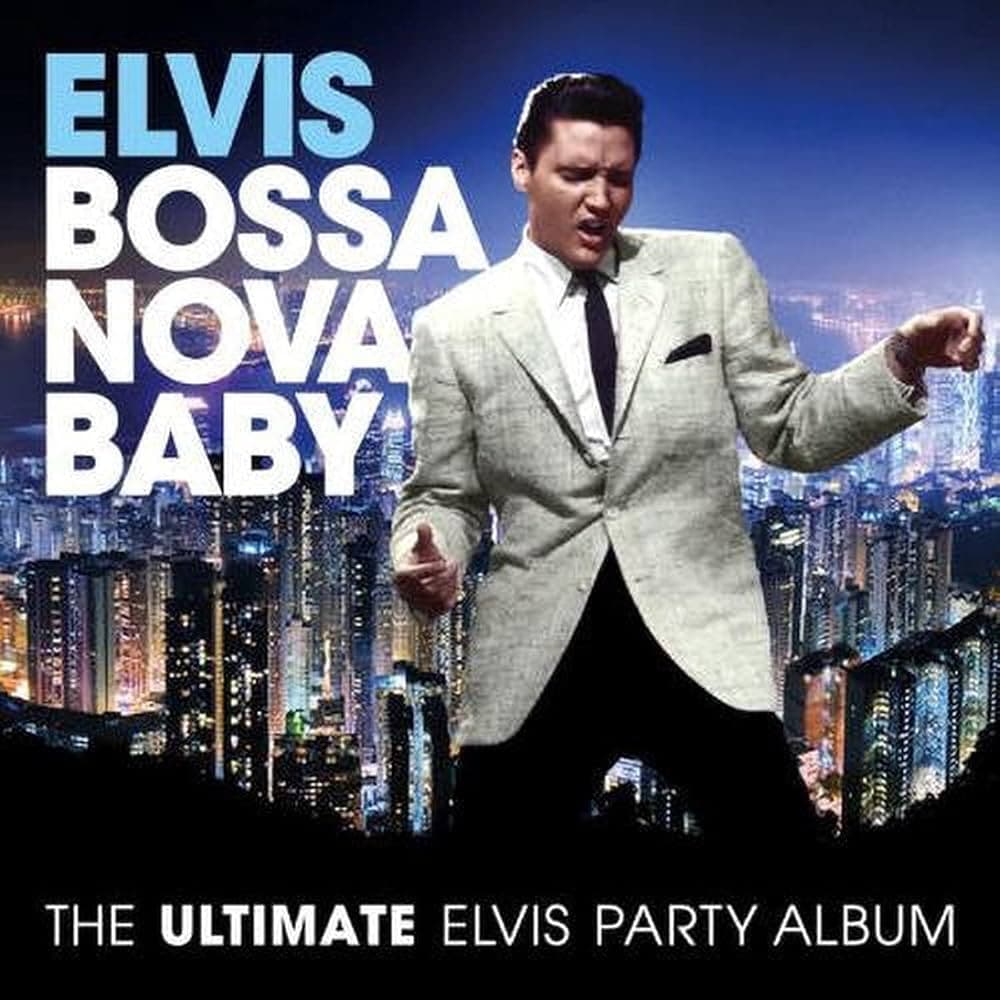
“Bossa Nova Baby” — when Elvis turned beach-bound rhythms into a playful rock & roll snap that still makes you tap your feet
From the first bright chords of Bossa Nova Baby, you sense movement — a sway of hips, the clink of a glass, the surge of youthful energy ready to run free.
At the top: Elvis Presley recorded “Bossa Nova Baby” on January 22, 1963 at Radio Recorders, Hollywood, as part of the soundtrack for the film Fun in Acapulco. The single was released on October 1, 1963, backed with “Witchcraft” on the B-side. Upon its release, “Bossa Nova Baby” soared up the charts, reaching #8 on the U.S. Billboard Hot 100 and also climbing to #20 on the U.S. R&B Singles chart that year. In the UK, the song peaked at #13 on the singles chart.
From those numbers alone, “Bossa Nova Baby” stands out not only as a hit — but as one of the more successful songs from Elvis’s 1960s film-era period. Yet beyond chart positions lies a story of rhythm, reinvention, and the curious blending of styles that marked the early 1960s.
The song was written by the celebrated duo Jerry Leiber and Mike Stoller — songwriters behind many early rock & roll and rhythm-and-blues classics. Originally, it had been offered to and recorded by a group called Tippie & the Clovers in 1962 — but that first version failed to find success. When Elvis accepted it for his movie soundtrack, effort was made to re-imagine it: instead of a samba-style Bossa nova, the track became a rocking, organ-inflected number with electric guitar, light percussion, and backing vocals — a lively hybrid that suited Elvis’s charm and the gaiety of a tropical-set film.
In the context of the film — light, breezy, escapist — the song works. On record, however, “Bossa Nova Baby” does more than serve as soundtrack filler: it captures a moment when popular music was open to mixing traditions, embracing Latin-tinged sounds, and yet stay firmly rooted in rock ’n’ roll’s pulse. That fusion is part of what gives the song its playful, slightly mischievous charm — a bit of beach-party lightness wrapped around a beat that invites dancing even today.
Elvis’s vocal on the track is confident and radiates carefree swagger. Backed by guitars, subtle percussion, and festive horns, he delivers the lines with a grin you can almost hear: “Hey, bossa nova baby / Keep on boppin’…” The song doesn’t dwell on heartbreak or longing; instead, it celebrates motion, youth, and a kind of spirited freedom. For lovers of old-school rock & roll and early ’60s pop, it remains a shining reminder that Elvis could still rock, even when tied to the conventions of movie songs.
Beyond music and charts, “Bossa Nova Baby” offers a snapshot of a shifting era — when rock stars dabbled in Latin rhythms, when movies and records overlapped in a booming entertainment industry, and when a voice like Elvis’s could carry both charm and energy over a worldwide audience. It stands among the songs that expand his catalogue beyond early-50s rockabilly or late-60s comeback specials: playful, unpretentious, and entirely of its time.
Listening now, decades later, you might close your eyes and recall living rooms turned into dance floors, jukeboxes spinning vinyl, or summer nights framed by neon glow and the buzz of possibility. “Bossa Nova Baby” becomes more than nostalgia — it becomes a vessel of memory. Its bouncy rhythm reminds us of youth, its spirited tone calls to the restless urge to dance, and its cheerful voice whispers that life, even in uncertain times, can still swing with hope.
That’s the quiet magic of Bossa Nova Baby: not a sorrow-drenched ballad, not a dramatic anthem, but a lighthearted hymn to joy — proof that even at the peak of Hollywood scripts and studio obligations, Elvis Presley never lost his rock ’n’ roll heart.