
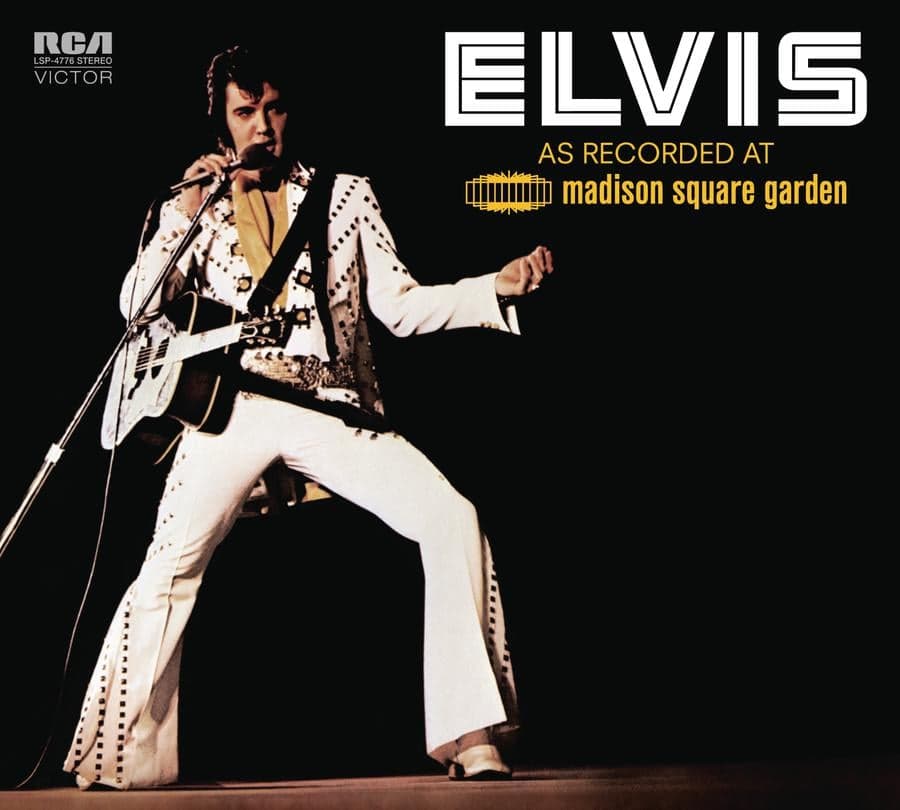
“An American Trilogy” — a sweeping, aching portrait of a nation through the heart of a man on stage
When you listen to An American Trilogy, performed by Elvis Presley, you feel more than music — you feel history stirring, longing and hope colliding, and a voice grappling with the weight of collective memory.
In April 1972, Elvis released his live recording of “An American Trilogy” — cut during his Las Vegas engagements — as a single by RCA Victor. It was an uneasy time: musical tastes were shifting, and Elvis’s career had weathered many storms. Yet with this medley, he offered something different: a grand, emotionally layered performance that spoke not just to fans of his rock ’n’ roll past, but to hearts longing for unity, memory, and reflection.
Chart-wise the song saw modest success in the United States: it peaked at #66 on the Billboard Hot 100 and rose to #31 on the Easy Listening chart. In the UK, however, it found a warmer reception, climbing to #8 on the Singles Chart, where it remained for about 11 weeks during the summer of 1972.
But to reduce “An American Trilogy” to chart numbers would be to miss what makes it timeless. The piece isn’t a traditional song — it’s a medley arranged by songwriter Mickey Newbury, combining three deeply meaningful 19th-century songs: Dixie, a folk anthem of the American South; The Battle Hymn of the Republic, the stirring Union march; and All My Trials, a sorrowful spiritual rooted in folk revival. In Newbury’s original 1971 version, the medley carried a wistful hope for reconciliation — a musical tapestry for healing a divided past.
When Elvis embraced it in early 1972, recording a live version at the Las Vegas Hilton on February 16, he reshaped the medley into something more powerful — a dramatic, emotional performance that became a staple in his shows. He enriched the arrangement: after “All My Trials,” the haunting flute revisits “Dixie,” then swells into a majestic, almost orchestral finish on “Battle Hymn of the Republic.”
There is grandeur in that structure — but also vulnerability. Elvis delivers each segment with a voice seasoned by years of triumph and hardship; his vocal trembles, softens, then roars back with conviction. Backed by a rich ensemble — guitars, piano, drums, backing vocals, and even orchestral touches — the medley becomes more than performance. It becomes prayer. It becomes confession. It becomes hope.
In a broader context, “An American Trilogy” came at a time when America was still grappling with its identity. Memories of conflict, division, and social upheaval hovered in the national consciousness. By weaving together songs from all sides — South and North, spiritual sorrow and patriotic fervor — the medley dared to imagine reconciliation, unity, healing. Elvis, a man reaching out across lines of race, region, and memory, stood under the spotlight and offered not bravado, but vulnerability.
For many listeners then — and today — the song evokes long drives under wide skies, old photographs, the ache of passing time, and the fragile hope that voices carried through music might bring light to darkness. The performance has since been enshrined in film: Elvis delivered it in his 1972 concert movie Elvis on Tour, and later included it in the landmark 1973 broadcast Aloha from Hawaii via Satellite, where it reached an even wider audience.
Listening now, decades later, “An American Trilogy” remains a bridge — between past and present, sorrow and hope, memory and redemption. The applause may have faded, the charts may no longer remember it, but the echo remains. Each chord pulls you back to smoky Vegas stages, rising flutes, and a voice that still dares to believe in unity, in faith, in something larger than fame.
If you close your eyes while the strings swell and the chorus rises — you might hear cicadas in Southern fields, footfalls in dusty streets, flags waving under wide blue skies. And you might feel, just for a moment, that history has let out a sigh.