
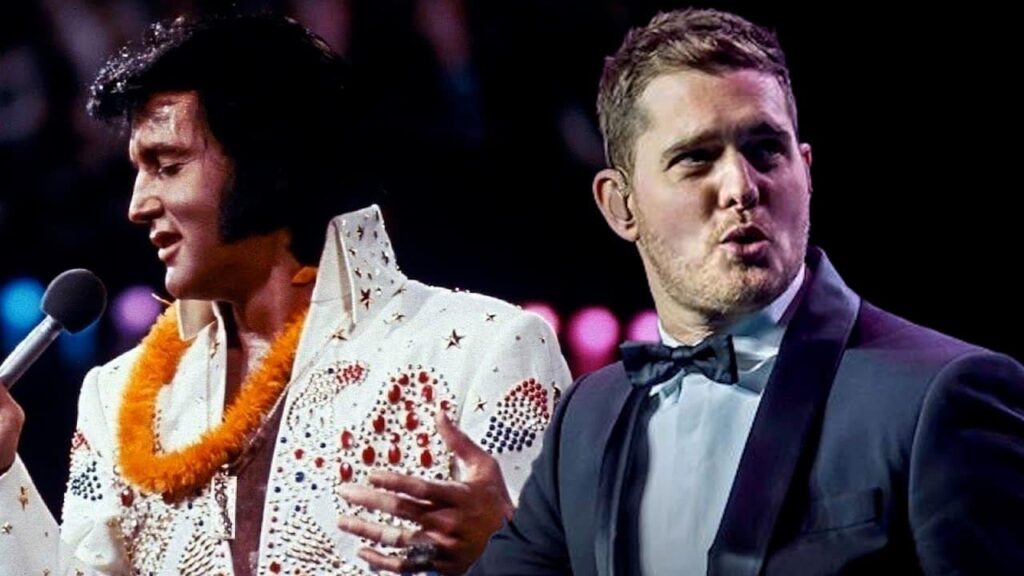
A soulful tribute that lets an old love song breathe again through a new voice
There is something deeply stirring about hearing Michael Bublé step into the hushed glow of a spotlight and breathe life into “One Night With You”, a song forever linked with Elvis Presley, yet born much earlier from the smoky world of mid-1950s rhythm and blues. Long before Bublé ever crooned its opening plea, the song existed as “One Night of Sin”, penned by Dave Bartholomew and Pearl King and recorded in 1956 by Smiley Lewis a version that climbed to No. 11 on the U.S. R&B chart. But it was Elvis, with his instinctive sense of what hearts were ready to hear, who reshaped the song into something gentler, something longing rather than suggestive, something the world would embrace. When his revised rendition, titled simply “One Night”, was released in 1958, it soared to No. 4 on the Billboard Hot 100 and claimed the No. 1 spot in the United Kingdom a testament to its intoxicating blend of innocence and desire.
Perhaps this is why the song continues to travel through generations, finding new breath in Bublé’s warm, velvety tone. For him, covering an Elvis classic is never a mere exercise in nostalgia; it is an act of reverence. When Bublé performs “One Night With You” on stage, guitar strapped across his chest, there is an unspoken dialogue happening a quiet conversation between eras, between the raw electricity of early rock ’n’ roll and the elegant phrasing of a modern crooner raised on the music of giants. His voice doesn’t imitate; it honors. And in doing so, the song softens, gaining a reflective tenderness that feels made for those who lived through the golden years of vinyl, jukeboxes, and late-night radio whispers.
What gives the song its enduring pull is its simplicity that pure, vulnerable plea for just one night, one moment of closeness that might mend what life has frayed. Elvis’s rewrite, gentle but aching, turned a confession of sin into a confession of longing. And longing, unlike scandal, never ages. It follows us through life: through first loves that vanished too quickly, through the quiet ache of distance, through memories of nights lit by hopes that felt almost too fragile to name. When Bublé sings it, the yearning becomes softer, more reflective, as though he’s inviting listeners not just to remember the past but to sit with it for a while, to let those old emotions rise like the scent of an old record sleeve when it’s pulled from its cover after many decades.
There is a special kind of magic in songs like this songs that refuse to grow old, songs that carry the fingerprints of every artist who has touched them. “One Night With You” has traveled from blues clubs to Hollywood studios to packed arenas in our own era, and through that journey, it has remained a quiet, persistent reminder of how deeply human it is to want just one more night with someone dear. And when Michael Bublé lends his voice to it, he doesn’t just sing an Elvis classic; he invites us to revisit our own treasured memories, to feel again the sweetness of longing, and to remember that some emotions — no matter how many years pass remain beautifully unchanged.