
Freedom Measured in Miles: The Restless Spirit of the American Wanderer
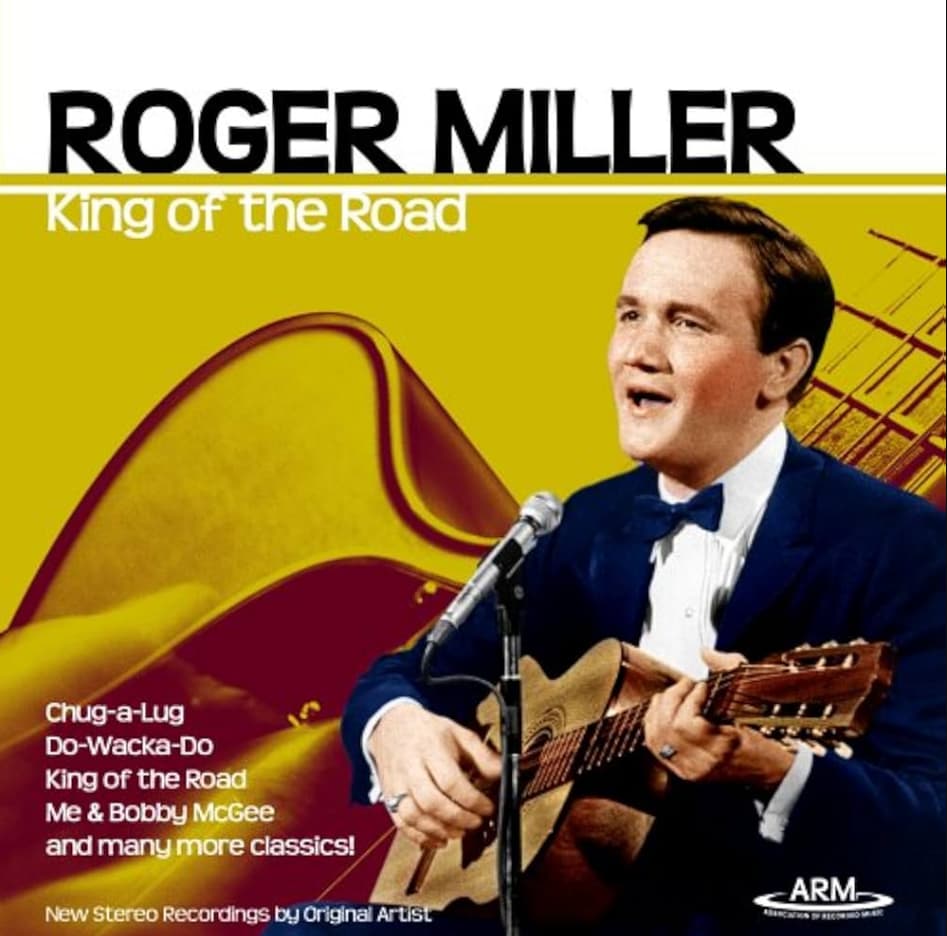
When Roger Miller released “King of the Road” in 1964, it quickly became more than a hit—it became an anthem for every soul who ever felt the tug of the open road. Issued as a single from his album “The Return of Roger Miller,” the song soared to No. 4 on the Billboard Hot 100 and claimed the No. 1 spot on both the Country and Easy Listening charts. It also crossed the Atlantic, topping charts in the UK, an extraordinary feat for a country-inflected tune in that era. With this one track, Miller—already admired in Nashville for his songwriting wit—cemented his place in popular culture as both a troubadour and a philosopher of everyday freedom.
At first listen, “King of the Road” feels deceptively simple: a jaunty rhythm, a whistled refrain, and Miller’s easygoing baritone sketching the life of a drifter who owns little but his independence. Yet beneath its breezy veneer lies a poignant meditation on dignity, self-sufficiency, and the peculiar poetry of having nothing left to lose. The narrator is not destitute in spirit; rather, he is liberated by the absence of possessions. His world is one of boxcars and cheap lodging—spaces that most would see as marginal—but Miller reimagines them as emblems of autonomy. In doing so, he transformed poverty into a kind of spiritual wealth.
The genius of Miller’s composition rests in this duality: its humor and humility coexist with a quiet defiance. The arrangement mirrors this balance—its lilting bassline and finger-snapping tempo evoke motion without haste, while the subtle brass accents lend an almost cinematic sweep to what is otherwise an intimate confession. Every note feels like it’s rolling down a long stretch of highway, framed by telephone poles flickering past in rhythm with the beat. It’s music that moves even when standing still.
Miller’s own biography colors the song’s resonance. Born in Depression-era Oklahoma and raised amid hardship, he knew firsthand what it meant to dream beyond scarcity. His songwriting often carried traces of melancholy wrapped in wit, but “King of the Road” distilled that tension perfectly—turning hobo imagery into universal metaphor. This wasn’t merely a story about a man without means; it was about anyone who measures life not by possessions but by horizons.
Decades later, “King of the Road” endures as both time capsule and timeless reflection—a reminder that freedom has many disguises. In an age obsessed with acquisition, Miller’s kingly vagabond still reigns supreme, guiding us back to the open road where identity is unburdened and contentment costs only a song.