
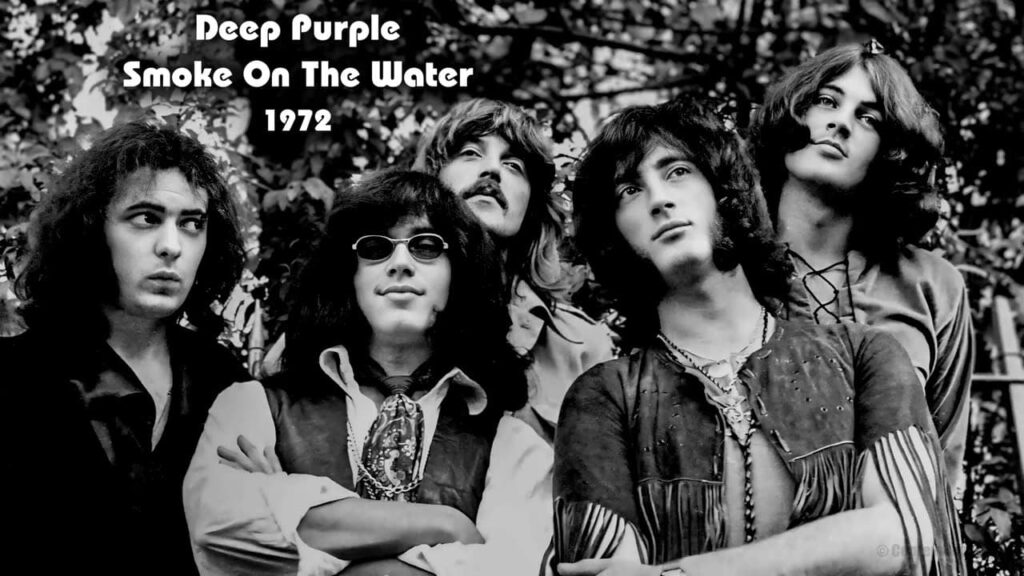
Deep Purple Turns Disaster into One of Rock’s Most Recognizable Songs
In the history of rock music, few songs are as instantly recognizable as Smoke on the Water by Deep Purple. Released in 1972 as part of the album Machine Head, the track stands as a defining moment not only for the band but for the evolution of hard rock.
Written collectively by band members including Ritchie Blackmore, Ian Gillan, Roger Glover, Jon Lord, and Ian Paice, the song is rooted in a real event. On December 4, 1971, a fire broke out at the Montreux Casino during a concert by Frank Zappa and The Mothers of Invention. The incident forced an evacuation and destroyed the venue, where Deep Purple had planned to record.
The band relocated to nearby spaces in Montreux, eventually continuing their work under challenging conditions. The experience directly inspired the lyrics of Smoke on the Water, which recount the scene with notable clarity. References to smoke drifting over Lake Geneva and the disruption of the recording process provide a rare example of a rock song functioning as a straightforward documentary narrative.
Musically, the track is anchored by Ritchie Blackmore’s guitar riff, widely regarded as one of the most iconic in rock history. Its simplicity and structure have made it a foundational piece for generations of guitarists. The riff’s enduring appeal lies in its clarity and repetition, offering both accessibility and power.
Upon release, the song achieved significant commercial success, reaching high positions on international charts, including strong performance in the United States. More importantly, it became a staple of live performances. In concert settings, Deep Purple consistently used the track as a centerpiece, allowing audiences to immediately connect through its familiar opening notes.
The broader significance of Smoke on the Water extends beyond chart rankings. It illustrates how a moment of disruption can be transformed into lasting cultural output. Rather than halting production, the band adapted and documented their experience through music. This practical response contributed to the authenticity that continues to resonate with listeners.
Today, the song remains a core part of rock music heritage. It is frequently cited in discussions of essential guitar works and continues to appear in performances, recordings, and educational contexts. Through its combination of real world narrative and enduring musical structure, Smoke on the Water stands as a lasting testament to the creative resilience of Deep Purple.