
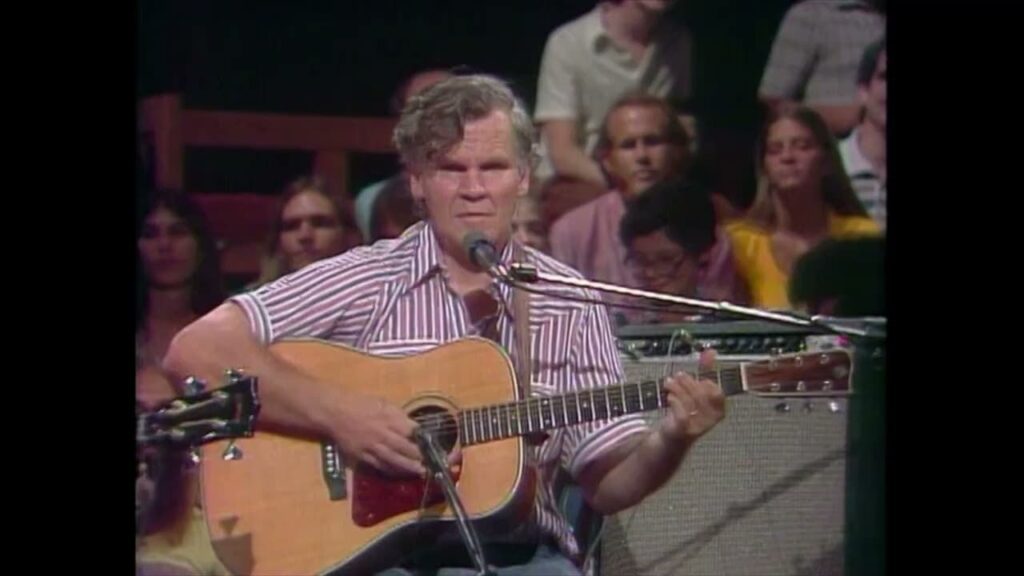
Doc Watson and “Sweet Georgia Brown”: When the “Flat” Legend Transforms into a Jazz Wizard
In the world of folk and bluegrass music, Doc Watson’s name is revered as a saint of flatpicking technique. However, the valuable archive of “Rare Performances – 1963-1981” has revealed an astonishing and transformative side of him, particularly through his classic performance of “Sweet Georgia Brown.”
This standard jazz piece is known for its fast tempos and intricate chord changes, usually reserved for large orchestras or Gypsy Jazz electric guitarists. But under the skillful hands of a blind artist from the mountains of North Carolina, “Sweet Georgia Brown” has been spectacularly “localized” on the acoustic guitar. Doc Watson wasn’t just playing music; he was embarking on a journey across genres, where the precision of bluegrass met the free-spirited soul of jazz.
The appeal of the “Rare Performances” compilation lies in its timeless authenticity. The period from 1963 to 1981 was the peak of Doc Watson’s career. Listeners can clearly feel the sharpness in each note of pieces like “Black Mountain Rag” or “Deep River Blues,” but it is in “Sweet Georgia Brown” that Doc truly showcases his groundbreaking musical vision. His ability to maintain a solid bass line while seamlessly transitioning through incredibly fast and smooth runs makes listeners wonder: Are two people playing the instrument at once?
Alongside narrative ballads like “Tom Dooley” or “St. James Hospital,” the inclusion of Jazz and Swing arrangements in this list demonstrates Doc Watson’s versatility. He proves that music knows no boundaries – a folk musician can conquer even the most complex urban melodies with sincerity and masterful technique.
For guitar lovers and readers who appreciate original artistic values, these rare film clips are more than just entertainment. They are a living legacy, a reminder that the pinnacle of music lies in absolute freedom on the six strings, where a blind man can see the world through his notes.