
Outlaws and Echoes A Haunting Live Performance That Defined Early Eagles
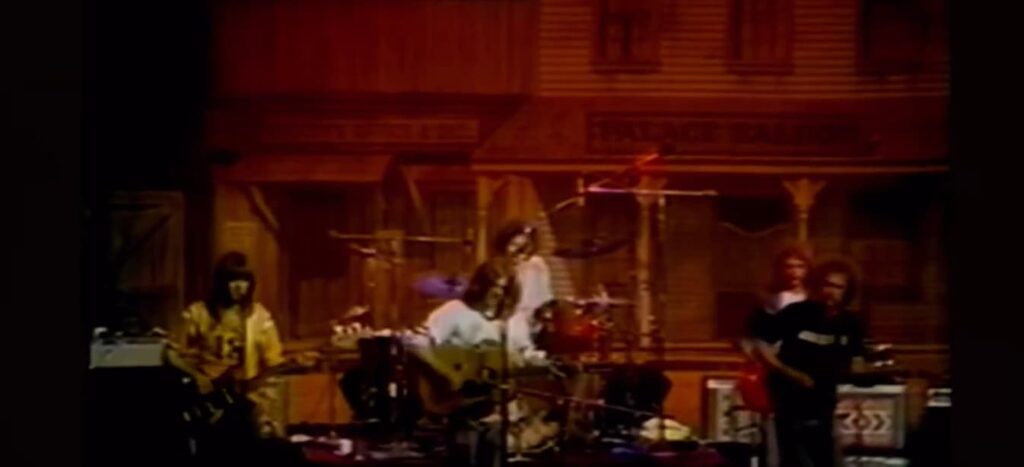
In 1974, Eagles delivered a striking live performance that continues to captivate audiences decades later, blending Doolin Dalton with a reprise of Desperado into a seamless and emotionally charged narrative. Far from a simple concert segment, the performance unfolds like a condensed cinematic story, reflecting the band’s early ambition to merge music with storytelling.
At its core, the piece explores the myth of the outlaw, a recurring symbol in American culture. Doolin Dalton introduces listeners to a world of bandits and fugitives, inspired by real figures from the Old West. Yet as the music transitions into Desperado, the focus shifts inward. The outlaw becomes less a historical character and more a psychological portrait of isolation. This duality gives the performance a lasting emotional weight, transforming it from a tale of rebellion into a meditation on loneliness and the human cost of absolute freedom.
What makes this 1974 rendition particularly compelling is its timing. The Eagles were still in the early stages of their career, having recently released their Desperado album. They had not yet reached the global superstardom that would later define them. This moment captures the band in a raw and transitional phase, where artistic exploration took precedence over commercial polish. The result is a sound that feels immediate, unfiltered, and deeply authentic.
The structure of the performance further elevates its impact. By pairing Doolin Dalton with the Desperado reprise, the band creates a circular narrative. The story begins with action and legend, then closes with reflection and inevitability. It suggests a cycle that cannot be escaped, reinforcing the idea that the outlaw’s path leads not to freedom, but to solitude. This narrative cohesion is rarely achieved so effectively in live music, making the performance stand out even within the Eagles’ extensive catalog.
Equally notable is the atmosphere of the live setting. Without elaborate staging or visual spectacle, the focus remains on the interplay of voices and instruments. The band’s signature harmonies carry a sense of tension and melancholy, while the instrumentation evokes the wide, empty landscapes of the American West. This simplicity enhances the storytelling, allowing the audience to fully engage with the emotional arc.
For modern viewers, the performance offers multiple layers of appeal. It serves as a historical snapshot of a band on the verge of greatness, a masterclass in musical storytelling, and a reflection on themes that remain universally relevant. The tension between independence and connection, freedom and loneliness, continues to resonate across generations.