
A Song of Quiet Devotion, Where Love Lives Not in Possession but in Gentle Memory
When Elvis Presley recorded “Gentle on My Mind,” he approached the song not as a dramatic declaration of love, but as a meditation soft, reflective, and profoundly human. In doing so, Elvis revealed a side of his artistry that was often overshadowed by spectacle: a singer capable of restraint, emotional intelligence, and deep interpretive grace.
The song was written by John Hartford in 1966, a composition born from simplicity and freedom. Hartford’s original recording reached No. 39 on the Billboard Hot 100 and No. 6 on the Hot Country Singles chart, but it was the song’s philosophical core its rejection of ownership in love that made it timeless. The song quickly attracted artists from across genres, including Glen Campbell, whose 1967 version famously climbed to No. 30 on the Billboard Hot 100 and won multiple Grammy Awards.
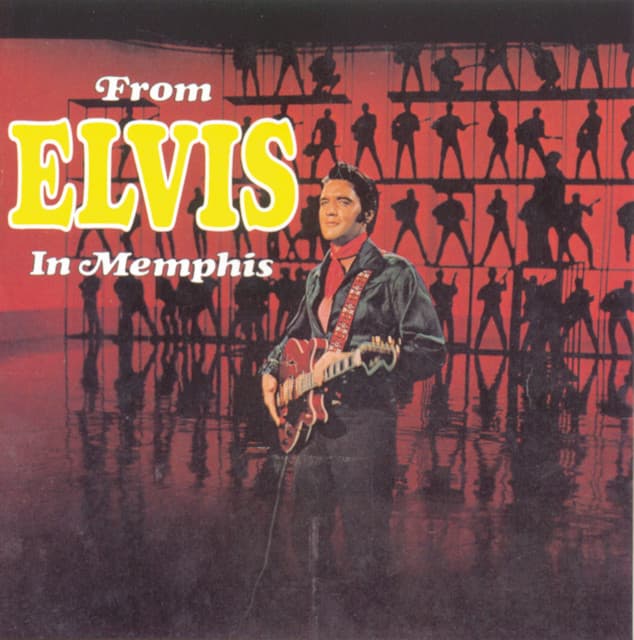
Elvis Presley recorded “Gentle on My Mind” in 1968, during a crucial period of artistic reawakening. The track was released on the album From Elvis in Memphis (1969), a record widely regarded as one of the most important works of his entire career. The album itself reached No. 13 on the Billboard Top LPs chart and marked Elvis’s full return to contemporary relevance after years focused on film soundtracks.
Although “Gentle on My Mind” was not released as a single from the album and therefore did not chart independently, its placement within From Elvis in Memphis is significant. This album represented Elvis stepping back into the emotional and musical currents of modern songwriting, embracing material that spoke honestly about adulthood, vulnerability, and complexity.
What makes Elvis’s version remarkable is his emotional posture. Where other interpretations emphasize movement and wanderlust, Elvis emphasizes reflection. His voice is warm, controlled, and slightly weary carrying the weight of someone who understands that love does not always arrive with permanence or certainty. He sings not as a man trying to hold on, but as one who has learned to let go without bitterness.
The lyrics of “Gentle on My Mind” challenge traditional ideas of romantic commitment. There are no chains, no promises, no demands. Instead, there is memory, respect, and quiet affection. “I don’t cling to her like a brother would his sister.” In Elvis’s hands, this line does not sound distant or cold. It sounds honest. Love, here, is defined not by proximity but by presence of thought.
Musically, the arrangement is understated. Acoustic guitar leads the way, supported by subtle rhythm and light instrumentation that never intrudes on the vocal. This restraint allows Elvis’s phrasing to shine. He lingers on certain words, softens others, and lets silence speak when necessary. The result is an interpretation that feels conversational rather than performative.
This recording also reflects Elvis’s personal and artistic maturity during the late 1960s. Having returned triumphantly with his 1968 NBC “Comeback Special,” Elvis was searching for songs that reflected depth rather than novelty. “Gentle on My Mind” fit that need perfectly. It offered no dramatic climax, no grand payoff only truth.
The deeper meaning of Elvis’s rendition lies in its acceptance of emotional impermanence. Love does not have to be constant to be real. It can exist quietly, living in thought and memory, untouched by distance or time. That idea, delivered with Elvis’s unmistakable warmth, gives the song its lasting resonance.
Within Elvis’s vast catalog, “Gentle on My Mind” stands as a moment of calm wisdom. It is not about youth or rebellion, nor about heartbreak or excess. It is about understanding about recognizing that some connections endure not because they are held tightly, but because they are remembered kindly.
Decades later, this performance still feels intimate. It does not ask for attention. It simply invites listening. And in that invitation, Elvis Presley reminds us that the most powerful emotions are often the quietest ones carried gently, thoughtfully, and forever close to the mind.