
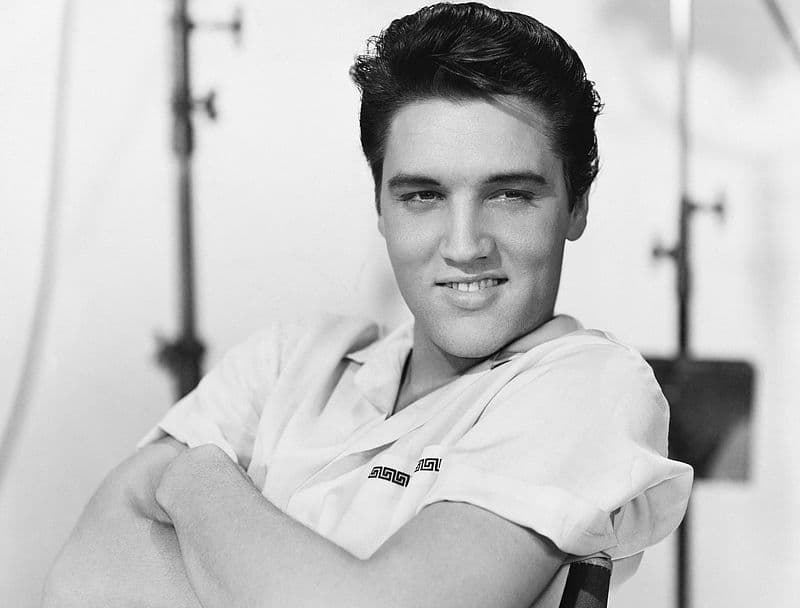
A neon‑lit celebration of escape, chance, and the restless pulse of the night “Viva Las Vegas” by Elvis Presley
“Viva Las Vegas” is a bright, exhilarating anthem to freedom, risk, and the electric allure of possibility an invitation to dive headfirst into that world where dreams meet neon and the dice always roll again.
When Viva Las Vegas was released as a single on April 28, 1964, by Elvis Presley, it carried with it the swagger and shimmer of the film of the same name. On America’s main mainstream chart, the song reached No. 29 on the Billboard Hot 100. In the United Kingdom, it climbed to No. 17 on the UK Singles Chart upon its original release. On other charts, such as in Canada, it fared better reaching No. 14.
The origins of the song are rooted in the 1964 MGM musical‑comedy film also titled Viva Las Vegas, starring Elvis and Ann‑Margret. It was written by songwriters Doc Pomus and Mort Shuman, crafted to reflect the high‑voltage energy, the glamour, and the neon‑blurred nights of Las Vegas. Elvis recorded the track on July 10, 1963, at Radio Recorders in Hollywood, with a full studio band guitars, piano, saxophones, brass, drums and backing vocals from The Jordanaires giving the song its brassy, celebratory tone.
From the very first chords, “Viva Las Vegas” pulses with movement and expectation. The tempo brisk, energized matches the vision of endless lights, slot machines, roulette wheels, and cigarette‑smoke‑tinged rooms. According to music‑analysis data, the song moves at about 144 beats per minute in the key of G major bright, bold, and easy to dance or drive to.
Lyrically, the song captures a spirit of abandon and hope. With lines like “Bright light city gonna set my soul, gonna set my soul on fire” the narrator is seduced not just by the city’s glitter, but by the promise of escape a chance to lose yesterday’s burdens under Vegas’s neon sky. The vibe is one of exhilaration: the gamble of love, of chance, of maybe winning big or losing it all, but feeling alive enough for the ride.
Interestingly, though today “Viva Las Vegas” is inseparable from the city’s image and nightlife culture, that wasn’t always obvious. Upon release, the single was modestly successful but not a runaway smash compared to some of Presley’s earlier hits. Yet over time, it grew into a kind of unofficial anthem a song that evokes not just a place, but a mood: shimmering nights, bold lights, and that restless human longing for more. Indeed, in recent decades the track has come to be regarded as emblematic of Las Vegas itself, often used in media, films, and even as a victory theme for sports teams based there.
In the context of Elvis’s career, “Viva Las Vegas” represents an important fusion point where his rock‑and‑roll roots met cinematic showmanship, big‑band energy, and a broader pop sensibility. It shows him able to channel the spirit of his generation’s wanderlust and optimism, while still keeping the raw charisma that made him “the King.” The film and its music captured a moment in the 1960s when America was dreaming big again of money, travel, freedom, and the allure of reinvention.
For listeners with more years behind them, “Viva Las Vegas” can feel like a portal back to wide‑open roads, rebellious youth, neon‑lit motels after midnight, or that first heady trip to a city that promised chance and excitement. It’s a song that doesn’t lean on melancholy or nostalgia; instead, it offers a kind of hopeful daring: maybe everything will change tonight, maybe we’ll roll the dice, maybe we’ll win or maybe we’ll just dance under the lights, and that’ll be enough. In the end, Elvis Presley’s “Viva Las Vegas” remains timeless a vibrant hymn to risk, release, and the bright‑eyed faith that sometimes, just sometimes, you get exactly what you’re chasing when you swing open the doors and step into the glow of possibility