
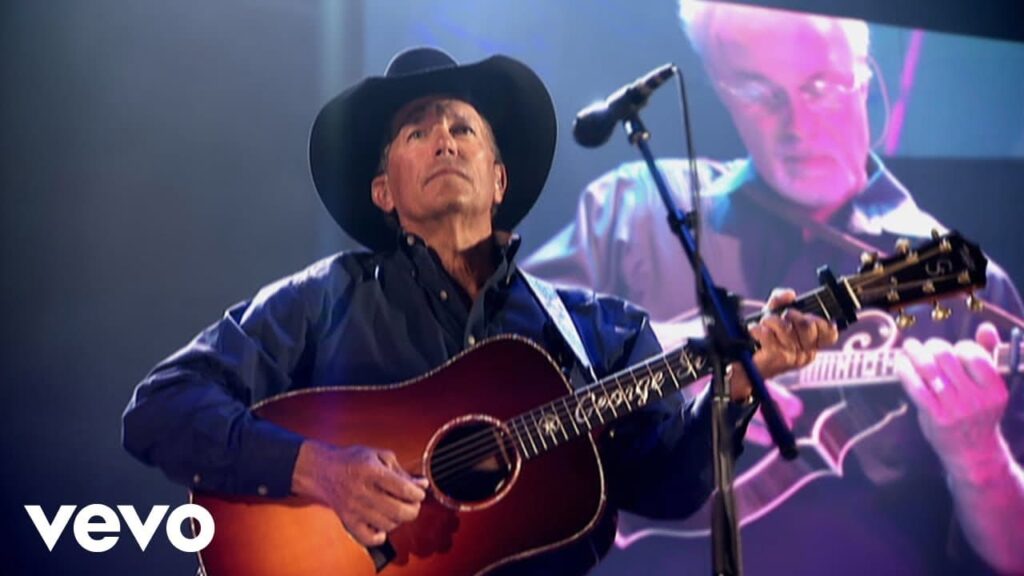
A shadow-draped portrait of grief and endurance, where the “King of Country” transforms the dark hours of solitude into a masterclass of heartbreak.
There is a profound, almost sacred gravity that takes hold when a true elder statesman of country music turns his gaze toward the silent, heavy hours after the sun goes down. When George Strait released “Living for the Night” in the summer of 2009 as the lead single for his 26th studio album, Twang, under MCA Nashville, he delivered an immediate classic. Written by Strait alongside his son Bubba Strait and long-time hitmaker Dean Dillon, the track marked a monumental milestone: it was the very first single of his legendary career that George Strait co-wrote himself. The response was swift and overwhelming; it debuted at number 26 on the Billboard Hot Country Songs chart—the highest debut of his entire storied career at the time—before soaring into the Top 5, cementing his unshakeable reign as the undisputed “King of Country Music.” The accompanying official music video, preserved by MCA Nashville, captured the stark, live elegance that has defined his career for decades.
The narrative woven into “Living for the Night” is a raw, unvarnished exploration of a man navigating the crushing weight of loss and heartache. Rather than seeking dramatic closure, the protagonist admits to a heartbreaking daily routine: dragging himself through the daylight hours in a haze of quiet numbness, surviving solely for the cover of darkness where he can lose himself in whiskey, neon lights, and bitter memories. When producer Tony Brown arranged the track, he surrounded Strait’s iconic voice with traditional country textures—a slow, weeping pedal steel guitar, a subtle bassline, and a haunting fiddle that echoes like a lonesome cry across an empty barroom.
What makes George Strait’s performance so profoundly arresting is his trademark restraint and effortless vocal authority. Known throughout his career for avoiding flashy stage antics or exaggerated vocal dramatics, Strait delivers every line with a quiet, conversational intimacy. His rich, warm baritone carries the weary wisdom of a man who understands that some heartbreaks cannot be rushed or easily healed. When he steps up to the microphone in the 2009 video, bathed in subtle stage lighting, there is no pretense—only the pure, unadorned truth of a master balladeer laying his soul bare.
Decades after its debut, listening to “Living for the Night” feels like stepping into a rain-slicked neon sanctuary at closing time. It effortlessly conjures the low amber glow of a quiet jukebox, the soft clink of ice in a glass, and the timeless realization that music remains our greatest companion when the world goes dark. Through this haunting 2009 masterpiece, George Strait left behind an eternal haven for anyone who has ever had to face the night alone.
 Oldies Songs