
“Inside the Mind of a Guitar Legend: Jimmy Page on Creativity, Led Zeppelin, and the Future”
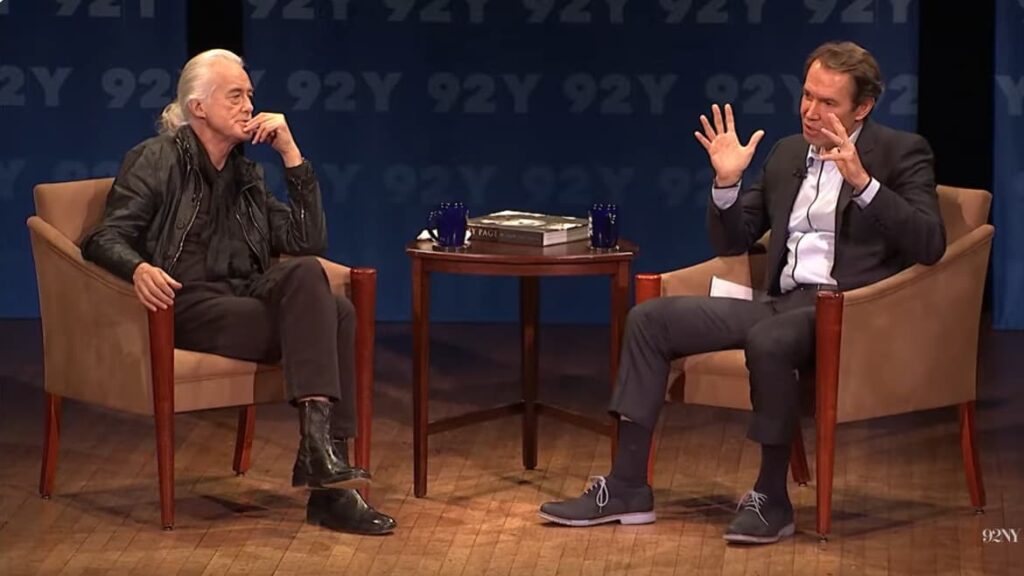
A rare onstage conversation at the 92nd Street Y in New York offered an intimate look into the life and creative philosophy of Jimmy Page, one of rock music’s most influential figures. Interviewed by Jeff Koons, Page spoke candidly about his early beginnings, artistic instincts, and the enduring legacy of Led Zeppelin.
The event, recorded in November 2014, unfolded less like a formal interview and more like a reflective dialogue. Page traced his musical roots back to childhood, recalling how American rock and roll and skiffle music shaped his ambitions. He described himself as a shy and introspective teenager, yet deeply driven, often arriving early to choir practice with a guitar in hand, experimenting with tuning and sound. This quiet determination would later define his meticulous approach to music.
Page’s rise as a sought after session musician in London marked a crucial chapter in his career. Despite initially lacking formal music reading skills, he developed a reputation for creativity and reliability. Producers often trusted him to improvise, a freedom that helped him refine a distinctive style blending blues, folk, and global influences. This period, as he described, functioned as an “apprenticeship,” preparing him for greater artistic control.
That control became fully realized with the formation of Led Zeppelin in 1968. Page emphasized his vision for the band as a collective force where each member’s individuality contributed to a unified sound. Rather than conforming to commercial trends, the group focused on expansive compositions and dynamic live performances. He highlighted how their music relied heavily on real time energy and improvisation, creating a unique connection with audiences.
The discussion also revealed insights into Page’s creative process. He explained that most ideas began with the guitar, evolving organically through experimentation. Influences ranged widely, from Chicago blues to Indian and Arabic music, resulting in a hybrid sound that challenged conventional rock structures. This openness to diverse traditions became a defining feature of Led Zeppelin’s work.
Beyond technical mastery, Page reflected on the emotional dimension of performance. He described concerts as an exchange of energy between band and audience, where spontaneity played a vital role. Each show, he noted, was intentionally different, reinforcing the authenticity of live music.
While the conversation focused largely on his past, Page also addressed the future of music. He expressed concern over overly digital production methods, emphasizing the importance of genuine performance. Still, he remains curious and engaged, frequently attending live shows to observe emerging artists.
In revisiting his journey, Jimmy Page offered more than nostalgia. He presented a thoughtful perspective on creativity, discipline, and artistic integrity qualities that continue to influence generations of musicians worldwide.