
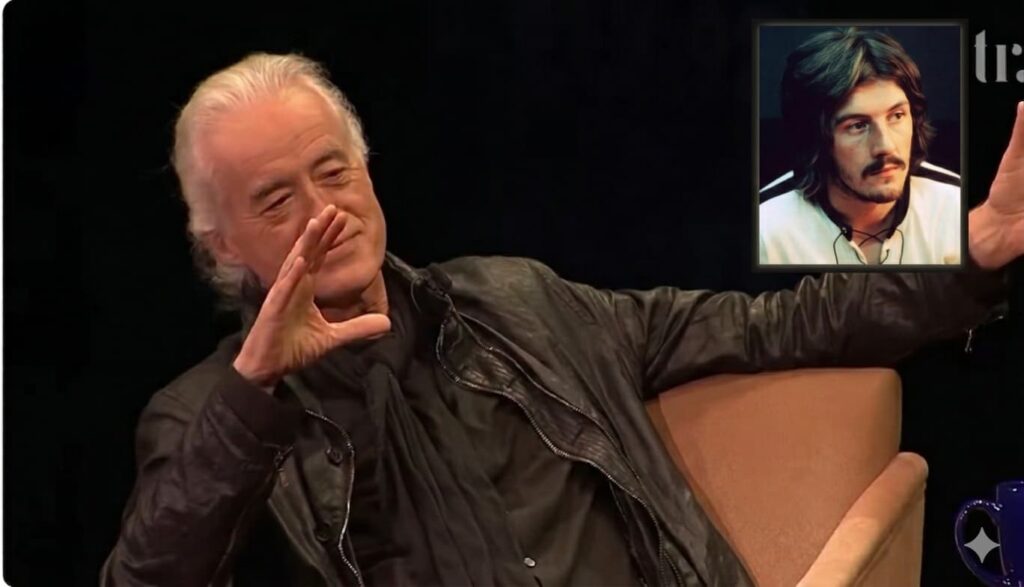
Jimmy Page Reflects on Loss, Silence, and the Limits of Reunion, Led Zeppelin After Bonham, Memory Without Replacement
In a candid and deeply reflective interview, Jimmy Page offers one of his most honest accounts of the rise and abrupt end of Led Zeppelin, focusing on the irreplaceable role of drummer John Bonham and the emotional aftermath of his death in 1980.
Page describes Bonham not simply as a bandmate but as a defining force within the group’s identity. He emphasizes that Led Zeppelin was built on a rare chemistry between four equal musicians, a dynamic he believes could never be replicated. When Bonham died, the decision to disband was immediate and resolute. Continuing without him, Page suggests, would have compromised the integrity of everything the band represented.
The guitarist recalls a period of personal withdrawal following the tragedy. For a time, he stopped playing guitar altogether, unable to separate the instrument from the loss he had experienced. This silence marked a stark contrast to the relentless energy that had defined Led Zeppelin’s years of global success, when the band’s performances drew massive crowds and reshaped the scale of live rock concerts.
Despite the enduring demand for a reunion, Page speaks openly about the difficulties that followed. Attempts to regroup over the years were inconsistent and often unsuccessful. He points in particular to the 1985 Live Aid performance, which he describes as deeply flawed due to lack of rehearsal and coordination. For Page, the experience underscored how far the band had drifted from its original cohesion.
There were, however, moments that hinted at what once was. The 2007 O2 Arena concert, later released as Celebration Day, stands out as a rare instance where preparation and shared intent allowed the remaining members to reconnect musically. Even then, Page frames it as a respectful tribute rather than a true revival.
A recurring theme in his reflections is the tension between public expectation and artistic reality. While all surviving members have, at times, performed Led Zeppelin material in their solo careers, a full scale reunion has remained elusive. Page acknowledges both the strong audience demand and the internal differences, particularly with Robert Plant, whose artistic direction has often diverged from reunion efforts.
Ultimately, Page presents Led Zeppelin not as a brand that can be revived at will, but as a unique moment in musical history. The band’s legacy, he argues, lies in its originality, its intensity, and the unrepeatable connection between its members. In his view, that legacy is best preserved not by repetition, but by recognition of what made it extraordinary in the first place.