
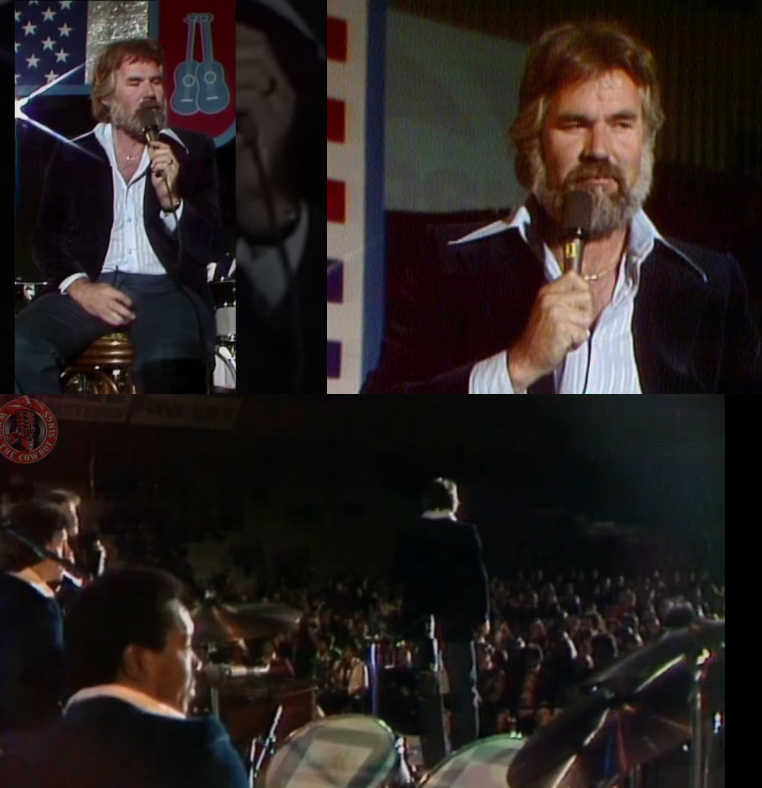
A haunting portrait of sacrifice and silent heartbreak, delivered with the rugged empathy of a master storyteller at the peak of his powers.
When Kenny Rogers performed “Ruby, Don’t Take Your Love to Town” in 1978, he was revisiting a song that had already become a foundational pillar of his career. Originally released in 1969 with his group The First Edition, the track reached No. 6 on the Billboard Hot 100 and became a massive international hit. By the late seventies, however, Rogers had transitioned into his solo “superstar” era. Hearing him perform this narrative in 1978 was a different experience; his voice had gained a deeper, more resonant texture, adding a layer of seasoned gravity to a story that remains one of the most provocative and emotionally complex in the American songbook.
Written by the prolific Mel Tillis, the song tells the agonizing story of a paralyzed veteran returning home from a “crazy Asian war”—a transparent reference to the Vietnam conflict that was still a raw, bleeding wound in the national consciousness. While many songs of the era focused on the politics of the battlefield, “Ruby” focused on the domestic tragedy that followed. The narrative of a man confined to his bed, watching his wife “paint her lips” and “roll her hair” to go out into the night, was a daring piece of songwriting. It didn’t offer a clean resolution; instead, it offered a window into the frustration, pride, and desperation of a soul trapped by circumstances beyond his control.
The story behind the song is as striking as its lyrics. Mel Tillis based the character of the soldier on a neighbor he knew in Florida, grounding the fiction in a stark, painful reality. When Kenny Rogers first recorded it, he chose a unique, mid-tempo arrangement with a driving drum beat that masked the darkness of the lyrics—a contrast that made the underlying pain even more haunting. By 1978, as he performed it for audiences who had lived through the societal shifts of the decade, the song had evolved into a tribute to resilience and a somber reflection on the hidden costs of duty.
For the mature listener, “Ruby, Don’t Take Your Love to Town” resonates with a profound sense of “what might have been.” It evokes memories of a time when the world was changing rapidly, and many were left trying to find their footing in a landscape they no longer recognized. There is a deep, philosophical weight in the line, “It’s hard to love a man whose legs are bent and paralyzed.” It speaks to the fundamental human fear of being forgotten or replaced, and the agonizing struggle to maintain one’s dignity when everything else has been stripped away.
Listening to this 1978 version today is a deeply nostalgic journey. It brings back the sights and sounds of a decade where music was a vessel for the complicated truths of our lives. Kenny Rogers didn’t just sing the song; he inhabited the character, his eyes conveying the silent plea that the lyrics could only hint at. It reminds us of a generation that understood the value of stoicism but also felt the quiet sting of abandonment. In the hush of the performance, we find a reflection of our own capacity for empathy and a timeless reminder that the most enduring stories are the ones that aren’t afraid to look into the shadows. It remains a masterpiece of narrative tension, anchored by a voice that felt like home.