
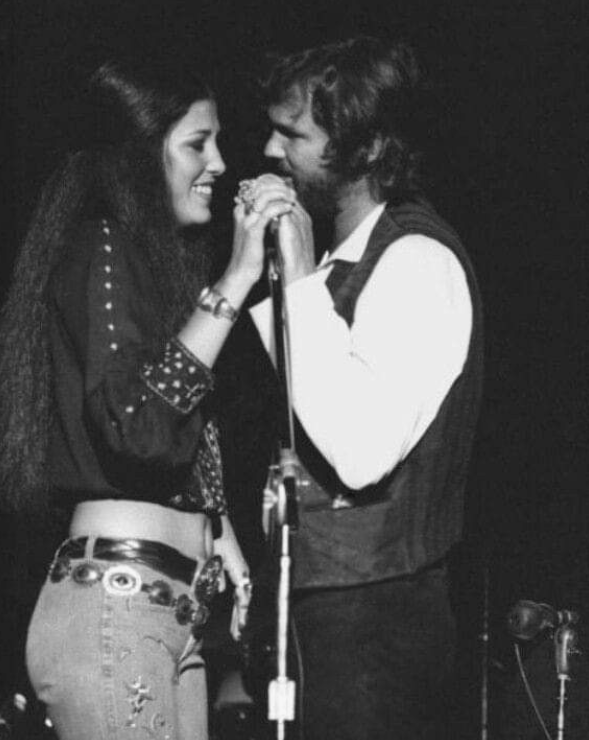
Kris Kristofferson and Rita Coolidge Deliver a Quietly Devastating Performan
In 1978, during a special appearance on The Johnny Cash Christmas Show, Kris Kristofferson and Rita Coolidge delivered a performance that remains one of the most emotionally resonant duets in country music history. Their rendition of Please Don’t Tell Me How the Story Ends was not just musically refined, but deeply personal, shaped by the reality of a relationship nearing its end.
Written by Kristofferson around 1970, the song had already established itself as a poetic meditation on love, uncertainty, and the fragile nature of human connection. Yet, when performed nearly a decade later alongside Coolidge, its meaning seemed to evolve. The lyrics, which speak of savoring fleeting moments and resisting the urge to foresee an inevitable ending, took on an added layer of poignancy given the couple’s impending divorce at the time.
What sets this performance apart is the authenticity conveyed through both voice and presence. Their harmonies are delicate yet precise, blending effortlessly in a way that reflects not just technical skill but shared history. There is a quiet intensity in their delivery. Subtle glances and restrained expressions suggest a mixture of lingering affection and emotional distance. It is this tension that gives the performance its enduring power.
The arrangement itself is understated, allowing the lyrical content and vocal interplay to take center stage. There are no grand gestures or dramatic flourishes. Instead, the focus remains on the emotional truth carried within each line. The simplicity enhances the sense of intimacy, drawing listeners into a moment that feels both deeply private and universally relatable.
Observers have often noted the visible emotion in their eyes during the performance. There is a sense of skepticism and sadness, yet it is tempered by a genuine warmth that hints at enduring respect and connection. This duality mirrors the central theme of the song, which balances hope with the acceptance of impermanence.
Over the years, Kristofferson continued to perform the song in his solo concerts, often placing it at the close of his shows. Its lasting presence in his repertoire underscores its personal significance and its resonance with audiences across generations.
More than four decades later, this 1978 performance stands as a rare and powerful intersection of life and art. It captures not only the beauty of a well crafted song but also the complexity of a relationship in transition. In doing so, it offers a timeless reminder that some of the most profound musical moments are those rooted in real human experience.