
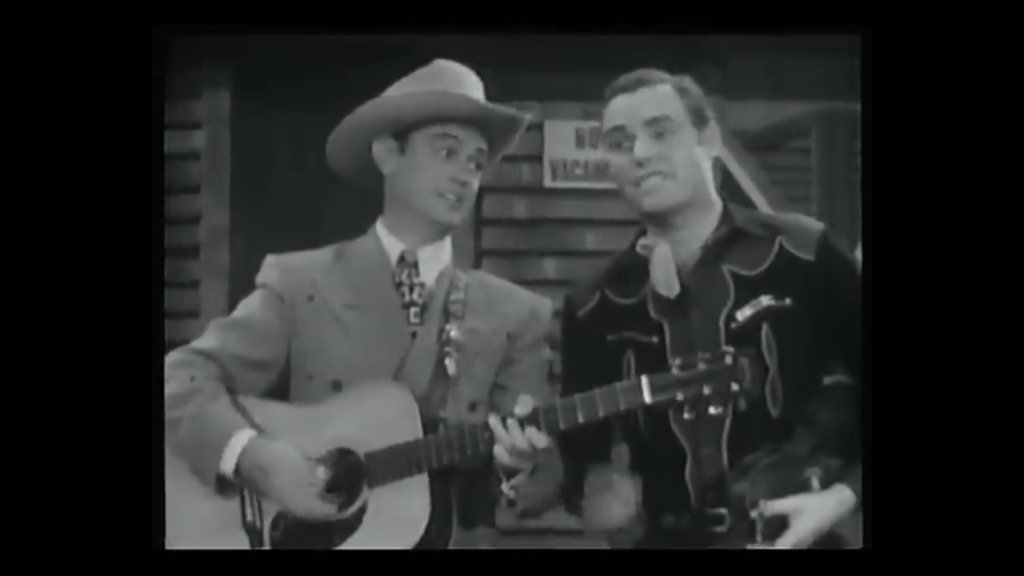
When the “No Vacancy” Sign Becomes a Haunting Image for Post-War Soldiers
In the American music scene following World War II, the legendary Merle Travis depicted a harsh reality through his classic hit “No Vacancy” (1946). This wasn’t just a country song that dominated the Billboard charts for weeks; it was also a profound social message about the housing crisis for veterans returning from war. Through his bitter self-narration, Merle Travis portrays the disappointment of soldiers leaving the battlefield to find their dream “little home,” only to be met with the indifferent sign hanging on every door: “No Vacancy.” That sign appears as a new enemy, no less cruel than war itself, causing “heartache” upon seeing it—a testament to the rejection of a society filled with greed and coldness towards those who sacrificed their lives for peace.
Throughout the song, Merle Travis not only reflects on personal fate but also conveys a profound humanistic message, calling on those who are well-off to take a moment of silence and gratitude for the homeless and the impoverished. With its vibrant Western Swing melody contrasting sharply with the melancholic lyrics, “No Vacancy” becomes a lively musical piece, capturing the loneliness and precariousness of a generation of forgotten heroes in their own homeland. For middle-aged audiences and those who cherish nostalgia, this work retains its weight of compassion, reminding us that peace is only truly complete when each person finds a home to call “their own.”