
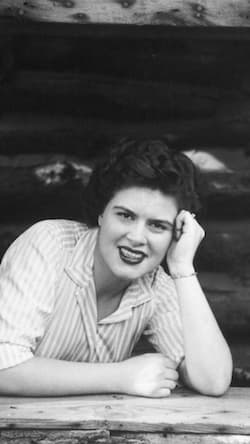
The Rise, the Voice, and the Tragedy That Ended Too Soon, The Unfinished Journey of Patsy Cline
In the early 1960s, few voices carried the emotional weight and crossover appeal of Patsy Cline. With a rich contralto tone and an instinct for storytelling, she bridged the gap between country and pop, helping to define what became known as the Nashville Sound. Yet it is not only her success that continues to captivate audiences, but the sense of a career abruptly, almost cruelly, unfinished.
Any retrospective of Cline’s performances now unfolds under the shadow of her death in a plane crash in 1963, at just 30 years old. What might once have been received as confident, assured stagecraft is today reinterpreted as something more fragile, even prophetic. Her performances feel less like moments in time and more like fragments of a legacy that never had the chance to fully form.
Songs such as Crazy and I Fall to Pieces take on a heightened resonance in this context. Both explore emotional vulnerability and romantic disintegration, themes that mirror the instability that seemed to follow her life and career. Written by a young Willie Nelson, “Crazy” in particular has come to symbolise the paradox at the heart of Cline’s artistry: a voice of control and clarity delivering stories of emotional chaos.
There is, too, a striking sense of irony in her final recordings. Sweet Dreams, released posthumously, carries an almost unbearable poignancy. Its gentle farewell now reads as something unintentional yet eerily fitting, a closing note that neither artist nor audience knew would be her last.
Behind the music lies a narrative of quiet defiance. Alongside figures such as Kitty Wells, Cline helped carve out space for women in a male dominated industry, transforming them from supporting acts into headline performers. Her willingness to move between genres was not merely a stylistic choice but a challenge to rigid industry expectations.
What remains most compelling, however, is the question that lingers over every note: what if she had lived? In an era now defined by powerful female vocalists across genres, Cline’s influence is unmistakable, even as her story remains incomplete.
To listen today is to experience more than nostalgia. It is to hear a voice suspended between triumph and tragedy, still reaching audiences, still refusing to fade.