
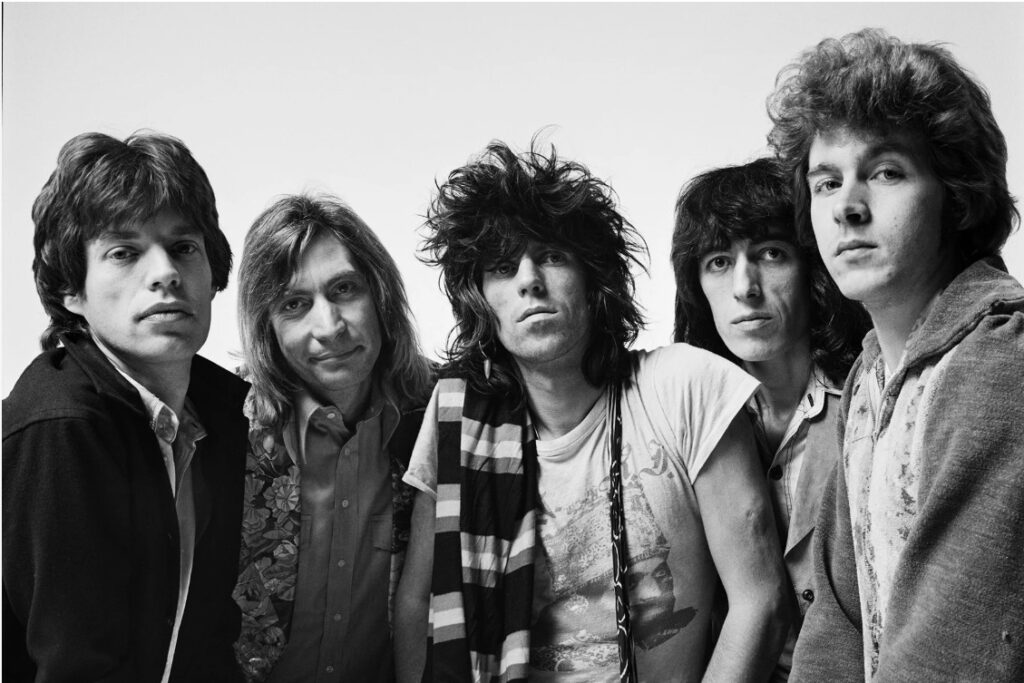
Brussels 1973 and the Sound of a Band Refusing to Slow Down
On October 17, 1973, at the Forest National Arena in Brussels, The Rolling Stones delivered a performance that would come to define the raw essence of live rock music. Captured in what later became known as the Brussels Affair recordings, the show stands today not merely as a concert, but as a document of a band operating at full, unfiltered intensity.
At the center of this moment is All Down the Line, a track that, in its live form, transforms into something far more urgent than its studio counterpart from Goats Head Soup. The rhythm surges forward with relentless momentum, echoing the sensation of a train that cannot and will not stop. It is a fitting metaphor for a band that, at this stage of its career, seemed driven less by precision and more by instinct.
Frontman Mick Jagger commands the stage with a presence that resists polish. His vocal delivery is not flawless, but it is alive, charged with a physical energy that connects directly with the audience. This is not a performance built on technical perfection. It is built on immediacy, on the tension between control and chaos.
Alongside him, Keith Richards anchors the sound with a guitar style that prioritizes groove over virtuosity. His playing does not dominate the arrangement, but rather binds it together, creating a rhythmic foundation that allows the entire band to move as a single, shifting force. It is within this interplay that the true character of the performance emerges.
What makes Brussels 1973 particularly significant is its origin as a bootleg recording, circulated among fans long before receiving official recognition. Its initial unofficial status speaks to the nature of the performance itself. It was too raw, too immediate, too unrefined to fit comfortably within the expectations of a commercial live release at the time. Yet it is precisely these qualities that have secured its lasting reputation.
In retrospect, the concert captures The Rolling Stones at a critical intersection. Positioned between the rebellious energy of their earlier years and the more calculated phases that would follow, the band achieves a rare balance. The music feels on the edge of collapse, yet never loses its direction.
For contemporary listeners, Brussels 1973 offers more than nostalgia. It provides a reminder that the power of live music does not lie in perfection, but in presence. In that arena, on that night, the Rolling Stones were not simply performing. They were moving forward, relentlessly, all down the line.
 Timeless Melodies