
Turning Away from Noise to Find Meaning — A Song About Choice, Taste, and Quiet Resistance
“Change That Dial” is one of the most revealing and quietly defiant recordings in Marty Robbins’ catalog. It is not a love song, nor a gunfighter ballad, nor a dramatic Western epic. Instead, it is a thoughtful commentary on music itself—on changing tastes, cultural shifts, and the deeply personal act of choosing what we allow into our lives. In its calm, conversational tone, the song feels like a moment of reflection shared between friends rather than a statement meant to persuade.
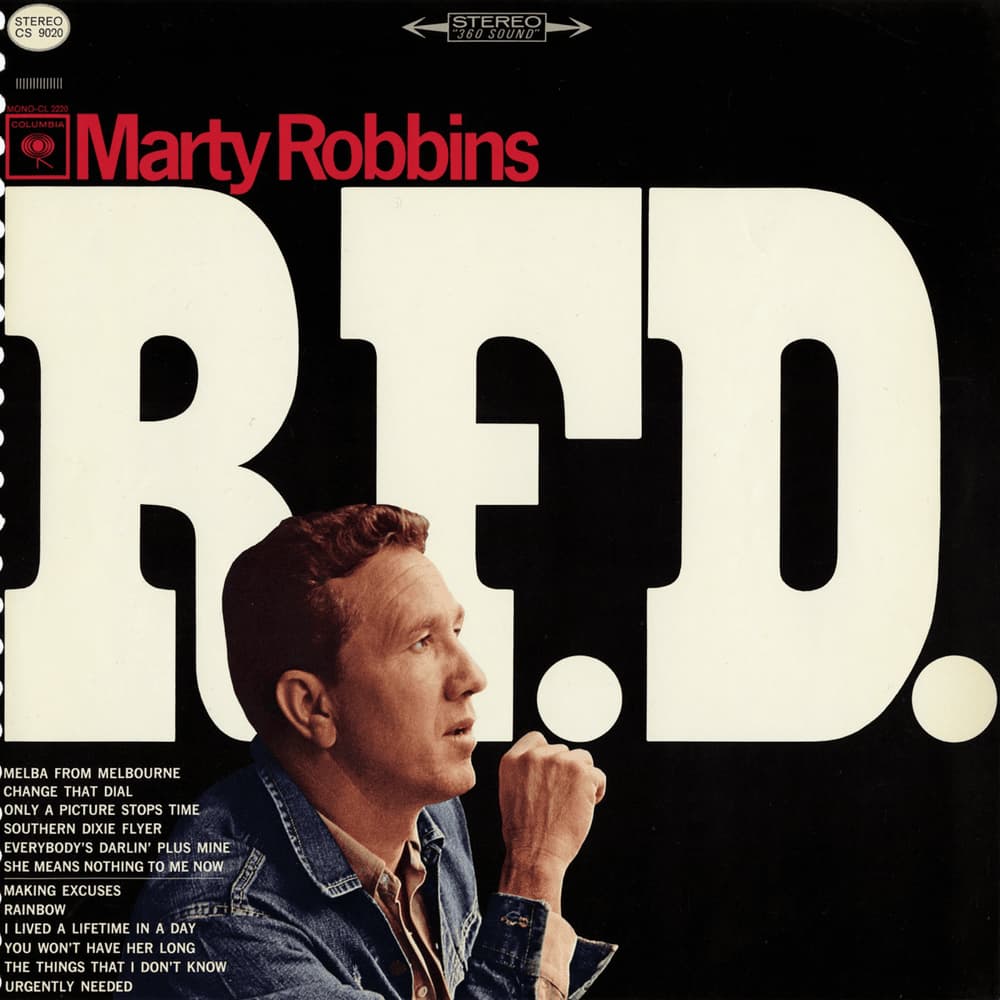
“Change That Dial” was released in 1966 on the album The Drifter, a period when Marty Robbins was already an established star with nothing left to prove. The album reached No. 7 on the Billboard Top Country Albums chart, and while “Change That Dial” was not issued as a major chart single, it became an important thematic track—one that spoke directly to listeners who felt increasingly out of step with the fast-moving cultural landscape of the mid-1960s.
Written by Marty Robbins himself, the song addresses a world where the radio—once a trusted companion—has begun to sound unfamiliar. Robbins does not attack modern music with bitterness or ridicule. Instead, he responds with quiet discernment. If the sound no longer speaks to the heart, there is a simple solution: turn the dial. That act becomes symbolic, not of rejection, but of self-respect.
From the opening lines, Robbins’ delivery is warm and unhurried. His voice carries reassurance rather than complaint. He is not angry about change; he simply recognizes that not all change must be embraced. This distinction is crucial. “Change That Dial” is not about nostalgia as resistance—it is about personal agency. Robbins reminds us that listening is a choice, and that preserving one’s inner calm sometimes means stepping away from what no longer resonates.
Musically, the arrangement is deliberately traditional. Gentle acoustic guitar, steady rhythm, and clean instrumentation create a sense of stability. There are no experimental flourishes, no attempts to modernize the sound. This was intentional. Robbins understood that the message of the song would be undermined if the music itself chased trends. Instead, the song stands firm, grounded in the values of clarity, melody, and storytelling.
Lyrically, “Change That Dial” speaks to a broader cultural moment. By the mid-1960s, music was becoming louder, more fragmented, and more confrontational. Rock was evolving rapidly, and for many listeners, the familiar warmth of earlier styles felt increasingly distant. Robbins captures that feeling without ever naming genres or artists. His language remains inclusive, never dismissive. He does not say the new music is wrong—only that it is not his voice.
This restraint is what gives the song its dignity. Marty Robbins does not position himself as a gatekeeper of taste. He positions himself as a listener who knows his own heart. That perspective allows the song to age gracefully. Decades later, “Change That Dial” still feels relevant, because its message transcends era. Every generation eventually faces the moment when the world grows louder, faster, and less familiar.
In the context of Robbins’ career, this song reveals a different kind of courage. He had already conquered the charts with songs like “El Paso”, “Devil Woman”, and “A White Sport Coat”. He did not need to comment on the state of music. Yet he chose to do so—not with confrontation, but with calm conviction. That choice reflects an artist comfortable with his identity.
The deeper meaning of “Change That Dial” lies in its emotional wisdom. It acknowledges that growth sometimes means letting go—not of memories, but of noise. Robbins suggests that peace is not found by arguing with the world, but by choosing what we listen to, what we value, and what we carry forward.
For listeners who have spent a lifetime with music as a companion, this song resonates quietly but powerfully. It recalls evenings spent near a radio, the ritual of tuning in, the intimacy of voices that felt familiar. Robbins honors that experience without sentimental excess. He trusts memory to do its work on its own.
Within The Drifter, “Change That Dial” stands as a reflective pause—less a song than a thought set to melody. It does not demand agreement. It simply offers perspective. And that is why it endures.
In the end, Marty Robbins’ “Change That Dial” is not about rejecting the present or clinging to the past. It is about discernment. About knowing when to listen, when to move on, and when to protect the quiet spaces where meaning still lives. In a world that never stops broadcasting, Robbins reminds us that sometimes the most powerful choice is the simplest one—just turn the dial, and keep what still speaks to your soul.
 Oldies Songs