
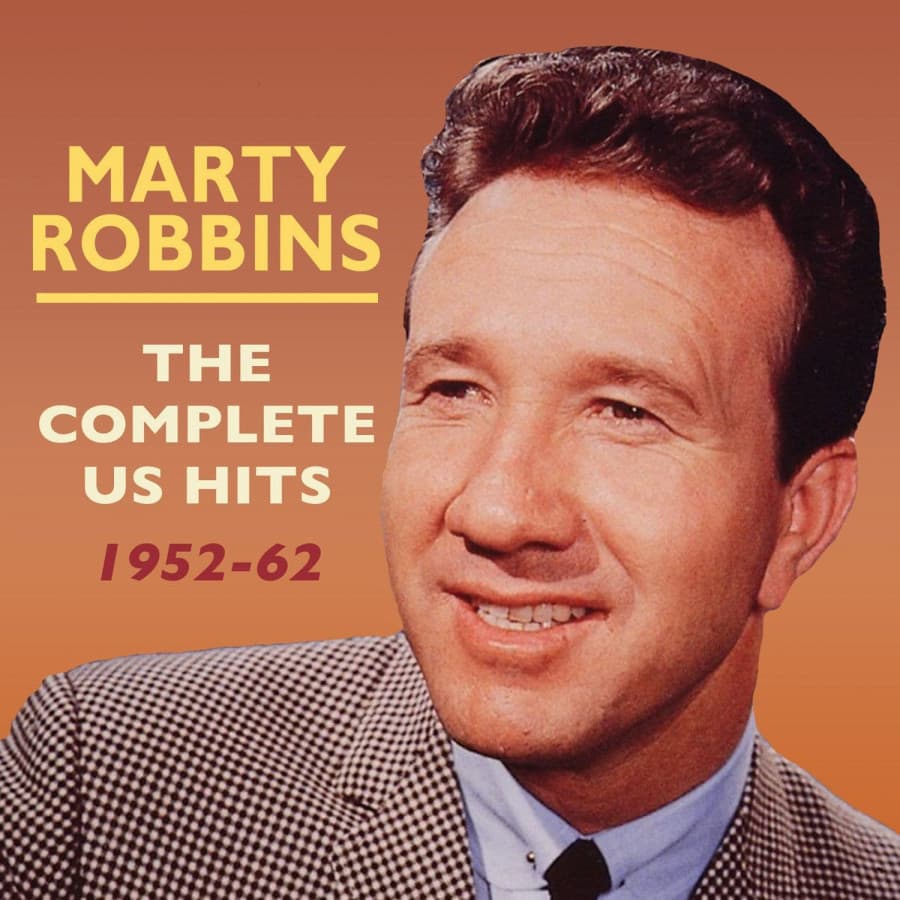
The Quiet Ache of Regret Echoing Through the Western Soul
When Marty Robbins released “I Couldn’t Keep from Crying” in 1952, the song marked one of his earliest steps toward becoming one of country music’s most evocative storytellers. Issued as a single on Columbia Records, it predated the sweeping Western ballads that would later define his career, yet even in this early work, Robbins’ ability to fuse vulnerability with melodic grace was unmistakable. The track made a modest impression on the charts—reflective of an artist still finding his place in a rapidly evolving postwar country scene—but its emotional authenticity hinted at the timeless voice that would soon give the world classics like El Paso and A White Sport Coat (and a Pink Carnation). “I Couldn’t Keep from Crying” stands today not merely as a relic of Robbins’ beginnings, but as a window into the emotional candor that would come to characterize his finest work.
At its heart, the song is a confession—a simple, unadorned admission of heartbreak rendered with the kind of plainspoken sincerity that country music does best. Robbins’ performance is intimate, almost conversational; his voice trembles not with theatricality but with genuine ache. The instrumentation is minimal, allowing his phrasing to carry the narrative weight. A gentle rhythm guitar and restrained steel accompaniment create an atmosphere of lonely reflection, evoking a time when heartache was expressed not in grand gestures but in quiet resignation.
Lyrically, “I Couldn’t Keep from Crying” captures that universal moment when love’s loss becomes too heavy to conceal. There is no bitterness here, no defiance—only sorrow and acceptance. Robbins sings not to accuse or plead but to remember. This emotional honesty would become a hallmark of his songwriting and interpretive style: he could inhabit a character’s pain without judgment, transforming personal grief into shared human experience. In this way, the song foreshadows the empathy and narrative depth that would later make him one of country’s great dramatists.
Beyond its immediate emotional pull, the recording also reflects the transitional era in which it was created. The early 1950s were a crossroads for American music: honky-tonk grit was softening under the influence of pop sensibility, while the Nashville Sound had yet to crystallize. Robbins stood in that liminal space—his voice equally at home in dusty barrooms and radio parlors—and “I Couldn’t Keep from Crying” captures that duality perfectly. It is both rural and urbane, grounded yet refined, echoing the shifting identity of postwar America itself.
Listening today, one hears more than just an early single by a young artist; one hears the genesis of Marty Robbins’ lifelong dialogue between strength and tenderness. Every note carries the promise of what he would become: a poet of longing whose songs painted landscapes not only of deserts and cowboys but also of hearts laid bare. “I Couldn’t Keep from Crying” remains a testament to that enduring truth—that sometimes the quietest songs are the ones that speak loudest across time.
 Timeless Melodies
  Oldies Songs