
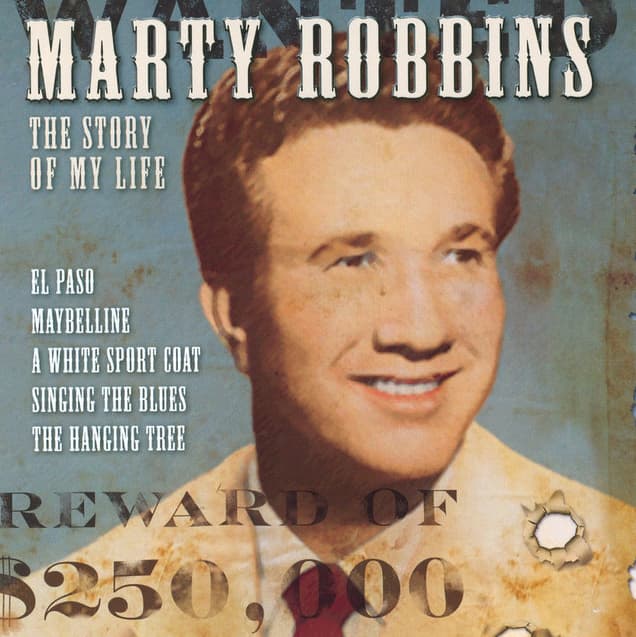
A Gentle Promise Etched in Vinyl: The Quiet Intimacy of Longing and Devotion
Released in 1963 on the album Return of the Gunfighter, Marty Robbins’ “Call Me Up (And I’ll Come Calling on You)” stands as one of those understated jewels that reveal the artist’s deeper emotional range beyond his legendary gunfighter ballads. While the single itself did not ascend to the top of the country charts as triumphantly as Robbins’ earlier hits like “El Paso” or “Don’t Worry,” its value lies not in commercial conquest but in its quiet, timeless sincerity—a testament to Robbins’ gift for crafting songs that speak directly to the heart, uncluttered by spectacle.
At its essence, “Call Me Up (And I’ll Come Calling on You)” is a study in tenderness and restraint, a love song built not on grand declarations but on the soft assurance of presence—the promise that distance can be bridged by devotion. Robbins recorded it during a period when he was already an established icon, equally comfortable in the realms of western storytelling, pop crossover, and pure country sentiment. Yet here, stripped of galloping rhythms and cinematic vistas, he turns inward. The arrangement is simple: gentle guitar lines, a measured rhythm section, and Robbins’ unmistakable voice—smooth as worn leather and resonant with empathy—carrying every syllable with deliberate care.
Thematically, the song lingers in that delicate emotional space between longing and steadfastness. Its narrator doesn’t demand love; he offers it as an act of service, a quiet readiness to be there whenever called upon. In this way, Robbins channels a distinctly mid-century romantic ideal—one rooted in loyalty and emotional endurance rather than passion’s volatility. There’s humility in his phrasing, a sense that love’s truest expression lies not in pursuit but in presence. This sentiment reflects much of Robbins’ artistry: even when his characters lived in worlds of outlaws and heartbreak, they were driven by codes of honor and emotional truth.
Musically, the track captures that transitional moment in early ’60s country music when Nashville’s polished production began blending with folk intimacy and pop sensibility. Robbins navigates this terrain effortlessly; his voice floats over subtle steel guitar accents and restrained percussion, embodying both the old-school crooner’s elegance and the storyteller’s earthbound warmth. Listening today, one hears more than nostalgia—there’s an enduring humanity woven through every note.
In the larger tapestry of Robbins’ career, “Call Me Up (And I’ll Come Calling on You)” might seem modest, yet its quiet sincerity reveals why he remains one of American music’s most beloved interpreters of emotion. It reminds us that love need not roar to be real—it can whisper across time and still be heard as clearly as ever.
 Timeless Melodies
  Oldies Songs