
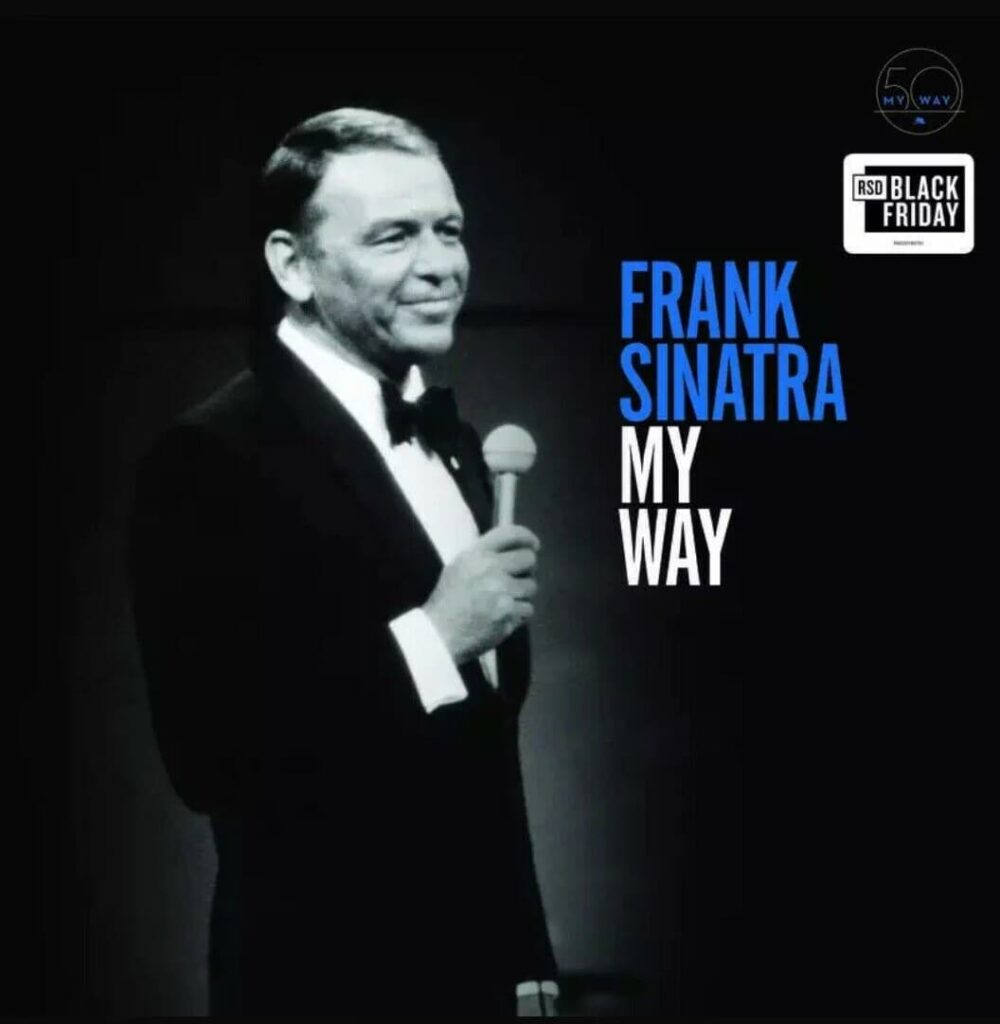
A defiant reflection of a life lived without regrets “My Way” by Frank Sinatra
“My Way” is a deeply personal anthem of self-determination, where Frank Sinatra looks back over his journey with pride, acceptance, and a gentle sense of defiance.
When Sinatra released “My Way” in early 1969, it marked one of the most iconic moments of his career even though it wasn’t an immediate monster hit in the U.S. Its single reached #27 on the Billboard Hot 100. In the United Kingdom, however, the song took on a life of its own: it peaked at #5, and remarkably spent 75 non-consecutive weeks in the UK Top 40, a record in its own right.
Behind the timeless melody lies a fascinating story of cultural transformation. The tune originally came from a French song called “Comme d’habitude”, written by Jacques Revaux and Claude François, with lyrics by Gilles Thibaut.That French original was not about bold self-assertion, but about the quiet, pain-filled routine of a dying relationship.
Paul Anka, while vacationing in the south of France, heard the original and recognized its potential. He negotiated the rights famously acquiring them for a mere symbolic amount and sat down at his typewriter late one night. Anka later explained that he thought deeply about how Sinatra communicated, imagining what Sinatra himself would say if he were reflecting on his life.The result was entirely new English lyrics, shifting the song’s meaning into a powerful self-eulogy rather than a lament over a failing relationship.
Sinatra recorded the song in a single take on December 30, 1968. At the time, he was reportedly contemplating retirement, and the gift of these words struck a deep chord. The recording features a restrained, elegant arrangement a soft but steady orchestral backing, gentle piano, and Sinatra’s voice delivering every line with quiet authority, as if he were speaking directly to his own heart.
Lyrically, “My Way” resonates with honesty and introspection. Sinatra sings with conviction: “Regrets, I’ve had a few, but then again, too few to mention… I did it my way.” The message is not just about confidence or ego, but about ownership of one’s life: the triumphs, the mistakes, the choices. It’s a man’s look back not with bitterness, but with composure, and recognition that every step, even the difficult ones, shaped who he became.
Yet, despite its grand reputation, the song has a tender complexity. According to The Guardian, many people who sing it today do so not out of arrogance, but out of a need to be heard, to declare that their life mattered. And Sinatra himself reportedly felt conflicted he once said he “detested” singing it, believing some audiences might mistake its bravado for self-aggrandizement.
The legacy of “My Way” is profound and multi-layered. It has become a standard covered by countless artists across genres, frequently sung at funerals, and often cited as a song people choose when they want to reflect on a life lived on their own terms. Yet it wasn’t just a career triumph: it was a reclamation. For someone like Sinatra who had lived through decades of change, fame, love, and loss the song gave him a way to articulate his journey in the most personal, dignified way possible.
For listeners who remember the soft crackling of vinyl, or the glow of a radio late at night, “My Way” still brings a wave of nostalgia not just for Sinatra, but for an era when music carried weight, emotion, and a kind of quiet courage. It remains not just a song, but a statement: a reminder that, in the end, how we live and how we choose to look back is ours to own.