
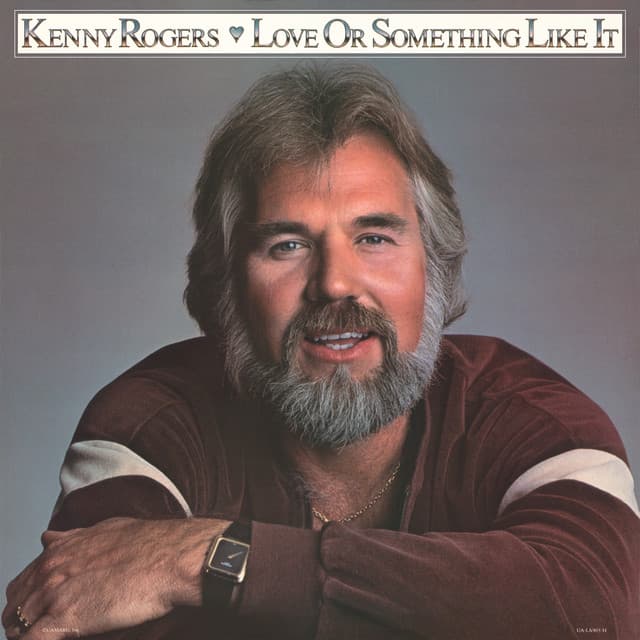
A Tender Escape into Memory and Midnight Longing, Where Dreams Move Gently to the Rhythm of the Heart
When Kenny Rogers released “Dream Dancin’” in 1980, it arrived quietly, almost like a secret shared late at night. Issued as a single from the album Gideon, the song reached No. 8 on the Billboard Hot Country Singles chart, a respectable showing that reflected Rogers’ steady presence on country radio during one of the most reflective periods of his career. Yet, as with many of his most meaningful recordings, chart position tells only a fraction of the story. “Dream Dancin’” was never meant to dominate the airwaves—it was meant to linger.
By 1980, Kenny Rogers had already crossed musical borders few artists managed so gracefully. He was a country star, a pop favorite, and above all, a storyteller whose voice carried the weight of experience. “Dream Dancin’” fits perfectly within this phase of his artistry, where the focus shifted away from dramatic plot twists and toward emotional atmosphere. It is a song about absence, imagination, and the quiet power of memory.
At its core, “Dream Dancin’” is about longing that survives distance. The narrator is separated from the one he loves, yet refuses to surrender the connection. Instead, he retreats into dreams—those private spaces where time, geography, and circumstance lose their authority. In dreams, they can still dance. That image is both romantic and heartbreaking. Dancing implies closeness, harmony, and shared movement, yet here it exists only in the mind.
The lyrics are simple, but deliberately so. Rogers understood that too much explanation would weaken the song’s emotional pull. Rather than describing events in detail, “Dream Dancin’” relies on suggestion. We are not told why the separation exists. We are not offered resolution. What matters is the feeling—the quiet ache of wanting something just beyond reach, and the comfort found in imagining it vividly enough to feel real.
Musically, the song is smooth and understated, built on a gentle rhythm that sways rather than drives. Soft keyboards and subtle guitar lines create a dreamlike atmosphere, perfectly matching the theme. There is no urgency here. The tempo invites reflection, allowing the listener to drift alongside the narrator. The arrangement feels intentionally uncluttered, as if any excess sound might disturb the fragile emotional space the song inhabits.
Vocally, Kenny Rogers delivers one of his most intimate performances. His baritone is calm, warm, and reassuring, yet tinged with vulnerability. He sings not as someone pleading for love, but as someone remembering it—carefully, respectfully, and with quiet devotion. There is maturity in this delivery, an understanding that love does not always need to be physically present to remain deeply felt.
Within the album Gideon, “Dream Dancin’” plays an important emotional role. Gideon itself is one of Rogers’ more conceptual works, exploring themes of isolation, faith, and personal reckoning. Against that backdrop, this song feels like a moment of gentle escape—a reminder that even in solitude, the mind can return us to moments of connection. It balances the album’s heavier reflections with warmth and tenderness.
The early 1980s marked a shift in country music toward more polished, crossover-friendly production. Yet “Dream Dancin’” resists becoming slick or impersonal. Its polish serves the song rather than overshadowing it. The emotion remains front and center, carried by voice and melody rather than production tricks.
Over time, “Dream Dancin’” has become one of those quietly cherished tracks in Kenny Rogers’ catalog. It may not be as immediately recognizable as his biggest hits, but for those who know it, the song holds a special place. It speaks to moments when memory becomes refuge, when imagination provides comfort that reality cannot.
Listening to the song now feels like stepping into a dimly lit room where the music plays softly and memories move slowly. There is no drama, no confrontation—only acceptance. Love may be distant, but it is not gone. It lives on in dreams, in rhythm, in the quiet promise of togetherness remembered.
In the end, “Dream Dancin’” stands as a testament to Kenny Rogers’ greatest strength: his ability to honor emotional subtlety. The song reminds us that not all love stories unfold in daylight. Some live in the quiet hours, where hearts dance unseen, guided not by reality, but by hope and memory.