
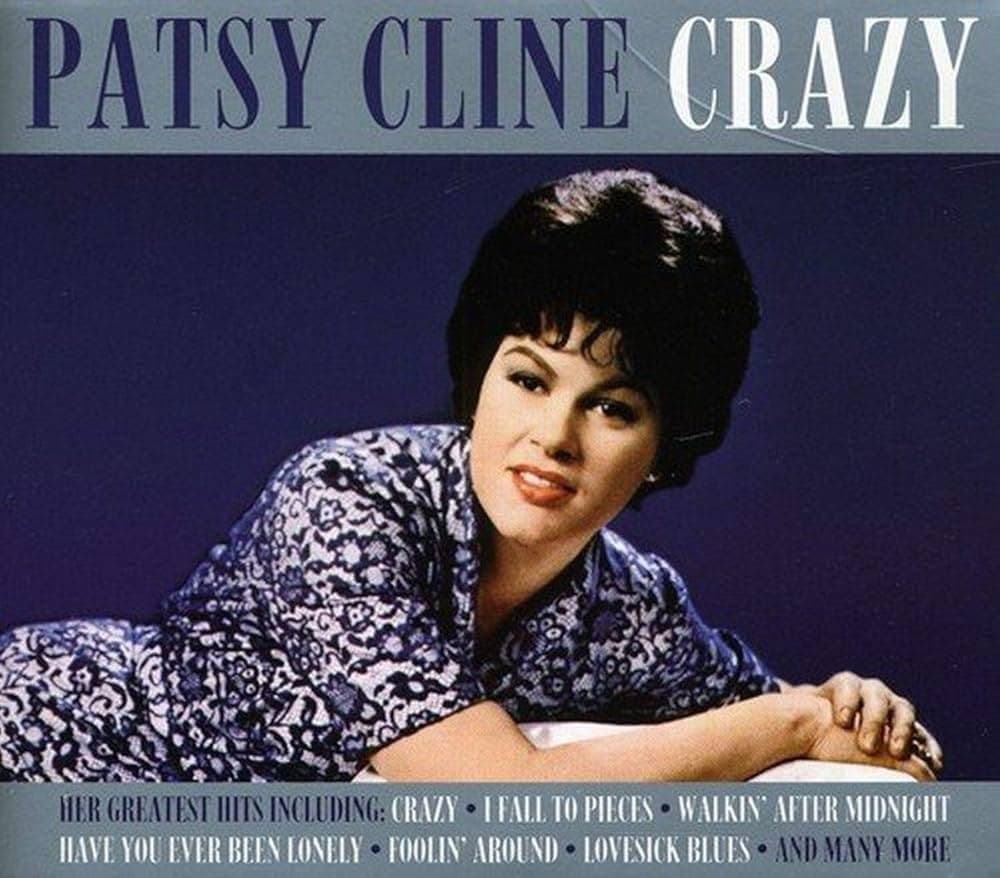
A timeless confession of longing and vulnerability “Crazy” by Patsy Cline
“Crazy” is a deeply emotional ballad in which Patsy Cline pours out her heart in a quiet, aching plea for love that torments yet sustains her.
Released on October 16, 1961 via Decca Records, the single version of “Crazy” would become one of Patsy Cline’s most iconic recordings. Upon its release, the song climbed high on the charts it reached #2 on the Billboard Hot Country Singles, spent 21 weeks on that chart, and crossed over into the mainstream, peaking at #9 on the Billboard Hot 100, while also reaching #2 on the Easy Listening chart.
The story behind “Crazy” is as rich and poignant as the melody itself. Originally written by a young Willie Nelson, then a struggling songwriter, the tune reached Patsy through her husband Charlie Dick. Nelson rarely imagined his composition would find such a perfect home; Cline’s producer, Owen Bradley, agreed, and he helped shape the song into the definitive ballad we know today.
Recording was no easy feat. At the time, Cline was still recovering from a serious car accident, and her broken ribs made it difficult for her to hit the high notes. According to historical accounts, the musicians and The Jordanaires recorded their parts first, because she couldn’t manage physically, and then, a week later, she returned and laid down her vocal in just one take, pouring all her emotion into every line.
Lyrically and emotionally, “Crazy” is a meditation on longing, regret, and unrequited devotion. Cline sings, “Crazy for feeling so lonely, I’m crazy for crying so much,” words that convey not only her yearning but a deep vulnerability a fear that love might always be one-sided, but also a stubborn hope that something will change. This is not a bravado-filled country love song it’s confession, naked and sincere.
Musically, the arrangement is restrained but unforgettable. The production by Bradley uses gentle piano accompaniment, soft strings, and lush backing vocals from The Jordanaires, all framing her voice so that there’s nothing to distract from the raw emotional core. According to an analysis preserved by the Library of Congress, the song’s chord progression and harmonic structure build a tension that mirrors the emotional instability Cline describes repeating motifs, rising intervals, and sparse but powerful arrangements.
More than just a hit, “Crazy” became Patsy Cline’s signature song. Willie Nelson himself later said that her rendition was the finest interpretation of anything he ever wrote her voice carried the lyrics with “delicacy, soul, and perfect diction.” Over the years, the song received high honors: it was inducted into the Grammy Hall of Fame, and in 2003, it was included in the Library of Congress’ National Recording Registry, enshrining its cultural and historical significance.
For older listeners, especially those who remember the crackle of vinyl and gently fading radio broadcasts, “Crazy” evokes a powerful wave of nostalgia. It’s a song of quiet nights, unspoken desires, and the bittersweet ache of loving someone when everything about you trembles in the dark. Patsy’s voice, rich and trembling with emotion, makes us feel that longing as though it were our own.
Today, “Crazy” continues to inspire new generations of singers and listeners. Its emotional honesty and timeless arrangement make it not just a country classic, but a universal hymn for anyone who has ever loved too deeply, hoped too much, or been haunted by the sweetness and pain of the heart.
 Oldies Songs