
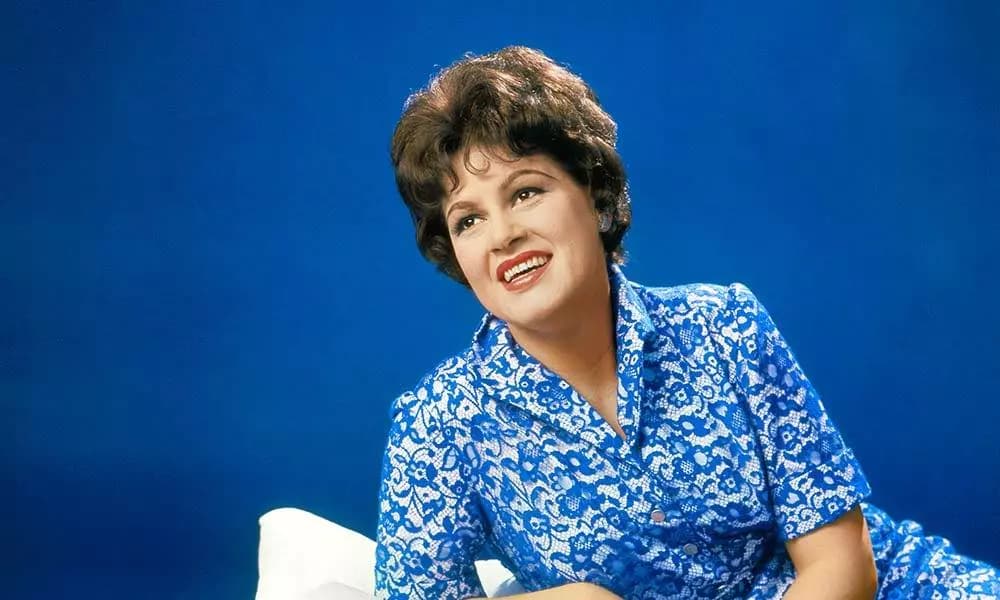
A fragile, heart‑torn confession of a love that’s falling apart “I Fall to Pieces” by Patsy Cline
“I Fall to Pieces” is a gentle, haunting ballad of heartbreak, where Patsy Cline surrenders to the ache of love slipping away and her voice becomes the tremulous echo of loss.
When “I Fall to Pieces” was released as a single on January 30, 1961, it quietly began its slow journey. At first, it received little attention but by August 1961, it had risen to #1 on the Billboard Country chart, demonstrating a steady, enduring climb. Meanwhile, it crossed over to the pop world, peaking at #12 on the Billboard Hot 100. Its slow ascent and graceful persistence underscore the emotional weight the song carried for listeners, and it would go on to rank as Billboard’s No. 1 Country record of 1961 for the year.
The story behind “I Fall to Pieces” is steeped in both artistry and emotional truth. The song was written by seasoned Nashville songwriters Hank Cochran and Harlan Howard, and they crafted it to capture that fragile moment when love remains, but trust has fractured. Cline herself was hesitant to record it: she felt the original arrangement leaned too much toward pop, and she worried the background vocals provided by The Jordanaires might dilute its country feel. Yet her producer, Owen Bradley, believed in its potential, and insisted she give it a try.
Recorded on November 16, 1960, at Bradley’s studio in Nashville, the session conveyed both intimacy and emotional tension. Cline’s delivery warm, rich, and vulnerable makes every line feel deeply personal: “I fall to pieces, each time I see you again,” she sings, as though admitting a secret she barely understands herself. Her voice quivers just a bit, as if she’s holding back tears, and the arrangement gentle piano, brushed drums, soft strings supports her without overwhelming her, giving the song a quiet but profound resonance.
There is something timeless in the song’s meaning: it’s not just about the end of a relationship, but about the fragility of heartbreak. The way she sings about falling “each time I see you again” suggests a pain that is not linear: it returns, over and over, as memories resurface or a glance rekindles what once was. The emotional honesty is raw, unadorned and that is part of why the song remains deeply affecting.
The impact of “I Fall to Pieces” on Patsy Cline’s career was profound. Its success helped break her through as a crossover artist, bridging country and pop something that was not easy to do in the early 1960s. It also played a crucial role in establishing her as one of Nashville’s leading voices, giving her both commercial success and critical respect.
But the story behind the song has a bittersweet side. Cline was seriously injured in a car accident in June 1961 only months after the song began climbing the charts. Her hospitalization cut into the promotional campaign, yet the song’s popularity endured, becoming a signature that defined her legacy.
Over the decades, “I Fall to Pieces” has entered the canon of country music classics. It is often cited as one of Cline’s greatest songs, celebrated for its emotional depth and her moving vocal performance. For listeners today especially those who remember the golden age of radio or spinning 45s on a turntable the song carries a haunting nostalgia: the bittersweet glow of a lifelong memory, the ache of a love that couldn’t quite last, and the soft power of a voice that still moves the heart.
In the end, “I Fall to Pieces” stands not just as a single, but as a testament to vulnerability. Through Patsy Cline’s voice, heartbreak is not weakness it is truth made beautiful, and pain rendered unforgettable.
 Oldies Songs