
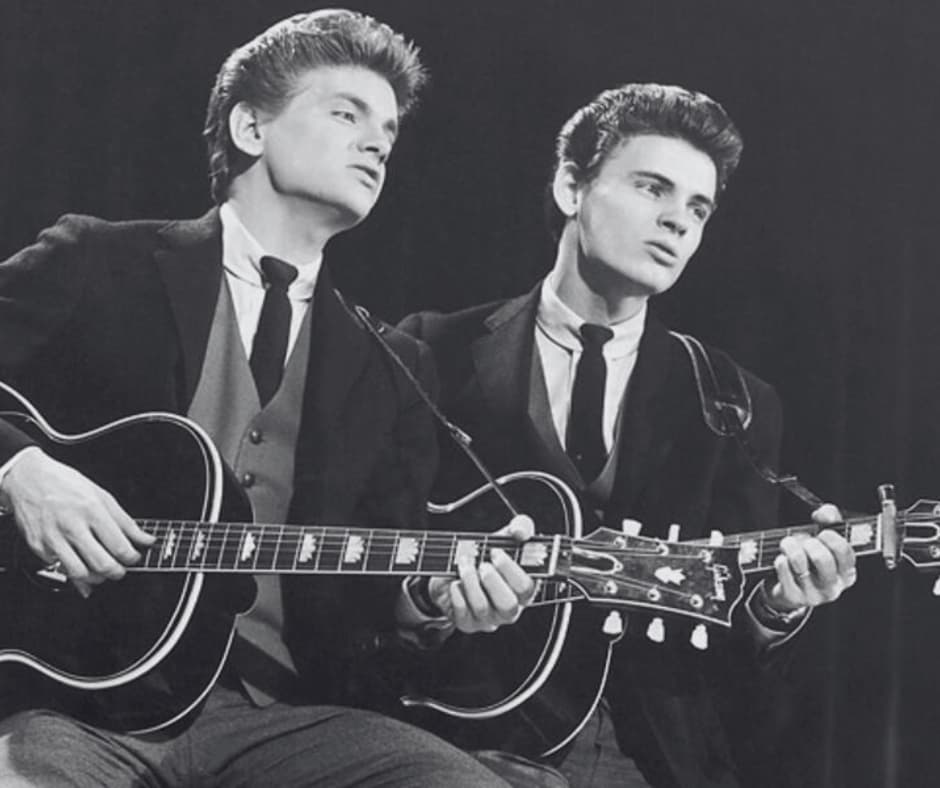
A playful yet daring tale of youthful innocence and the fear of scandal “Wake Up Little Susie” by The Everly Brothers
“Wake Up Little Susie” is a lighthearted but culturally bold story-song, where The Everly Brothers capture the tension between teenage adventure and societal expectation.
Released on September 2, 1957, the single quickly became a defining moment for the duo. Remarkably, it soared to #1 on the U.S. Billboard Pop chart and also topped the Cash Box Best Selling Records chart, despite controversy. On the country front, it reigned for seven weeks at #1, showing the Everly Brothers’ broad appeal across genres.Across the ocean, it found its way to the #2 spot on the UK Singles Chart, a testament to its transatlantic resonance.
Behind the song is a quietly daring story. Written by the renowned songwriting duo Felice and Boudleaux Bryant, “Wake Up Little Susie” was inspired by teenage romance and innocent mischief. According to interviews, the Bryants struggled to finish the melody and lyrics late one night Felice finally woke Boudleaux, suggesting a lyrical tweak that transformed the piece into what it became. In the studio, the Everly Brothers, backed by Chet Atkins on guitar, laid the track down with that signature close harmony that became their hallmark.
What sparked the controversy wasn’t just youthful naiveté, but how listeners at the time interpreted the situation in the lyrics. The song tells of a high school boy and his girlfriend, Susie, who go to a movie date and accidentally fall asleep. They awake at 4:00 a.m., dreadfully aware they’ve missed Susie’s 10:00 p.m. curfew, and worry about how her parents and friends will react. The implied situation two young people staying out all night brought the song under fire, and some radio stations, notably in Boston, banned it, calling it “suggestive.”
Yet, the Everly Brothers weren’t ashamed of their tale they consistently defended it as innocent, saying there was “nothing sleazy or off-color” in the lyrics. That tension between innocence and perceived impropriety gave the song real emotional resonance: it wasn’t just a cute story, but a reflection of real teenage anxieties and the pressures of reputation.
Musically, the song is deceptively simple but powerful. The arrangement leans on the Everly Brothers’ signature harmony style, acoustic guitar, and a gentle rhythm. There’s a sense of urgency in their voices when they sing “Wake up, little Susie … we’ve both been sound asleep,” as if that very moment carries the weight of what’s to come. Their vocal delivery isn’t theatrical it’s intimate, almost conspiratorial, like they’re sharing a secret.
The meaning of “Wake Up Little Susie” goes deeper than teenage rebellion: it speaks to the universal fear of judgment and the longing for acceptance. The boy in the song isn’t just worried about missing curfew he’s anxious about how the world will perceive him and Susie, about how innocent mistakes may leave lasting marks.
This song holds a special place in musical and social history. According to American Songwriter, despite being banned in some places, it became The Everly Brothers’ first chart-topper on both pop and country charts, symbolizing a shift in youth culture and what popular music could talk about. It has endured through decades its blend of catchy melody, emotional honesty, and harmony has influenced countless artists.
For listeners who remember the crackle of vinyl or late-night radio broadcasts, “Wake Up Little Susie” brings a warm wave of nostalgia. It recalls an era when young love, innocence, and social expectations intermingled in a way that felt both fun and serious. The Everly Brothers’ voices, ringing in harmony, invite us back to a time when a simple mistake falling asleep in a movie could feel like the most thrilling or terrifying thing in the world.
In the end, “Wake Up Little Susie” remains more than a pop hit it’s a story of youth, risk, and the fragile line between innocence and assumption. It’s a reminder that sometimes, our very dreams or our very mistakes wake us up to who we are and how we wish to be seen.