
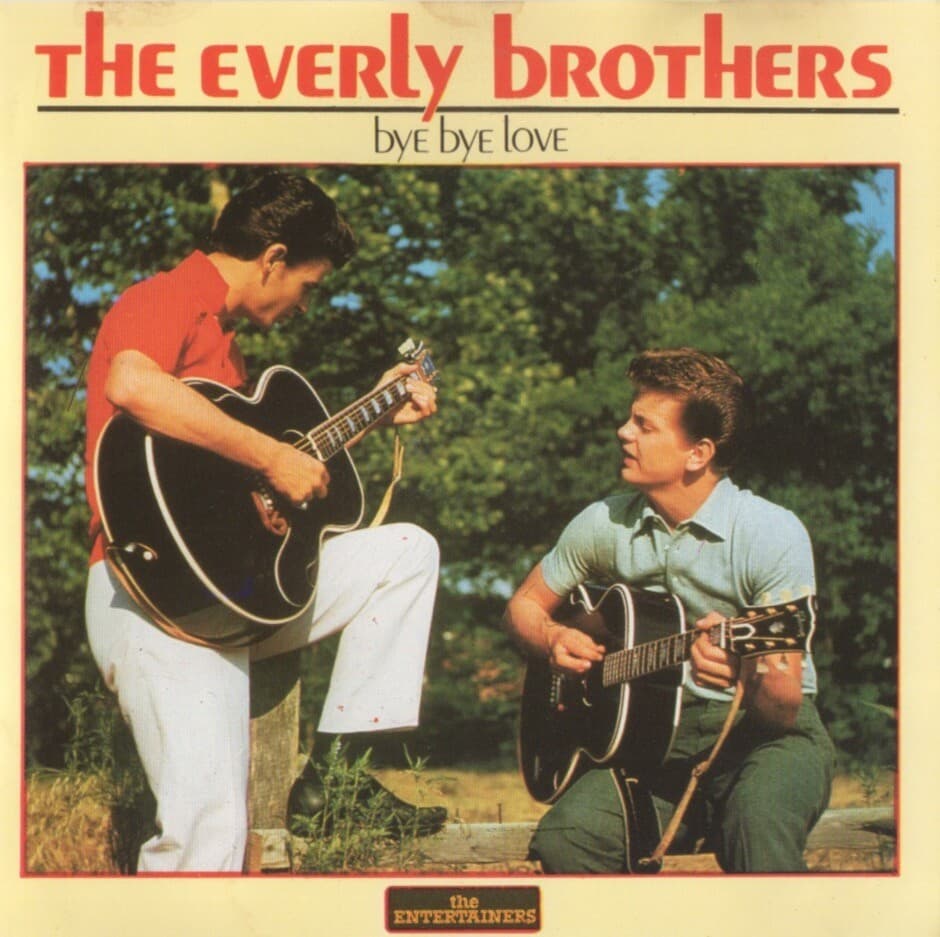
A bright, aching farewell wrapped in infectious harmony a song that turned heartbreak into timeless melody.
“Bye Bye Love” by The Everly Brothers arrived in 1957 like a spark that lit up the early years of rock ’n’ roll, carrying with it a youthful mixture of pain, charm, and irresistible rhythm. When it debuted, the song quickly soared to No. 2 on the Billboard Pop chart, No. 1 on the Country chart, and firmly positioned itself as one of the duo’s first great breakthroughs the song that truly announced their arrival as leading voices of a new era in American music. It also reached the Top 5 on the R&B chart, a rare achievement at the time for a country-leaning act, reflecting how deeply its sound resonated across audiences from different backgrounds.
Composed by the legendary husband-and-wife songwriting team Felice and Boudleaux Bryant, the song had originally been rejected by nearly 30 other artists before reaching the Everly Brothers a fact that now feels almost unbelievable considering how perfectly their voices came to define it. The Bryants wrote the song from a place of raw emotional truth: a tale of heartbreak told with deceptively upbeat energy, a melody that smiles even as the lyrics quietly wince. In this balance between sadness and sweetness, the young duo found their musical identity.
When Don and Phil Everly stepped into the studio to record “Bye Bye Love”, they were still newcomers, barely known outside Nashville circles. But the moment their signature close-harmony blend fused with Chet Atkins’s bright guitar work and that simple, driving beat, everything changed. Their voices carried a purity and clarity that felt both familiar and startlingly new a sound rooted in the Appalachian harmonies they grew up singing but electrified by the rhythm and urgency of early rock ’n’ roll. It was a bridge between eras, a sound that comforted even as it thrilled.
The genius of “Bye Bye Love” lies in its emotional contradiction. The lyrics speak of rejection, jealousy, and the sting of being left behind, yet the arrangement practically dances. That playful bounce in the guitar, the gentle handclaps, and the effortless vocal phrasing give the impression of someone trying to laugh their way through heartbreak a feeling many listeners know all too well. For those who lived through the 1950s, this song often recalls evenings spent near the family radio, or slow-moving summer nights when the world felt open, young, and full of promise, even amid personal disappointments.
Behind the scenes, the Everly Brothers recorded the track during a period when Nashville was shifting rapidly, blending country roots with pop accessibility. Their success with “Bye Bye Love” did more than establish them as stars; it helped reshape the sound of popular music. The track showcased what would become their hallmark: clean, impeccable harmonies carrying emotional stories that spoke directly to listeners’ lives. It paved the way for later hits like “Wake Up Little Susie”, “All I Have to Do Is Dream”, and countless others that would influence everyone from The Beatles to Simon & Garfunkel.
But above all, “Bye Bye Love” endures because it captures a universal moment that first real heartbreak, when love slips away and the world suddenly feels sharper, yet somehow still filled with the music of possibility. Listening to it now brings back images of old jukeboxes, chrome diners, and nights lit by soft neon glow. It reminds listeners of the days when a simple song could make life feel lighter, even when the heart was heavy.
More than six decades later, The Everly Brothers’ “Bye Bye Love” remains a perfect snapshot of youthful loss and resilience. Its melody still lifts, its harmonies still shine, and its story continues to echo in the memories of those who lived through the era proof that even the saddest goodbyes can become something beautiful when sung with honesty and heart.