
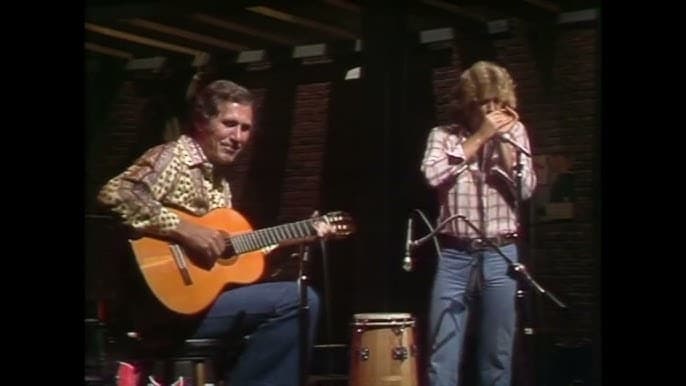
A gentle conversation between strings and conscience, where wisdom speaks softly and nothing is forced
When Jerry Reed and Chet Atkins came together to record “Don’t Think Twice, It’s All Right”, they were not merely covering a famous song they were engaging in a thoughtful dialogue with American musical history. Originally written and recorded by Bob Dylan in 1963, the song had already lived many lives by the time these two guitar masters approached it. Yet their interpretation stands apart, not because it reinvents the song, but because it understands it deeply.
The version by Jerry Reed & Chet Atkins appeared during the later stage of both artists’ careers, when neither had anything left to prove. By then, Chet Atkins was universally respected as the architect of the Nashville Sound, a man whose influence shaped decades of country and instrumental music. Jerry Reed, meanwhile, was celebrated not only as a songwriter and performer, but as one of the most inventive and rhythmic guitarists to ever come out of the American South. When these two sat down with “Don’t Think Twice, It’s All Right”, the result was not competition, but conversation.
The song itself carries a deceptively simple structure. Written by Dylan during a period of emotional uncertainty, it is often mistaken for a song of casual farewell. In truth, it is layered with resignation, quiet hurt, and emotional maturity. The narrator does not argue or plead. He walks away, but not without reflection. That emotional balance between release and regret is precisely what Atkins and Reed grasped so well.
Unlike Dylan’s original vocal-centered folk performance, Atkins and Reed allow the guitars to speak first. Their arrangement is relaxed, spacious, and unhurried. There is no sense of urgency. Each phrase unfolds naturally, as if the music itself is thinking through the decision to leave. Atkins’ playing is elegant and measured, providing structure and clarity. Reed’s guitar brings syncopation, warmth, and a conversational looseness. Together, they create a sound that feels lived-in rather than performed.
Importantly, neither guitarist overwhelms the song with technical display. This is remarkable, given their combined virtuosity. Instead, they exercise restraint a choice that gives the song its emotional weight. Every note feels intentional. Every pause matters. Silence becomes part of the message, reinforcing the idea that some things no longer need to be said aloud.
Chart positions were never the purpose of this recording. Unlike Dylan’s original which became a folk standard and was later covered by countless artists Jerry Reed & Chet Atkins’ version was not released as a major charting single. Its value lies elsewhere. It belongs to the category of recordings made for listening rather than consumption, for reflection rather than reaction.
The meaning of “Don’t Think Twice, It’s All Right” changes subtly in their hands. Where Dylan’s version carries youthful frustration and wounded pride, Atkins and Reed bring perspective. Their reading suggests acceptance rather than defiance. It feels like a farewell spoken after time has passed, when emotions have settled and understanding has replaced impulse. The song no longer sounds like someone leaving in the heat of the moment it sounds like someone who has already made peace with the decision.
This interpretation aligns beautifully with both artists’ identities. Chet Atkins always believed in musical dignity clarity over chaos, balance over excess. Jerry Reed, despite his playful reputation, possessed a deep emotional intelligence as a musician. Together, they strip the song of bitterness and leave behind something gentler: acknowledgment.
There is also a quiet respect shown toward the song’s folk origins. Rather than polishing it into something glossy, Atkins and Reed preserve its humility. The melody remains intact. The emotional core is untouched. What changes is the tone from questioning to knowing.
In the broader context of American music, this version of “Don’t Think Twice, It’s All Right” feels like a passing of wisdom from one generation to the next. Dylan wrote the song as a young man grappling with uncertainty. Atkins and Reed revisit it as seasoned artists who have seen enough of life to understand that not every ending needs explanation.
Ultimately, Jerry Reed & Chet Atkins’ “Don’t Think Twice, It’s All Right” is not about leaving it is about letting go with grace. It reminds us that sometimes the kindest thing we can offer, to ourselves and to others, is acceptance. No argument. No regret performed for effect. Just a quiet understanding, carried on six strings, and left gently in the air long after the final note fades.