
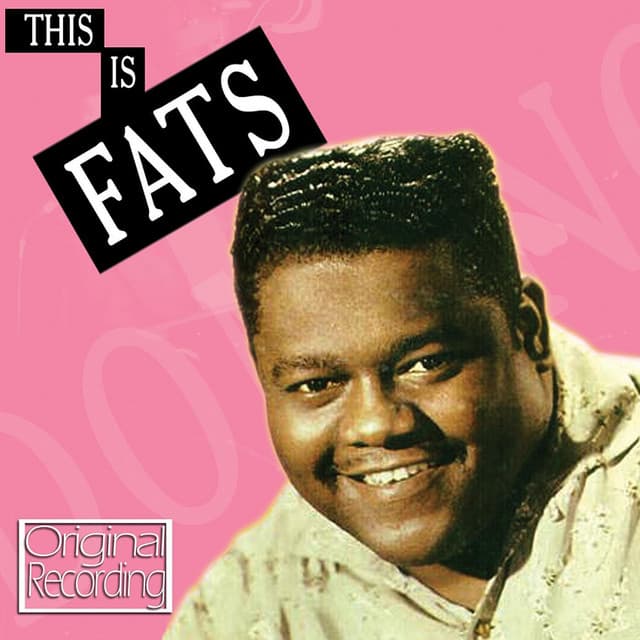
A Warm Smile Set to a New Orleans Groove, Where Love Feels Easy and Life Gently Swings
When Fats Domino recorded “Honey Chile” in 1956, he was not trying to chase trends or reinvent himself. Instead, he did what he always did best: he let warmth, rhythm, and sincerity flow naturally from the piano bench. The result was a song that may not shout its importance, but quietly affirms why Fats Domino remains one of the most beloved architects of early rock ’n’ roll.
Released as a single on Imperial Records, “Honey Chile” reached No. 5 on the Billboard R&B chart and crossed over to No. 18 on the Billboard Hot 100 in early 1957. At a time when racial barriers in popular music were still firmly in place, this crossover success was not incidental it was part of a larger movement led by Domino, whose music felt welcoming rather than confrontational. He did not demand attention; he invited listeners in.
By 1956, Fats Domino was already a proven star. Songs like “Ain’t That a Shame” and “Blueberry Hill” had established him as a national figure, someone who could bridge blues, rhythm & blues, and the emerging sound of rock ’n’ roll without losing authenticity. “Honey Chile” arrived during this golden run, and while it may not be as universally cited as those signature hits, it captures his spirit with remarkable clarity.
Musically, the song is built on the unmistakable New Orleans shuffle, driven by Domino’s rolling piano lines and anchored by a relaxed, dancing rhythm section. There is nothing aggressive here—no sharp edges, no urgency. Instead, the groove feels like a slow sway on a warm evening, the kind where worries are set aside and conversation comes easily. Domino’s piano does not dominate; it converses, filling the spaces between the beat with gentle assurance.
Lyrically, “Honey Chile” is simple, almost conversational. Domino sings about affection, devotion, and everyday love not dramatic heartbreak or longing, but comfort and closeness. His repeated address, “Honey chile,” feels less like a lyric and more like a term spoken softly across a kitchen table. This simplicity was one of his great strengths. He understood that music did not need complexity to feel meaningful; it needed honesty.
Domino’s vocal performance deserves special attention. His voice is unforced, slightly behind the beat, and full of warmth. He never strains for effect. Instead, he sounds as though he is smiling while he sings and in many ways, that smile became his signature. In an era when rock ’n’ roll was often associated with rebellion and youthful defiance, Fats Domino offered something different: reassurance. His music suggested that joy, kindness, and rhythm could coexist beautifully.
Behind the scenes, “Honey Chile” was shaped by the familiar and successful partnership between Domino and producer Dave Bartholomew, whose arrangements helped define the New Orleans sound. Bartholomew understood Domino’s instincts and gave him room to breathe musically. Together, they created recordings that felt polished yet human, refined but never distant.
The meaning of “Honey Chile” lies not in metaphor or hidden symbolism, but in atmosphere. It reflects a moment in American music when rhythm & blues was opening doors inviting broader audiences to feel its warmth without fear or resistance. Domino, with his gentle demeanor and gracious presence, became a natural ambassador for that sound. He did not challenge listeners; he disarmed them.
Over time, “Honey Chile” has come to represent a quieter corner of Domino’s catalog one that rewards careful listening. It reminds us that not every classic announces itself loudly. Some classics endure because they feel good to return to, because they carry the emotional texture of lived experience rather than spectacle.
In the long arc of Fats Domino’s career, “Honey Chile” stands as a reminder of what made him timeless. Not flash. Not controversy. But warmth, rhythm, and an unwavering belief that music could make life feel just a little easier.
And decades later, when that piano begins to roll and his voice settles gently into the groove, it still does exactly that.