
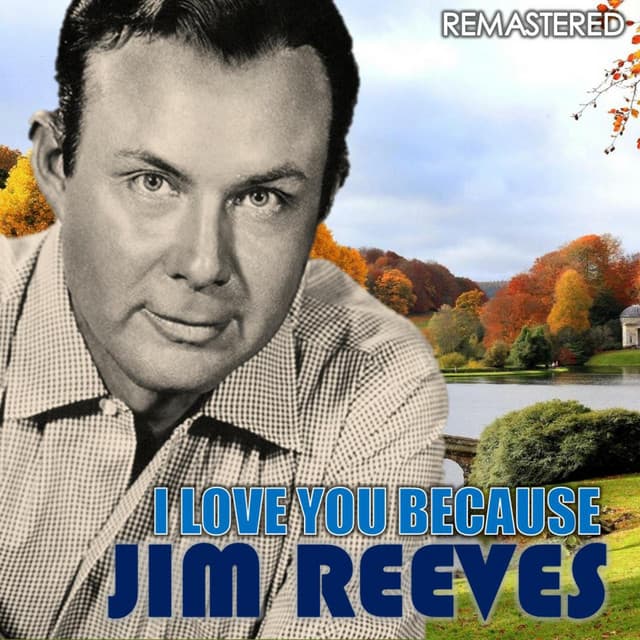
A Quiet Devotion That Transcends Time and Circumstance
When Jim Reeves released “I Love You Because” in 1964, the song felt less like a new addition to his catalog and more like a natural extension of his artistic soul. Featured on the posthumously released compilation album The Best of Jim Reeves, the track quickly found its place among country and pop audiences alike, climbing into the Top 5 on the U.S. Country charts and crossing over to the Billboard Hot 100—a testament to Reeves’s rare ability to bridge genres without ever straying from his emotional truth. Originally penned and recorded by Leon Payne in 1949, “I Love You Because” had already been embraced by multiple artists over the years, but it was Reeves’s interpretation—smooth, intimate, and imbued with quiet reverence—that transformed it from a simple love song into something approaching spiritual confession.
Reeves was often called “Gentleman Jim,” a title that captured both his temperament and his vocal style. His voice was velvet stretched over steel—a baritone so effortlessly controlled that every syllable seemed to float in midair before settling softly into the listener’s heart. In “I Love You Because,” that restraint becomes its own kind of passion. The arrangement is understated—soft guitar strums, a whisper of strings, and Reeves at the center, steady as a heartbeat. There are no grand crescendos or theatrical flourishes; instead, he delivers each line with the quiet assurance of a man who has long since stopped trying to prove anything. His love is not performative—it simply is.
Lyrically, the song is a meditation on unconditional affection: love that persists not for what it receives but for what it gives. It speaks of acceptance, patience, and gratitude—qualities that Reeves embodied both in life and art. In an era when country music often leaned on heartbreak and loss for its emotional power, Reeves turned instead toward serenity and faithfulness. His interpretation reframes Payne’s words as a reflection on grace—the grace of loving someone without measure or demand. That notion, delivered through Reeves’s tender phrasing, feels timeless, even sacred.
There’s also a poignant layer to how this song sits within Reeves’s legacy. Recorded near the height of his career, it became one of the defining tracks to represent him after his untimely death in 1964. Listening now, one cannot help but hear a kind of farewell woven between the lines—not because the lyrics anticipate parting, but because Reeves’s delivery feels eternal, as though he were already singing from beyond time’s reach. In “I Love You Because,” he distilled everything that made him extraordinary: purity of tone, emotional sincerity, and a profound understanding that true love—like great art—requires no justification. It simply exists, quietly enduring long after the final note fades.
 Oldies Songs
  Timeless Melodies