
A quiet ache captured in two voices that never met, yet forever echo the same question of fading love.
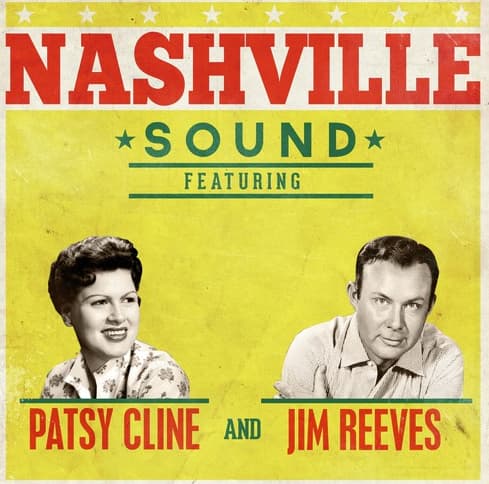
In 1957, Jim Reeves first carried Am I Losing You onto the Billboard country charts, where its gentle sorrow lifted it to a Top Five position and established it as one of the defining ballads of his early career. He later revisited the song on his 1960 self titled album Jim Reeves, reaffirming its place in the heart of the Nashville Sound. Decades after its debut, a posthumous studio crafted duet joined Reeves with Patsy Cline, bringing together two of country music’s most distinctive voices in a moment that feels both impossible and inevitable. Though recorded in different eras, their combined performance allowed a familiar heartbreak to be reborn with new emotional weight.
The story of this duet is less a tale of shared studio time and more a testament to the enduring gravitational pull of their artistry. Reeves and Cline were kindred spirits in tone and temperament. Both embodied a softness that resisted theatrical despair, favoring instead the subtler shades of longing. When modern producers blended their vocals, the result was not a novelty but an unexpected restoration of the emotional core that had always lived inside the song. Reeves brings the quiet questioning of a man trying to understand the shift in his lover’s heart, while Cline answers with a tremor of uncertainty that seems to hover between confession and silence. Together, they illuminate the emotional stalemate at the center of the lyric.
At its heart, Am I Losing You is a portrait of love in retreat. The lyrics never accuse. They circle the same small doubts, each line shaped around the fragile instinct that something cherished is slipping away. Reeves wrote the song with a plainspoken honesty that avoids melodrama. Instead, it lingers on the uneasy space where affection becomes unpredictable. In the combined version with Cline, every pause feels heavier. Her voice shades the song with a quiet vulnerability, suggesting what the lyric only hints at: sometimes we do not answer the question because we fear the truth it reveals.
Musically, the song remains anchored in the hallmarks of the Nashville Sound that Reeves helped pioneer. The arrangement is understated, built around soft rhythms and a melodic line that moves with the natural cadence of a private conversation. Within that simplicity lies its power. Nothing distracts from the emotional clarity of the voices, which feel as if they are confiding in the listener rather than performing for them.
The duet version stands as a meeting of legacies. It preserves the intimacy of Reeves’s original while offering a glimpse into an imagined collaboration between two artists whose careers ended far too soon. What endures is the delicacy of the question at its center, one that listeners continue to recognize in their own lives. Am I Losing You remains a reminder that the deepest heartbreak is often found not in the end itself, but in the quiet moments when we begin to sense it coming.
 Oldies Songs