
A Woman’s Heart Laid Bare in the Twilight of Love’s Undoing
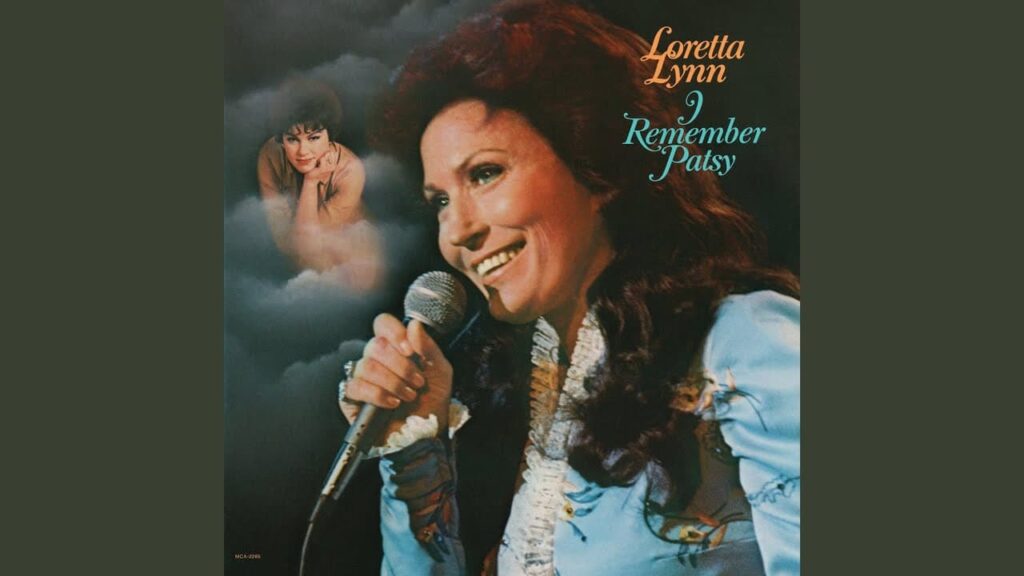
When Loretta Lynn released “Crazy” in 1977, it arrived as part of her album I Remember Patsy, a tender tribute to her late friend and musical confidante, Patsy Cline. The song itself, of course, had already achieved immortality fifteen years earlier when Cline’s version became a defining torch ballad of early 1960s country-pop crossover success. Lynn’s rendition was not a chart-topping single—nor was it meant to be—it was an act of reverence. Within the context of her career, which by then already spanned over two decades and countless number-one hits, this recording stood as something more intimate than commercial: a conversation across time between two women whose voices had shaped the emotional terrain of American country music.
Lynn approached “Crazy” not as an imitation but as a communion. Her interpretation carries the grace of a friend remembering another through song—a remembrance steeped in both admiration and ache. The timbre of Lynn’s voice in 1977 had matured into something earthier than in her early Decca years: still bright with Kentucky mountain clarity, yet softened by experience, motherhood, fame, and loss. When she sang this song that Willie Nelson had penned for Cline so many years before, she did so with an understanding that only a life fully lived could summon. It was no longer merely a lament about unrequited love; it became an elegy for friendship, legacy, and the passage of time itself.
Musically, Lynn’s version honors the original’s languid swing but tempers its urbane polish with a more traditional country sensibility—steel guitar sighs where Cline’s arrangement leaned toward Nashville smoothness. The instrumentation breathes differently here: less nightclub croon, more porchlight confession. Each measure feels like a quiet nod to the woman who once transformed Nelson’s composition into an anthem of sophisticated sorrow. And yet, Lynn’s phrasing—unhurried, honest—transforms that sorrow into something distinctly hers: resilient rather than resigned.
There is an almost cinematic quality to listening to Loretta Lynn sing “Crazy” within the framework of I Remember Patsy. The album functions as both tribute and testimony, tracing the contours of female camaraderie in a male-dominated industry. In singing these songs once owned by another voice, Lynn doesn’t seek to reclaim them; she seeks to keep them alive. Her performance becomes an act of preservation—a living archive of emotion rendered through tone and memory rather than mere melody.
To hear Loretta Lynn’s “Crazy” is to witness how art transcends mortality. One woman sings for another who cannot; one heart echoes another’s heartbreak until they are indistinguishable in their devotion. It is not just a cover—it is country music remembering itself.
 Oldies Songs