
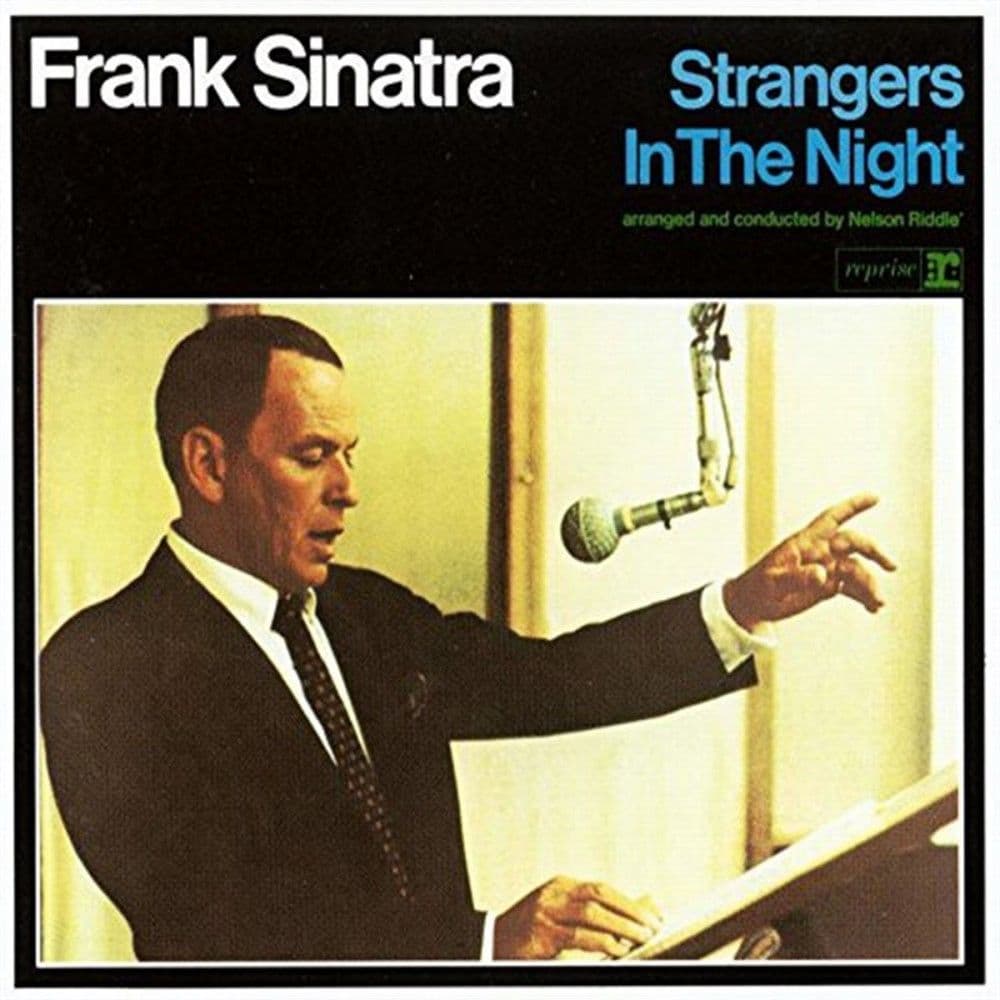
A chance encounter that kindles a timeless, magical love “Strangers in the Night” by Frank Sinatra
“Strangers in the Night” is a lush, romantic ballad that captures the wonder of a fateful first meeting, when two lonely souls find each other in the darkness and discover the possibility of something real.
When Frank Sinatra released this song in 1966, it became a milestone in his career. The single soared to No. 1 on the U.S. Billboard Hot 100 on July 2, 1966, marking a triumphant moment for him. In the UK, it also reached the top spot, staying at No. 1 for three weeks. The song’s popularity contributed to the success of his album Strangers in the Night, released on May 30, 1966, which became his fifth and final solo studio album to reach No. 1 on the U.S. pop albums chart.
Behind the scene, “Strangers in the Night” has a rich and slightly surprising backstory. The melody was composed by Bert Kaempfert, originally for a 1966 film, A Man Could Get Killed, under the title “Beddy Bye.” The English lyrics were written by Charles Singleton and Eddie Snyder, who gave the tune its poetic, romantic turn. Sinatra recorded the song on April 11, 1966, backed by a smooth, sophisticated orchestra conducted by Ernie Freeman.
Lyrically, the song tells a gentle but powerful story. Two people, strangers in the night, exchange glances and feel an immediate attraction: “Something in your eyes was so inviting / Something in your smile was so exciting … Something in my heart told me I must have you.” That “something” becomes a spark of destiny. Over the course of a warm, embracing dance, they realize that love was just a glance away. The repeated line “Lovers at first sight, in love forever” reflects an almost fairytale certainty, while the famous “doo-be-doo-be-doo” scatted outro spontaneously improvised by Sinatra adds a playful, iconic flourish.
But the meaning of the song is more than just romantic idealism. As SongTell suggests, it captures the thrill and mystery of connections formed in fleeting moments the idea that under the cover of night, anonymity can become intimacy. There is an undercurrent of longing and transformation: two solitary people meet by chance, and in the span of a single evening, their lives change forever. SongSense echoes this, describing it as a celebration of serendipity and the transformative power of a glance.
Despite its success and popularity, Sinatra himself did not entirely embrace the song. Reports suggest that he once called it “a piece of shit” a surprising admission given how fondly the public received it. Regardless, he performed it often, and its legacy grew. The recording won several Grammy Awards in 1967, including Record of the Year, Best Male Pop Vocal Performance, and Best Arrangement Accompanying a Vocalist or Instrumentalist for Ernie Freeman.
Musically, the arrangement is elegant and restrained, featuring a rich string section, subtle percussion, and gentle orchestral swells. This arrangement allows Sinatra’s voice smooth, warm, and emotionally expressive to shine. His phrasing is classic Sinatra: slightly behind the beat, intimate, and utterly believable.
For listeners who remember radios in softly lit living rooms or quiet dance floors in the 1960s, “Strangers in the Night” holds a special, almost nostalgic power. It evokes that magical moment when a glance or a song could change everything: a simple but profound reminder of how love can arrive in the most unexpected places.
At its heart, Frank Sinatra’s “Strangers in the Night” is more than just a love song it’s a meditation on chance, destiny, and the human heart. It suggests that even among strangers, something true and lasting can spark in a single moment, carried forever in memory and melody.