
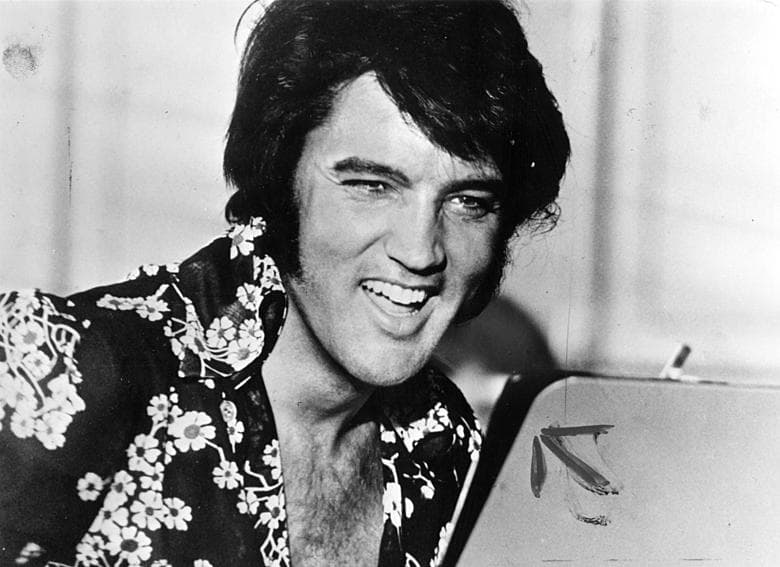
A raw spark of new beginnings “That’s All Right” by Elvis Presley marked the birth of rockabilly and the dawn of a legend
“That’s All Right” crackles with youthful energy and spiritual rebellion a song that doesn’t apologize, but declares freedom, rough love, and a new kind of hope.
When That’s All Right was recorded and released by Elvis Presley in July 1954, it wasn’t meant to be just another record it was a lightning bolt. The recording, made at Sun Studio in Memphis, captured a raw blend of blues, rhythm & blues, and country, laying the groundwork for what would become rockabilly. Although it wasn’t a major national chart-topping hit (given the way charts operated in 1954 in the early rock era), its release is widely regarded as a turning point in popular music. It made Elvis a sensation in the South, leading to a wave of radio play and local fandom that would expand into a global phenomenon.
The story behind “That’s All Right” is as belatedly legendary as the man who sang it. The song itself was originally written and recorded by blues musician Arthur Crudup in 1946 under the title “That’s All Right, Mama.” Elvis then a young unknown paying bills with a job shipping radios stumbled on Crudup’s record and felt in its simplicity and heartbreak the voice of something new. On July 5, 1954, he, guitarist Scotty Moore, and bassist Bill Black stepped into Sun Studio, asked for quiet, and recorded the song in about two takes. What emerged was spontaneous, intense a fusion of rhythm and country that sounded unlike anything else on the airwaves.
From the first slapping guitar, the walking bass line, Elvis’s almost impulsive vocal “Well, that’s all right, mama, that’s all right for you, that’s all right mama, just anyway you do…” there was urgency, freedom, yearning, defiance. It didn’t carry the polish of pop production. It had the cracks of late nights, dust roads, longing voices, and the restless energy of youth hungry for something real. That rawness resonated. Local DJs began spinning the disc on radio, and soon small crowds were gathering at Elvis’s live performances, drawn by the wildness, the promise, the simplicity and truth of the sound.
In retrospective accounts and music histories, “That’s All Right” is recognized not so much for chart numbers, but for cultural impact. It ignited a seismic shift: bridging black blues with white country roots, birthing rockabilly, and offering a fresh voice that captured the hopes and rebellious spirits of a generation. It opened the door for Elvis to rise first across the South, then across America, and eventually around the world.
But beyond its historical significance, the song has enduring emotional power. It captures the urgency of youth, the ache of love, the restlessness of heart and soul longing for something more. It doesn’t idealize love or life it accepts longing, pain, and the grit of reality, and turns them into music that pulses and lives. For listeners now, decades later, it can evoke memory of simpler times: nights of radio static, first dances, hesitations before a confession, the thrill of something new and unfiltered.
In the arc of Elvis’s career, “That’s All Right” stands as the prologue the first imprint of his voice that told a different story. It reminds us that greatness often emerges not from polish, but from honesty; not from elaborate arrangements, but from raw emotion; not from perfection, but from heart.
Listening today, the song retains its spark. It doesn’t feel dated or quaint. It sounds alive. It sounds urgent. It sounds like someone, guitar in hand, daring to say: “This is me. This is what I feel.”
Thus, Elvis Presley’s “That’s All Right” remains not just a song, but a milestone a new beginning, a whisper that grew into a roar, and a testament to the enduring power of music that comes from the soul.