
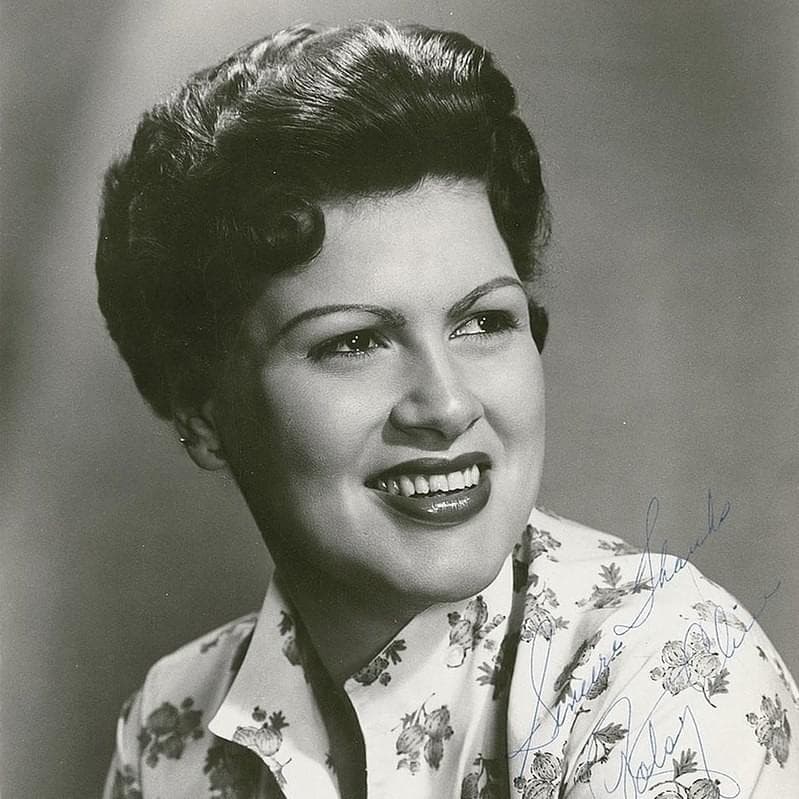
A sorrow-soaked torch song of longing and emotional unraveling, shaped by Patsy Cline’s unmistakable voice
When Patsy Cline recorded “Crazy Arms” in 1962, she stepped into a song that had already carved its place in country music history. Originally released in 1956 by Ray Price, whose version spent an extraordinary 20 weeks at No. 1 on the Billboard Country chart, the song became a cornerstone of the honky-tonk era. But when Patsy brought her voice to it, she didn’t simply cover a classic she reshaped its emotional core, softening its edges while deepening its heartbreak. Her rendition did not chart as a major single at the time, yet it earned a cherished place among her recordings for the sheer sincerity she breathed into every note.
What makes Patsy Cline’s “Crazy Arms” so affecting is the way she approached the material. Instead of the hard, rhythmic swing that defined Ray Price’s original, Patsy leaned into the song’s wounded spirit. She sang it not as an anthem of defiance, but as the quiet confession of someone who has loved deeply and lost painfully. Her voice smoky, measured, resilient but undeniably fragile turned the familiar tune into a deeply personal lament.
Behind the song lies a story etched sharply into country music lore. Written by Ralph Mooney and Charles Seals, Crazy Arms was born from Mooney’s own marital heartbreak. He penned the lyrics in the midst of his wife leaving him, pouring raw emotion into phrases that captured the helplessness of unreciprocated devotion. Those lines“Crazy arms that reach to hold somebody new” were never meant to be poetic embellishment; they were the truth of a man grasping for something already lost. That authenticity is what lifted the song above others of its era, giving it a sting that lingers even decades later.
When Patsy recorded the track, she was already known for her extraordinary ability to inhabit a song. “I Fall to Pieces,” “Crazy,” and “She’s Got You” had shown that she did not simply perform heartbreak she understood it. In “Crazy Arms,” she allowed herself to become a vessel for the song’s original pain while adding her own quiet dignity. Her version feels like an evening recollection, the kind that slips out when the room is dim, the world is still, and the heart remembers more than it wants to.
The meaning of the song has always resonated with listeners who know the ache of loving someone who has moved on. It speaks to the stubborn persistence of memory, the way the heart can continue reaching long after the mind has accepted the truth. Patsy’s interpretation deepens this idea. Her delivery suggests not anger, but acceptance not fury at betrayal, but sorrow at how love can change shape without warning. In her voice, the song becomes a meditation on loneliness, resilience, and the quiet courage required to go on living with a wounded heart.
For many, hearing Patsy Cline’s version calls to mind nights in old dance halls, slow steps across worn wooden floors, jukeboxes glowing in the corner, and hearts that beat a little too loudly in the dark. It evokes the era when country music was a companion to life’s most vulnerable moments comforting, cathartic, and honest. Patsy’s voice carries the memories of those times with a grace that few artists have ever matched.
Though her recording of “Crazy Arms” never sought chart glory, it remains a tender example of her gift: the ability to transform any song she touched into something unmistakably hers. She didn’t need embellishment. She didn’t need dramatic flourishes. She simply sang from a place where truth lives and listeners felt it, deeply and immediately.
Today, the song stands as a quiet testament to her artistry. Patsy Cline could take a well-known standard and reveal something new within it a hidden sorrow, a lingering tenderness, a deeper understanding of the human heart. Her “Crazy Arms” is not just a recording; it is a moment suspended in time, where longing, memory, and emotion gather into a single, unforgettable voice.
 Oldies Songs