
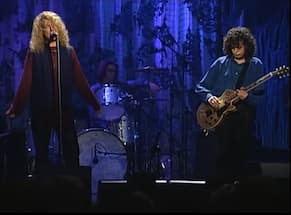
A Sonic Journey Beyond Borders: Page and Plant Bring Kashmir to Life with Egyptian Orchestra
In a performance that continues to resonate decades later, Jimmy Page and Robert Plant redefined their classic song Kashmir through a powerful collaboration with an Egyptian orchestra led by Hossam Ramzy. Featured in the acclaimed No Quarter: Jimmy Page and Robert Plant Unledded project, the performance stands as one of the most striking reinventions of a rock anthem in modern music history.
Originally released by Led Zeppelin in 1975, Kashmir was already known for its hypnotic rhythm and Middle Eastern inspired sound. However, this reimagined live version elevates the song into something far more immersive. The addition of traditional instruments and orchestral arrangements deepens its atmosphere, transforming it into a cross cultural dialogue between Western rock and Eastern musical traditions.
The collaboration was not a superficial experiment but a carefully constructed artistic vision. Jimmy Page had long been fascinated by global music, while Robert Plant explored diverse cultural influences throughout his post Zeppelin career. Their reunion in the mid 1990s was less about nostalgia and more about rediscovery. Without relying on the full original band, they chose instead to reinterpret their legacy through new textures and collaborations.
There is also a personal dimension that subtly echoes the spirit of Kashmir itself. The song, though not directly about the region it references, evokes a sense of journey, distance, and longing. In many ways, this mirrors Robert Plant’s artistic path after the loss of John Bonham in 1980, which led to the dissolution of Led Zeppelin. Plant’s later work often reflects themes of searching and transformation, elements that resonate strongly in this performance.
Visually and sonically, the Unledded version of Kashmir is captivating. The orchestra does not simply accompany but actively reshapes the song’s identity, creating a layered soundscape that feels both ancient and modern. The result is a performance that transcends genre boundaries and cultural divides.
Today, this rendition remains a benchmark for how classic songs can be reinterpreted without losing their essence. It is not merely a live performance but a statement about music’s ability to evolve, connect, and endure across time and geography.