
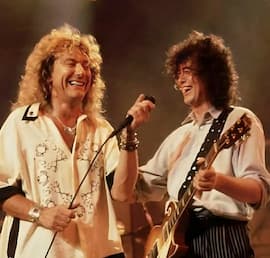
A Night of Revival and Reinvention in Dallas
In March 1995, Jimmy Page and Robert Plant brought their celebrated reunion project to Dallas, Texas, as part of the widely acclaimed No Quarter tour. The performance of Dancing Days during this period stands as a vivid reminder of how two iconic musicians successfully reimagined their past while remaining rooted in the spirit of Led Zeppelin.
Originally released in 1973 on the album Houses of the Holy, Dancing Days was known for its upbeat rhythm and distinctive riff, inspired in part by musical influences the band encountered abroad. By the time Page and Plant revisited the song in 1995, it had evolved from a classic rock staple into a flexible piece capable of reinterpretation on a modern stage.
The Dallas performance took place during a busy North American leg of the tour, which saw the duo performing across major cities in early 1995. Unlike the original Led Zeppelin arrangements, the No Quarter tour was characterized by a richer and more layered sound. It incorporated acoustic textures, world music influences, and orchestral elements, reflecting the duo’s desire to move beyond simple nostalgia.
During Dancing Days in Dallas, this transformation was especially clear. Jimmy Page’s guitar work retained the recognizable groove of the original recording, yet it was delivered with a looser and more expressive style. Robert Plant, meanwhile, approached the vocals with maturity and subtlety, avoiding direct imitation of his younger self and instead offering a reinterpretation shaped by experience.
Importantly, the performance was not merely a reproduction of past success. The No Quarter era emphasized reinvention, as Page and Plant intentionally avoided a full Led Zeppelin reunion format. Instead, they reshaped their catalog, giving songs like Dancing Days new emotional depth and sonic character. This approach allowed longtime fans to reconnect with familiar material while also appreciating its evolution.
The Dallas show, including this rendition, illustrates how legacy artists can revisit their work without diminishing its original impact. Rather than relying on spectacle alone, Page and Plant delivered performances grounded in musicianship and artistic growth.
More than three decades later, recordings of these concerts continue to circulate widely, offering insight into a unique chapter in rock history. The 1995 tour remains a testament to the enduring relevance of their music and to the creative possibilities that emerge when artists revisit their past with intention and vision.