
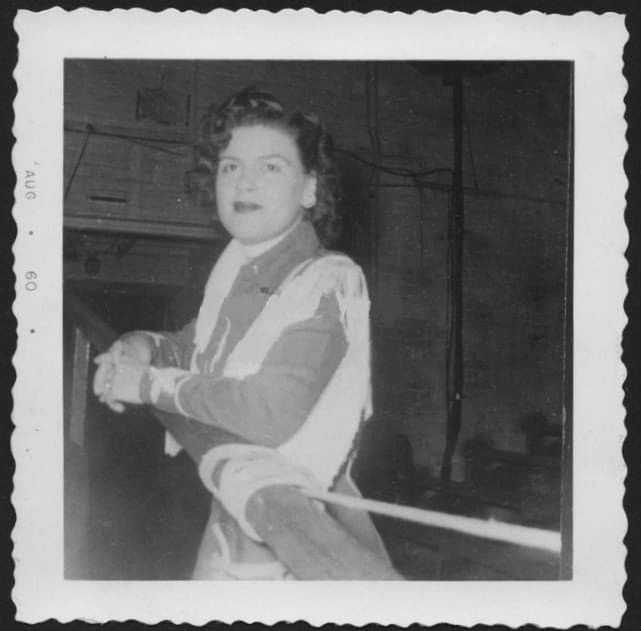
Whispers of a Broken Heart Rediscovered Through Patsy Cline’s Crazy Arms
In the vast landscape of classic country music, few songs carry the quiet emotional weight of Crazy Arms, and fewer still are reimagined with the haunting tenderness that Patsy Cline brings to her rendition alongside The Jordanaires. Though not originally her signature hit, the performance reveals a deeper layer of storytelling that continues to resonate across generations.
Written in the aftermath of personal heartbreak by Ralph Mooney, the song was born from a real life separation shaped by regret and addiction. This origin gives Crazy Arms an authenticity that cannot be manufactured. When Ray Price first popularized the track in the mid twentieth century, it became a cornerstone of honky tonk tradition. Yet in the hands of Patsy Cline, the narrative transforms. It shifts from a lament of loss into a quiet confession of emotional surrender.
What makes this interpretation remarkable is not spectacle, but restraint. There is no need for dramatic vocal peaks or elaborate staging. Instead, Cline delivers each line with a controlled vulnerability, allowing silence and phrasing to carry as much meaning as the lyrics themselves. Her voice does not chase the melody. It lingers within it, creating the feeling of someone caught between memory and acceptance.
Behind the scenes, the presence of The Jordanaires plays a subtle but crucial role. Their soft harmonies act like echoes of the past, surrounding the lead vocal with a sense of distance and nostalgia. This collaboration reflects a broader shift in country music at the time, where traditional honky tonk textures began blending into the smoother, more polished Nashville Sound. The result is a recording that feels both intimate and timeless.
There is also an unspoken connection between the emotional core of the song and Cline’s artistic identity. Known for her ability to inhabit the emotional truth of every lyric, she transforms Crazy Arms into something deeply personal. Listeners are left with the impression that this is not merely a cover, but a lived experience being retold.
Decades later, the recording endures not because of its historical significance alone, but because of its emotional honesty. In a world of fast moving music, Crazy Arms asks the listener to pause, to feel, and to remember what it means to hold on to something already lost.