
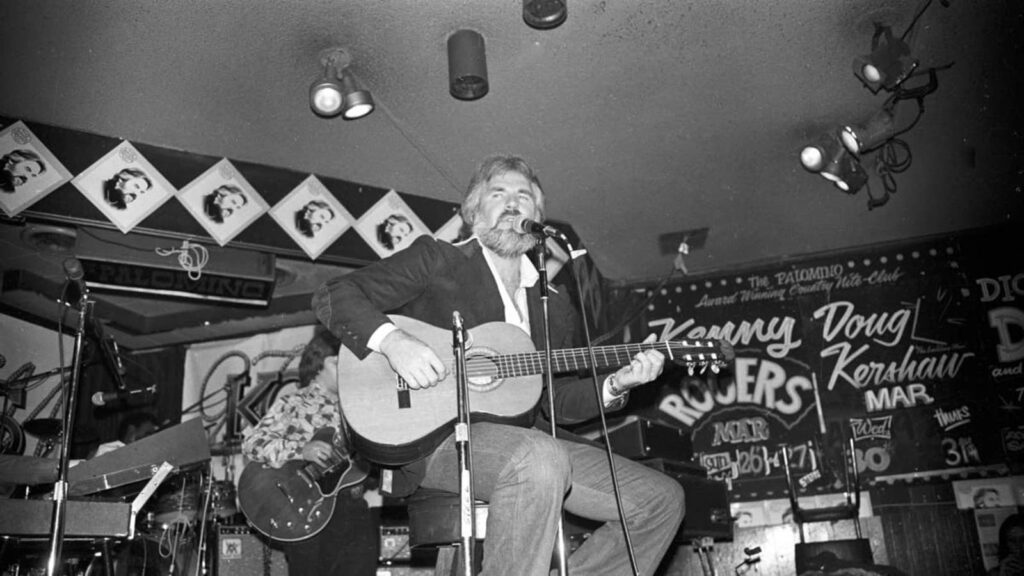
A rare glimpse into the transformative spark of an icon, where the warmth of the living room met the rising tide of a country-pop revolution.
The year 1978 was a seismic pivot point for American music, and perhaps no single moment captures that shift better than Kenny Rogers appearing on The Mike Douglas Show. For those of us who remember the rhythm of afternoon television, Mike Douglas wasn’t just a host; he was a bridge into our homes, and his stage was the ultimate proving ground for talent. When Kenny Rogers walked onto that set, he wasn’t yet the global “Gambler” phenomenon we know today—he was an artist in the midst of a brilliant metamorphosis. Dressed in the classic, effortless style of the late seventies, he brought a sense of intimacy to the screen that felt less like a performance and more like a visit from a long-lost friend.
At the time of this broadcast, Rogers was riding the incredible momentum of his self-titled 1977 album and the burgeoning success of “Lucille,” which had just secured him a Grammy Award for Best Male Country Vocal Performance. On the charts, he was a force of nature, consistently hitting No. 1 on the Billboard Hot Country Singles and, more importantly, crossing over into the top ten of the Billboard Hot 100. This was the era when the “Nashville Sound” was beginning to embrace a more polished, suburban sophistication, and Kenny Rogers was its primary architect. His appearance on The Mike Douglas Show served as a formal introduction to a broader, educated audience that recognized the technical mastery behind his gravelly, storytelling baritone.
The story behind this particular era of his career is one of remarkable reinvention. Before becoming the face of country-pop, Rogers had fronted the psychedelic rock-tinged The First Edition. Many of us remember the trippy strains of “Just Dropped In (To See What Condition My Condition Was In),” but by 1978, he had shed that skin. On the talk show circuit, he displayed a wit and a groundedness that appealed directly to the sensibilities of a mature generation. He spoke of the struggles of the road and the joy of finding his true voice later in life, a narrative that resonated deeply with viewers who were navigating their own mid-life transitions. It was during these interviews that the public fell in love not just with the singer, but with the man.
The meaning behind these vintage televised moments goes far beyond entertainment; they are the cultural glue of our collective memory. Watching Kenny Rogers in 1978 evokes a time when media felt more singular and shared. We remember the wood-paneled living rooms, the hum of the television set, and the way a single song could become the conversation of the neighborhood the next morning. There is a deep, reflective nostalgia in seeing him at the peak of his physical and vocal powers—a reminder of our own youth and the vibrant energy of a decade that dared to be both rugged and romantic.
For the discerning viewer today, this footage is a masterclass in the “art of the presence.” Rogers didn’t need pyrotechnics or digital enhancements; he relied on the sincerity of his gaze and the nuanced textures of his voice. His performance on the show often featured stripped-back versions of his hits, allowing the lyrics to breathe. It reminds us that the best stories don’t need to be shouted to be heard. As we look back on that 1978 broadcast, we aren’t just watching a singer; we are revisiting a milestone in our own lives, a moment when music felt like a steady hand on our shoulder, guiding us through the shifting winds of a changing world. It remains a timeless testament to a man who understood that the greatest gift a performer can give is the truth.