
The Secret Sanctuary of Sound: Roy Orbison and the Majesty of Motionless Resilience
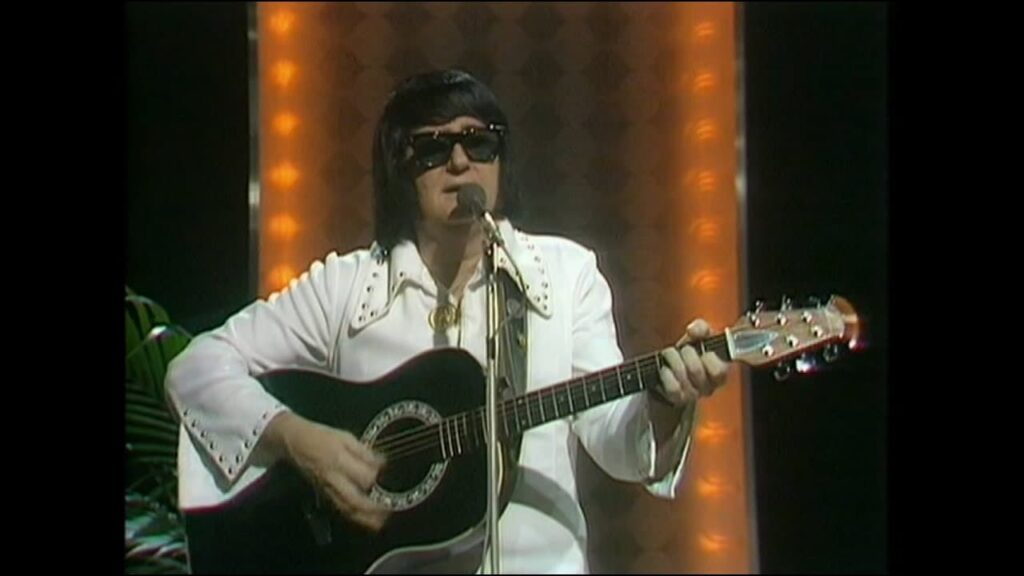
With an atmosphere wrapped in a quiet, almost sacred reverence, the mid-1975 stage remains an unforgettable monument to the absolute purity of the human voice. In an era increasingly dominated by flashy arena pyrotechnics and grand, theatrical gestures, Roy Orbison stood completely motionless at the center of the spotlight. He was navigating a difficult, quiet lull in his commercial career—a transitional space where the dizzying chart-topping fame of his early 1960s triumphs had temporarily receded into the shadows. Perched behind his familiar, trademark black sunglasses, he looked less like a modern pop idol and more like a mysterious, sophisticated craftsman who had weathered the fiercest storms of life in absolute silence, leaving his legendary voice to tell the stories he could never bring himself to speak aloud.
The meticulous architecture of Roy Orbison’s art during these reflective years represents a profound psychology that continues to deeply fascinate late-twentieth-century music purists. Behind those breathtaking, operatic high notes lay a devastating trail of personal tragedy—the sudden, heartbreaking loss of his beloved wife, Claudette, followed shortly by the unimaginable grief of losing his two young children in a catastrophic house fire. Yet, when he stepped up to the microphone, he never sang as if he were trying to show off his four-octave range or achieve a sterile, commercial perfection. Instead, he delivered each slow-burning ballad like a man who had looked directly into the depths of sorrow and survived before ever stepping into the recording studio, transforming raw human suffering into a towering, magnificent fortress of acoustic beauty.
For the sophisticated music enthusiast who treasures the deep historical nuances of vintage analog tracking, the image of that motionless man with the dark glasses carries an immense emotional weight. When the sunglasses metaphorically fall off and the world falls silent, the true power of his resilience is fully revealed through sound. Roy never needed to pace the stage or rely on dramatic dance moves to command an arena; his absolute stillness was his ultimate power, forcing the audience to lean in and listen to the exquisite, crying textures of his pristine tenor. It remains a beautiful, handcrafted masterclass in artistic dignity, proving that a premier pioneer could turn a moment of deep personal isolation into a universal sanctuary of profound comfort and shared healing.
Roy Orbison has long since left this earthly stage, but when his soaring, crystal-clear voice rings through the high-fidelity speakers today, it still feels as if he left the door to the room half-open for us. It sparks a powerful, deeply comforting wave of sweet nostalgia, transporting the listener back to a golden era when a performance was judged entirely by genuine talent and absolute sincerity of the soul. Roy Orbison’s motionless legacy remains an enduring testament to the triumph of the human spirit through song. It serves as a permanent, highly reflective reminder that when an artist dares to transcend the heaviest tragedies of life through the majesty of music, they will always remain the absolute masters of their own sanctuary, commanding our deepest gratitude and timeless admiration forever.