
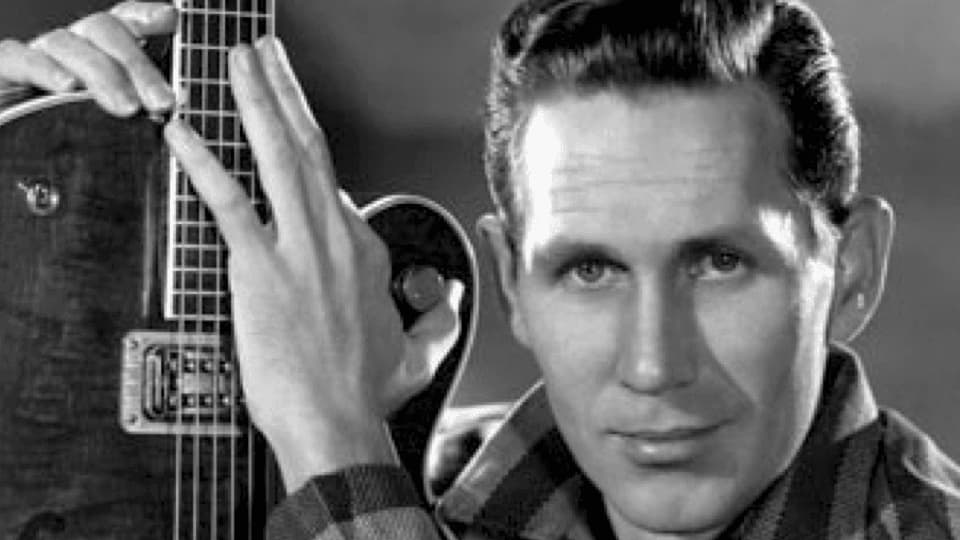
A soothing instrumental lullaby, where a legendary guitar gentles a stormy folk classic into a warm, late-night prayer of comfort.
There is a beautiful, restorative quietude that settles into a room when a true master pulls the frantic energy of the world down into a single, hushed melody. When Chet Atkins released his exquisite instrumental interpretation of “Goodnight Irene” in 1963, he provided exactly that kind of sanctuary. Featured as a standout track on his landmark RCA Victor studio album Our Man in Nashville, this recording captured “Mr. Guitar” at the absolute zenith of his creative and administrative influence. While the beloved folk standard had previously achieved staggering commercial heights—most famously in 1950 when a lush version by The Weavers and Gordon Jenkins spent an incredible 13 weeks at number one on the Billboard Best Seller chart—Atkins’ 1963 version sought a different kind of longevity. It became a permanent late-night companion for listeners, an audio safe-haven that traded vocal dramatics for the pure, comforting vibration of wood and wire.
The story behind this particular piece of music is a rich journey through the shifting landscape of 20th-century American folklore. The song’s roots stretch back to 1886, originally composed by the pioneering African-American songwriter Gussie Lord Davis. However, it was the legendary blues and folk titan Huddie Ledbetter—better known to the world as Lead Belly—who rescued the melody from obscurity in the 1930s, modifying the lyrics and rhythm while serving time in the Louisiana State Penitentiary. Traditionally performed as a sweeping, bittersweet waltz about lost love, heartbreak, and existential weariness, the song had always carried a heavy, melancholic undertone. When Chet Atkins approached the track for the Our Man in Nashville sessions, he recognized that beneath the sorrow lay a deeply comforting, universal lullaby—one that could be unlocked beautifully through the sophisticated framework of the emerging Nashville sound.
What makes Chet Atkins’ performance of “Goodnight Irene” so profoundly arresting is the delicate, conversational elegance of his arrangement. Utilizing his iconic “Travis picking” technique with a lighter, softer touch than usual, Chet’s thumb maintains a steady, rhythmic bass line that mimics the soothing heartbeat of a sleepy evening. Meanwhile, his fingers dance effortlessly across the high strings, articulating the familiar melody with a pristine, rounded tone that feels like amber sunlight fading over a familiar hill. Supported by the hushed, minimalist backing of Nashville’s elite studio musicians—the legendary “A-Team”—the guitar is allowed to truly breathe. He doesn’t rush a single phrase; instead, he allows each note to linger in the air, transforming an old song of regret into a timeless message of reassurance and warmth.
Decades after it first spun on high-fidelity turntables, listening to this 1963 recording today feels like stepping back into a world of unhurried sincerity. It effortlessly conjures the comforting aroma of a quiet home at dusk, the soft scratch of vintage vinyl beneath a heavy needle, and the serene realization that the truest melodies are those that anchor us to our fondest memories. To hear Chet Atkins interpret “Goodnight Irene” today is to remember a golden era when music was crafted with patience, dignity, and a profound respect for the listener’s peace of mind. It remains an unforgettable testament to an artist who could take the most turbulent chapters of American song and smooth them into an everlasting embrace.