
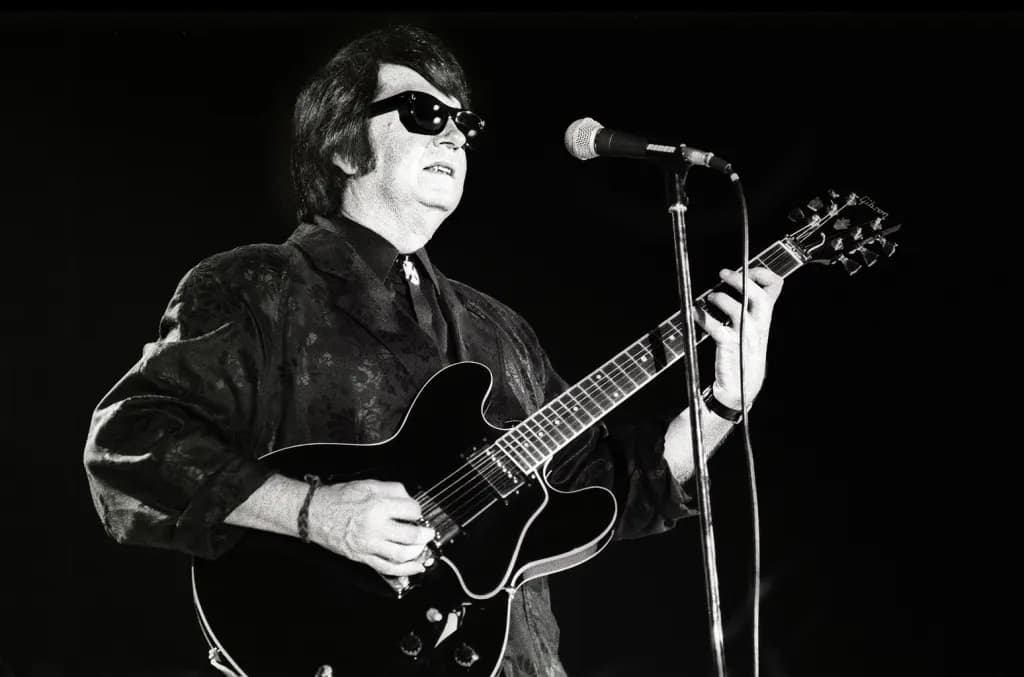
The Operatic Zenith of Heartbreak: Roy Orbison’s Mythic Delivery of “It’s Over” from A Black and White Night
When the definitive chronicle of rock and roll’s most sophisticated live recordings is thoroughly examined, certain star-studded milestones transcend ordinary concert documentation to become pure cinematic mythology. This extraordinary transformation took place on September 30, 1987, inside the intimate, retro-styled Cocoanut Grove nightclub in Los Angeles, during the taping of the historic television special, Roy Orbison and Friends: A Black and White Night. Anchored by an all-star backing orchestra of multi-platinum disciples, the incomparable Roy Orbison delivered what many connoisseurs consider the absolute emotional centerpiece of the evening: a breathtaking, operatic performance of his monumental 1964 chart-topper, “It’s Over.” Standing motionless beneath the stark, high-contrast monochrome spotlights, this premier pioneer did not merely look backward to a bygone era of early sixties pop; instead, he completely commanded the room, proving that raw human vulnerability and pure vocal power possess an immortal, cross-generational majesty.
The meticulous audio-visual architecture defining this spectacular 1987 live tracking represents a flawless, handcrafted pinnacle of twentieth-century concert engineering. Operating completely free from the synthetic backing tracks, heavy studio overdubbing, or artificial pitch cosmetics that began dominating the late-eighties pop landscape, the performance relied entirely on an organic, live-in-the-room dialogue between premier instrumentalists and pristine room acoustics. Orbison’s core band was a breathtaking assembly of rock royalty, featuring Bruce Springsteen, Elvis Costello, and James Burton, alongside the legendary TCB Band rhythm section. The tracking opens with an atmosphere of quiet, dramatic reverence, guided by a steady, bolero-style drum cadence and a round bassline that forms a pristine vintage bed. As the narrative of finality builds, the arrangement masterfully expands across the frequency spectrum, layering a sweeping, live string section and rich, angelic backing harmonies from k.d. lang, Bonnie Raitt, and Emmylou Harris that elevate the mix to a soaring, symphonic crescendo.
For the sophisticated music enthusiast who treasures the deep historical nuances of vintage vocal health, breath control, and complex dramatic phrasing, Orbison’s physical execution during this specific live sequence is an absolute revelation. Written by Orbison and Bill Dees, “It’s Over” famously rejects the simple structural constraints of standard rock songcraft, acting instead as a miniature through-composed pop opera that demands immense dynamic restraint and physical stamina. Roy approaches the studio microphones with his signature conversational, stone-still poise, letting his rich, velvet baritone voice wrap warmheartedly around the haunting, melancholic verses that detail the shattering end of a love affair. As the composition ascends toward its final, volcanic release, Orbison effortlessly scales his three-octave range to unleash the full, crystalline power of his upper register, holding the legendary, sustained high note with an unforced emotional honesty and complete pitch precision that modern electronic studio gimmicks simply cannot replicate.
To turn the volume all the way up and re-engage with the archival treasures of Roy Orbison’s magnificent delivery of “It’s Over” from A Black and White Night today is to be swept away by a powerful, deeply comforting wave of sweet nostalgia and profound gratitude. It transports the educated viewer back to a golden, highly sophisticated realm of entertainment history—a time when an iconic pioneer could completely captivate a multi-generational global audience through the sheer strength of absolute sincerity, flawless live precision, and pure, inherited creative genius. This definitive television performance remains a triumphant milestone in popular culture, serving as a permanent, highly reflective reminder that real creative brilliance requires no commercial dilution or digital enhancements to capture the heart of the public. It leaves us with a timeless reminder that when an uncompromising melody is delivered straight from the passionate, resilient soul of a true legend, its magic possesses an immortal strength that will continue to cross generations, warm our souls, and command our deepest admiration forever.