
Knowing When to Deal and When to Fold: How a Living Legend Reclaimed His Throne in the Quiet Twilight of a Storied Career
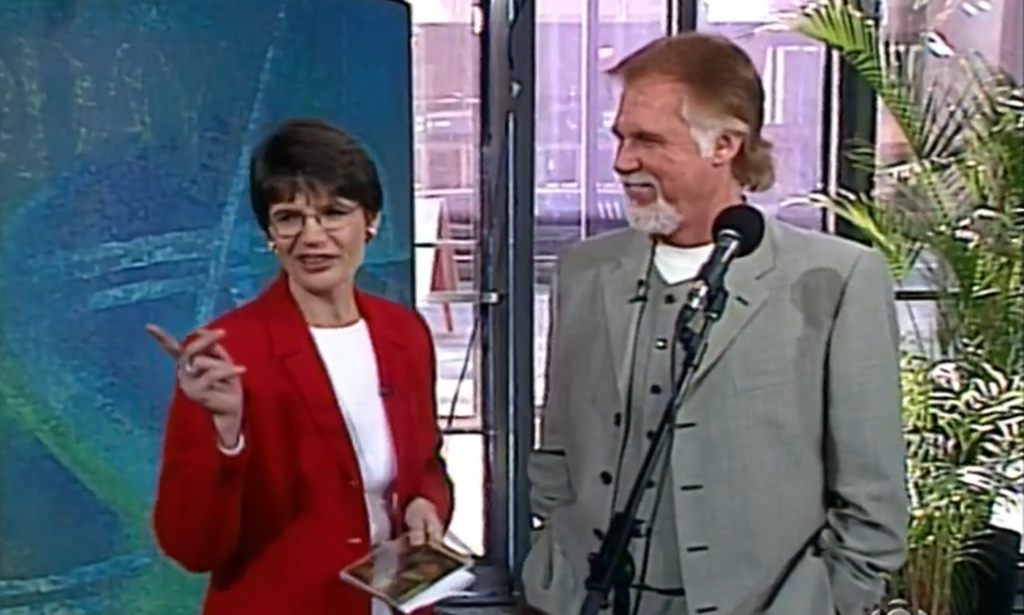
There is a profound, almost mystical wisdom built into the tapestry of a truly great song, a kind of predictive truth that echoes through the decades of an artist’s life. In the late autumn of 1999, the silver-bearded icon Kenny Rogers sat down for a remarkably reflective retrospective interview with Midday, looking back over a sprawling musical odyssey that had already crossed four decades. At sixty-one years old, a time when most titans of the golden era are content to coast on the lucrative waves of nostalgia, Kenny was instead celebrating the astonishing renaissance of his twenty-third studio masterpiece, She Rides Wild Horses. Released on his independent label, Dreamcatcher Records, the album defied every cynical industry expectation by debuting at No. 6 on the Billboard Top Country Albums chart. Its flagship anthem, “Buy Me a Rose”—featuring the ethereal backing vocals of Alison Krauss and Billy Dean—went on to achieve the miraculous, climbing all the way to No. 1 on the Billboard Hot Country Singles & Tracks and crossing over into the Billboard Hot 100 at No. 40. It was a historic feat that officially crowned him the oldest artist to land a number-one country hit at the time, proving that the world was still deeply in love with his gravelly, storytelling warmth.
Yet, as Kenny looked back during that pivotal 1999 conversation, the shadow of his defining 1978 monument, “The Gambler”, loomed large and protective over the interview. Written by the brilliant, then-unknown twenty-three-year-old tunesmith Don Schlitz, “The Gambler” had originally spent three weeks at No. 1 on the Billboard Country singles chart and crossed over to No. 16 on the Hot 100, earning Kenny a Grammy and cementing his place in the cultural lexicon. In a beautiful twist of poetic symmetry, Don Schlitz had also returned to Kenny’s side for the 1999 album, penning the record’s poignant introductory single, “The Greatest.” Reflecting on his survival in a fickle industry, Kenny mused on how the iconic philosophy of knowing “when to hold ’em, and when to fold ’em” had ceased to be just a catchy chorus; it had become the very blueprint of his life, guiding him through the volatile tides of pop stardom, financial ruin, and ultimate artistic redemption.
The true meaning of Kenny Rogers’ music in this late-career epoch shifted from the swagger of a cinematic outlaw to the quiet, vulnerable wisdom of a man who had seen the top of the mountain and valued the simplicity of the valley below. His 1999 resurgence was not built on high-energy arena anthems, but on songs like “Buy Me a Rose” and “Slow Dance More,” which implored listeners to slow down, look into the eyes of their companions, and cherish the small, unpurchasable moments of domestic devotion. For the generation that had grown up playing his records on heavy vinyl stereo consoles in the late seventies, this older, wiser Kenny resonated with a deeply comfortingly mature truth. He was no longer just the charismatic gambler on a late-night train; he was a steadfast friend acknowledging that life’s true wealth is measured not by the chips piled on the table, but by the love left standing when the game is done.
Looking back at that 1999 interview from the quiet shores of the present, after the Houston-born singer peacefully passed away at the age of eighty-one, the conversation feels less like a promotional press stop and more like a beautifully preserved time capsule of gratitude. It reminds us that a legendary career is not sustained by stubbornness, but by the graceful intuition to listen to the music, trust the storytellers, and step into the shifting seasons of life with dignity. To hear that unmistakable, husky baritone discuss his journey is to be wrapped in a blanket of pure, unfiltered nostalgia. It is a deeply moving reminder that while the gambler has finally broken even and found his rest, the hand he dealt to the world will continue to be played in our hearts for generations to come.