
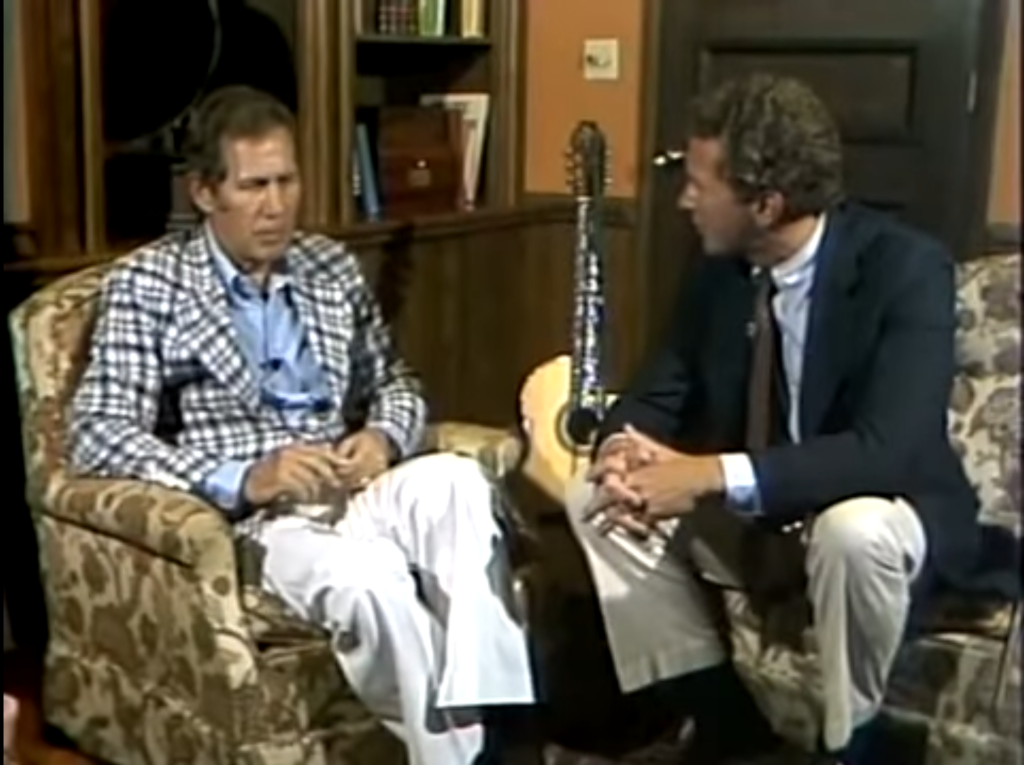
A quiet homecoming broadcast that strips away the glitz of Hollywood to reveal the humble, brilliant architect behind the soul of American music.
There is a distinct, grounding comfort in watching two sons of the South sit down for a quiet conversation, away from the blinding neon glare of show business. In 1981, during a memorable broadcast titled “Coffee with Huell,” television journalist Huell Howser did something extraordinary for his audience at KCBS in Los Angeles. He left the bustling West Coast behind and traveled back home to Tennessee to sit across a table from a living legend: Chet Atkins. This wasn’t a rehearsed, fast-paced promotional junket meant to capture fleeting headlines. Instead, it was an intimate, beautifully unhurried encounter. It offered viewers a rare glimpse into the mind of the undisputed “Mr. Guitar,” the visionary producer and executive who was universally credited with rescuing a struggling industry by creating the sophisticated, globally beloved Nashville sound.
The historical backdrop of this 1981 interview captures Chet Atkins at a fascinating crossroads in his monumental career. For over two decades, as a premier artist and the head of RCA Victor’s Nashville division, Chet had revolutionized popular music. In the late 1950s and 1960s, when rock-and-roll threatened to bury traditional country music, Chet—alongside producers like Owen Bradley—made a daring choice. He stripped away the harsh, nasal twangs and replaced them with lush string sections, polished background vocals, and smooth, jazz-inflected rhythms. This elegant sonic blueprint birthed masterpieces for icons like Don Gibson, Jim Reeves, and Eddy Arnold. Yet, by the dawn of the 1980s, Chet was preparing to step away from his demanding executive desk to reclaim his first true love: the pure, unadorned joy of playing the guitar.
What makes this archival jewel so profoundly moving is the undeniable chemistry between the interviewer and his subject. Before Huell Howser became a California broadcasting icon with his trademark enthusiastic curiosity, he was a proud son of Tennessee, bringing a gentle, respectful warmth to the conversation. Over cups of coffee, the dialogue unfolds with the easy cadence of old friends sitting on a shaded porch. Chet, wearing his signature humility like a well-worn coat, speaks candidly about the immense pressures of guiding the Nashville sound, the evolving landscape of the music industry, and his deeply rooted love for melody. There are no grand illusions of grandeur here; despite having sold millions of records and shaping the landscape of American culture, Atkins speaks of his genius as merely a craft honed by years of quiet dedication.
Revisiting this 1981 broadcast today feels like finding an old, handwritten letter tucked safely inside the sleeve of a favorite album. It serves as a gentle reminder of an era when television programming was allowed to slow down, giving audiences the space to truly listen, learn, and feel. To watch Chet Atkins share a quiet moment with Huell Howser is to be transported back to a time when artistry was defined by substance over spectacle. It evokes memories of a world where greatness didn’t need to shout to be heard, and where the truest legends were always the ones who could make you feel completely at home, even through the glowing screen of a living room television.