
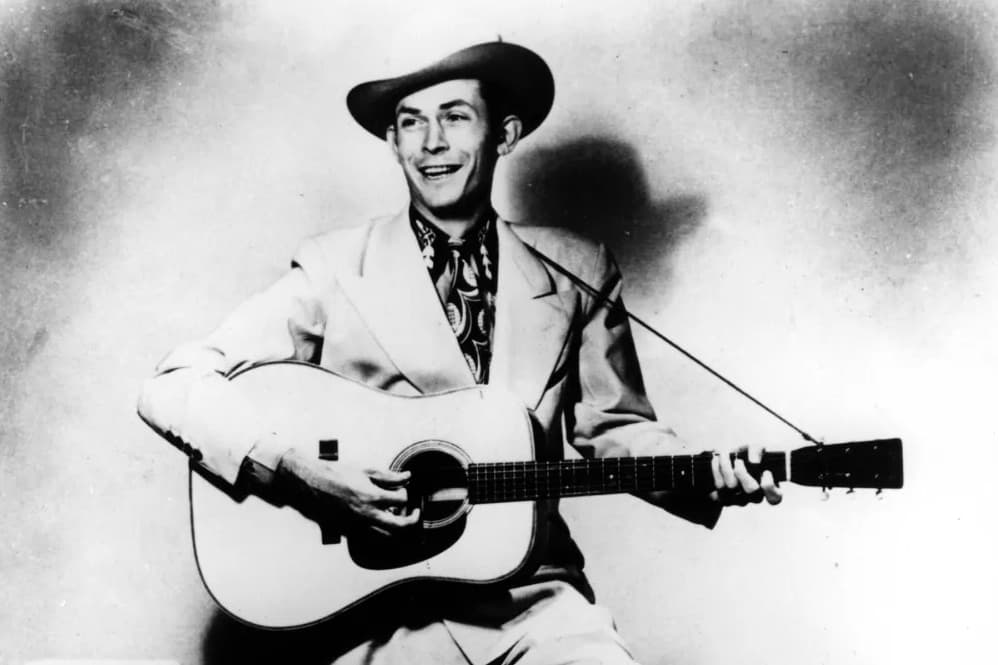
A Haunting Solitude Echoed Through Time
When Hank Williams released “I’m So Lonesome I Could Cry” in 1949, as the B-side to his single “My Bucket’s Got a Hole in It,” few could have predicted that this quiet, mournful ballad would become one of the most enduring laments in American music. Though it wasn’t a chart-topping hit upon its initial release, the song has since transcended commercial measures, finding immortality through countless covers and its profound emotional resonance. Featured later on compilations and live recordings rather than a specific studio album, this song stands as one of Williams’ purest expressions of desolation—a moment when country music’s raw heart bled into poetry.
At its core, “I’m So Lonesome I Could Cry” is not merely a sad song; it is an unflinching portrait of existential loneliness. Williams wrote it during a period of personal turmoil, when his marriage to Audrey Sheppard was unraveling and his health and spirit were burdened by addiction and restlessness. The song emerged from that darkness like a confession whispered into the night. In barely three minutes, he distilled an entire universe of human isolation—an emotion so acute it almost transcends sadness and becomes a kind of spiritual vacancy.
The song’s genius lies in its restraint. There are no grand gestures here, no soaring choruses or sentimental flourishes—only the soft ache of Williams’ voice and the spare accompaniment of steel guitar and fiddle. Each image he conjures—a whippoorwill crying, stars hiding their light, a falling leaf trembling before it touches the ground—feels like a mirror held up to his own soul. It is as if nature itself conspires to echo his loneliness. The language is simple, yet every word bears the weight of ancient sorrow; this is poetry spoken in plain American vernacular.
Musically, the composition inhabits the borderlands between country, blues, and folk—a testament to Williams’ gift for universality. His phrasing stretches time itself; he lingers on notes as though reluctant to let them go, then lets silence fill the space like grief settling into an empty room. This interplay between sound and stillness gives the recording its spectral quality. One can almost hear the air tremble between verses.
Over decades, artists from Elvis Presley to Johnny Cash, from B.J. Thomas to Bob Dylan, have interpreted the song, each drawn to its ghostly power. Yet no rendition ever eclipses Williams’ original—the fragile quiver in his voice feels too authentic to be imitated. It remains a document of loneliness so intimate that listening feels almost voyeuristic, as though we are overhearing a private prayer.
In the end, “I’m So Lonesome I Could Cry” endures because it speaks to something elemental within us: that unbearable stillness when love has departed and time itself seems to mourn alongside us. It is not just one man’s sorrow—it is the sound of human isolation rendered eternal in vinyl grooves.
 Oldies Songs
  Timeless Melodies