
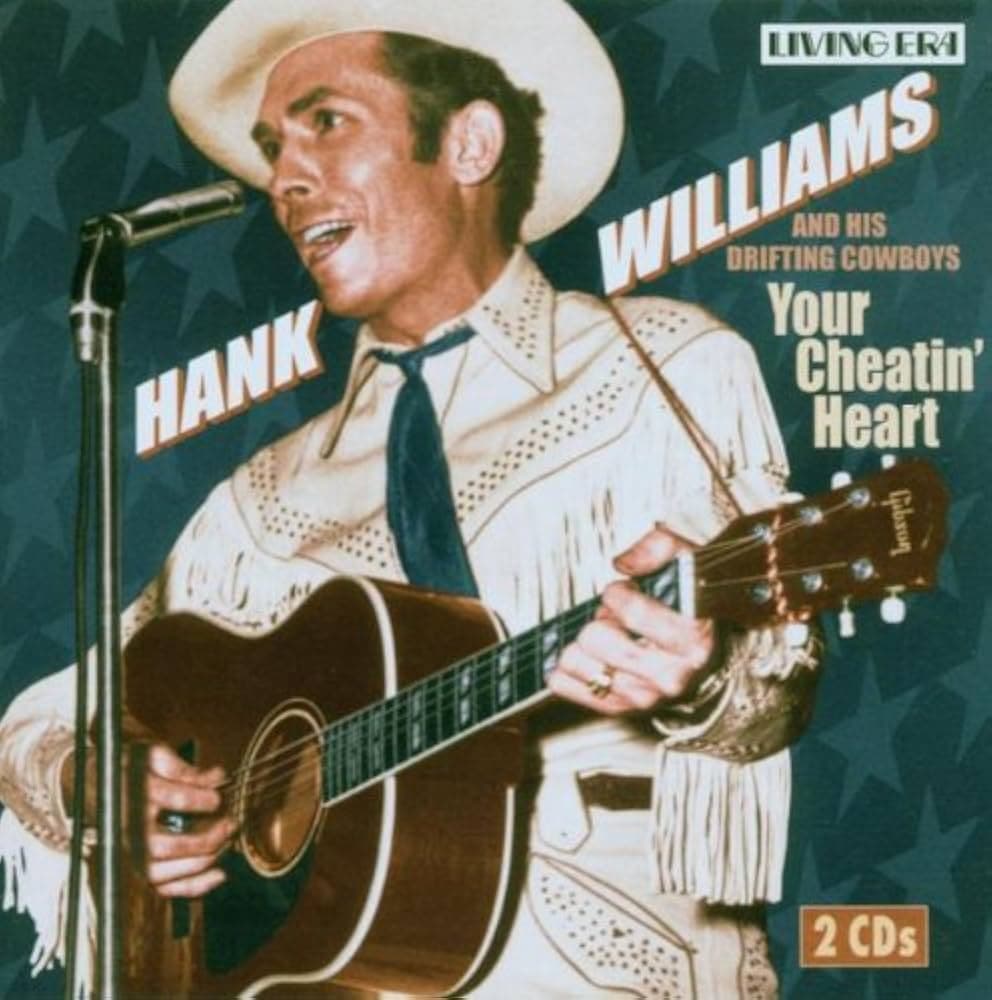
“Your Cheatin’ Heart” a mournful cry from a broken heart, timeless in its sorrow and truth.
Few songs in the history of country and popular music carry the heavy weight of heartbreak and authenticity as elegantly as “Your Cheatin’ Heart” by Hank Williams. Released posthumously in January 1953, the song touched the hearts of listeners immediately and became a standard of sorrowful longing and bitter truth.
When “Your Cheatin’ Heart” hit the airwaves, it resonated across radio stations and jukeboxes. In the early 1950s, country charts were still nascent and data collection was imperfect nevertheless, the song reached No. 1 on the country charts and stayed in public favor for months, cementing its place as a defining heartbreak ballad of its era.
The backstory of the song is as raw and tragic as its lyrics. Hank Williams wrote “Your Cheatin’ Heart” late in 1952, reportedly after personal heartbreak and a faltering relationship. In a time when men rarely sang of vulnerability, Williams dared to lay bare the pain of betrayal. It’s said that he completed the song shortly before his death in January 1953 mere weeks later, the record was released. The timing, tragic as it was, cast a shadow of poignancy over the song: listeners heard not just a replay of heartbreak, but a voice silenced too soon, singing of love lost.
Musically, “Your Cheatin’ Heart” is deceptively simple a gentle waltz rhythm, the lonely strum of guitar or steel guitar, and Williams’s voice: thin, aching, haunted. There is no showiness, no dramatic flourish just the bare bones of melody carrying the full weight of sorrow. That simplicity is part of what makes it so enduring. The listener isn’t distracted by ornamentation; instead, they are drawn into the emotional core, where heartbreak isn’t a performance, but a confession.
Lyrically, the song captures universal feelings of betrayal, regret, and the bitter clarity that follows heartbreak. Lines like “Your cheatin’ heart will make you weep / You’ll cry and cry and try to sleep / But sleep won’t come the whole night through / Your cheatin’ heart will tell on you” remain haunting even decades later. For many, the song becomes more than a memory of lost love it becomes a mirror for any heartbreak ever felt. Williams didn’t soften the pain; he named it plainly, and in naming it he made it honest.
For older generations those who lived during or soon after its release “Your Cheatin’ Heart” may evoke memories of radios tuned to quiet frequencies late at night, of jukeboxes in small-town bars, of lonely rides on country roads under moonlight. For younger listeners discovering it later, the song still carries that same raw authenticity, a bridge across time built on emotion, not style.
Over the decades, “Your Cheatin’ Heart” has grown beyond its chart success to become a standard covered by countless artists across genres,
 Oldies Songs